How Often Should You Replace Electric Scooter Tires?
*We may earn a commission for purchases made using our links. Please see our disclosure to learn more.
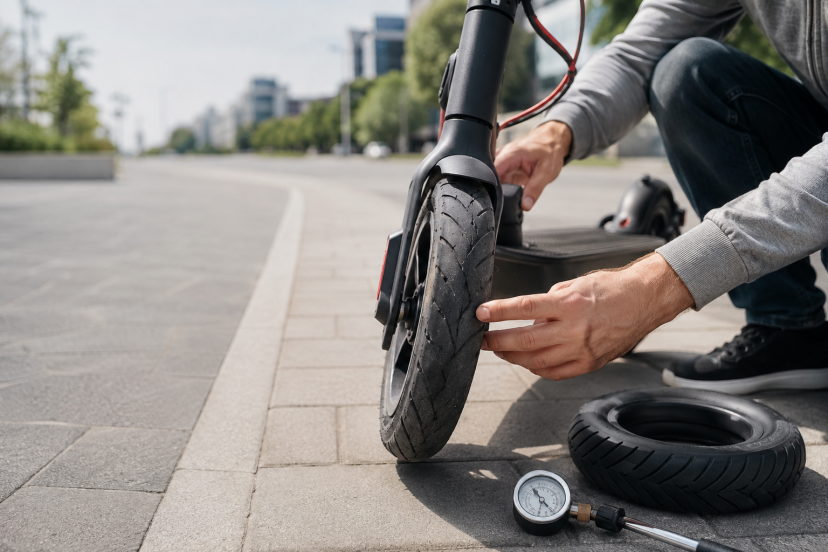
Electric scooter tires do much more than keep the scooter moving. They determine how well the scooter grips the road, absorbs bumps, responds while turning, and stops during an emergency. Because scooter wheels are relatively small, even moderate tread wear, incorrect pressure, or minor damage can noticeably affect handling.
There is no single replacement schedule that applies to every electric scooter tire. Some commuter tires may wear out after months of daily riding, while lightly used tires can remain serviceable for several years. Tire type, rider weight, road quality, inflation pressure, speed, braking habits, weather, and storage conditions all affect how quickly the rubber deteriorates.
As a practical rule, inspect your tires before or after every few rides, check pneumatic tire pressure at least monthly, and perform a more detailed condition check every three months. Replace a tire immediately when it develops unsafe damage rather than waiting for a particular date or mileage target. Segway, for example, recommends checking tire pressure and tire condition every three months on some of its current scooter models.
“Tire pressure influences your vehicle performance like driving comfort and general handling behavior.”
Source: NIU
Key Takeaways
- Electric scooter tires should be replaced according to their condition, not simply their age or mileage.
- Inspect tires regularly for shallow tread, flat spots, cracks, cuts, exposed material, bulges, loose rubber, and repeated pressure loss.
- Pneumatic tires usually require more frequent maintenance, while solid tires generally resist punctures but can still wear, harden, crack, or lose traction.
- Check the recommended pressure in your scooter manual. Common models may specify pressures between approximately 40 and 50 pounds per square inch, but the correct figure varies by scooter and tire.
- Replace both tires together when they are similarly worn, but a single damaged tire can be replaced separately when the other remains in good condition.
- Never purchase a replacement based only on the advertised wheel diameter. Confirm the full tire code, rim dimensions, width, valve position, tire construction, and scooter-model compatibility.
Four Electric Scooter Replacement Tires to Consider
Compatibility is more important than brand recognition. Before ordering, read the size printed on the original tire and verify the rim diameter, width, tire construction, valve arrangement, fender clearance, and exact scooter model. Product listings can contain broad compatibility claims, so compare physical measurements whenever possible.
1. BANGTING 8.5 x 2 Solid Scooter Tires

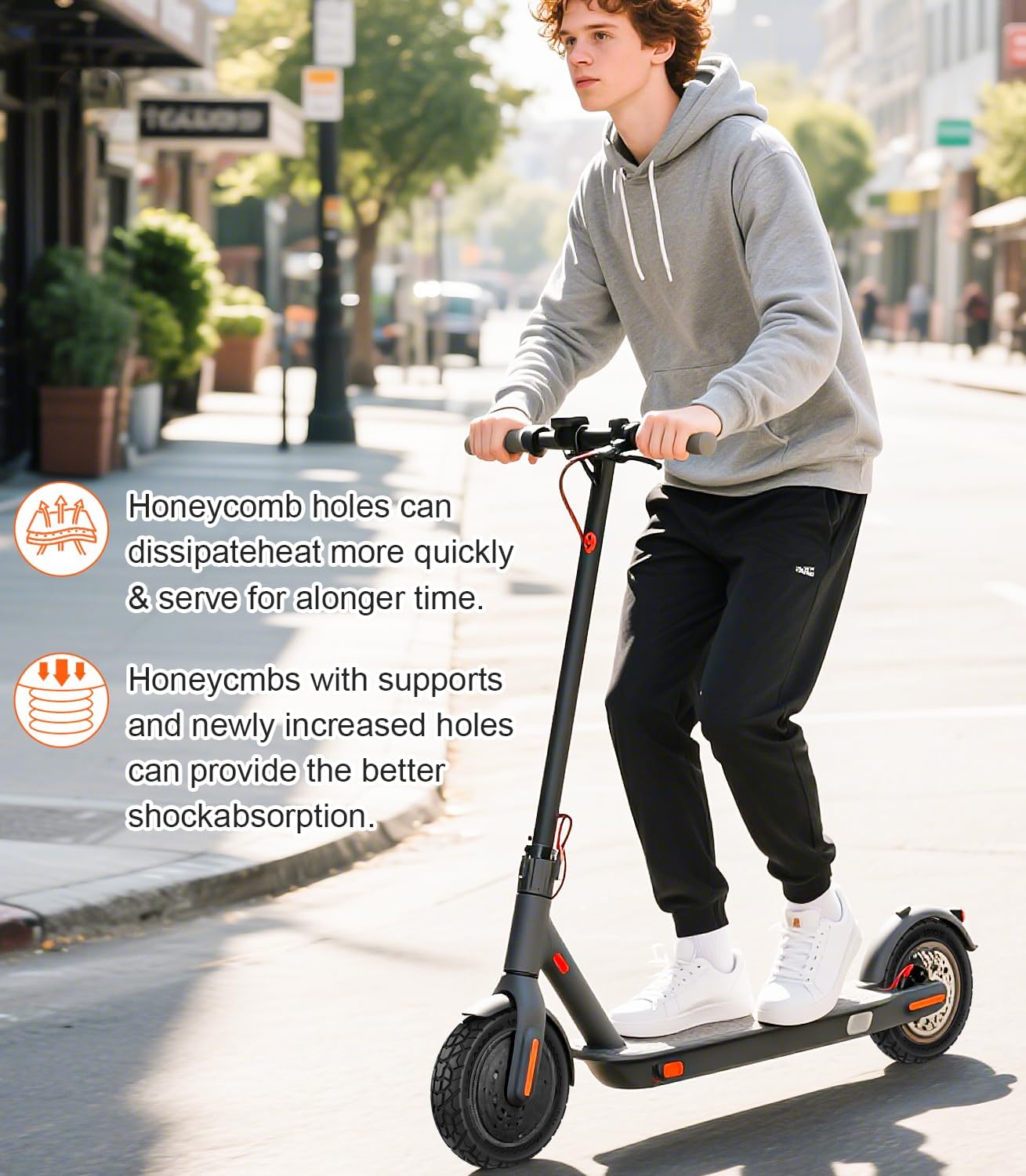
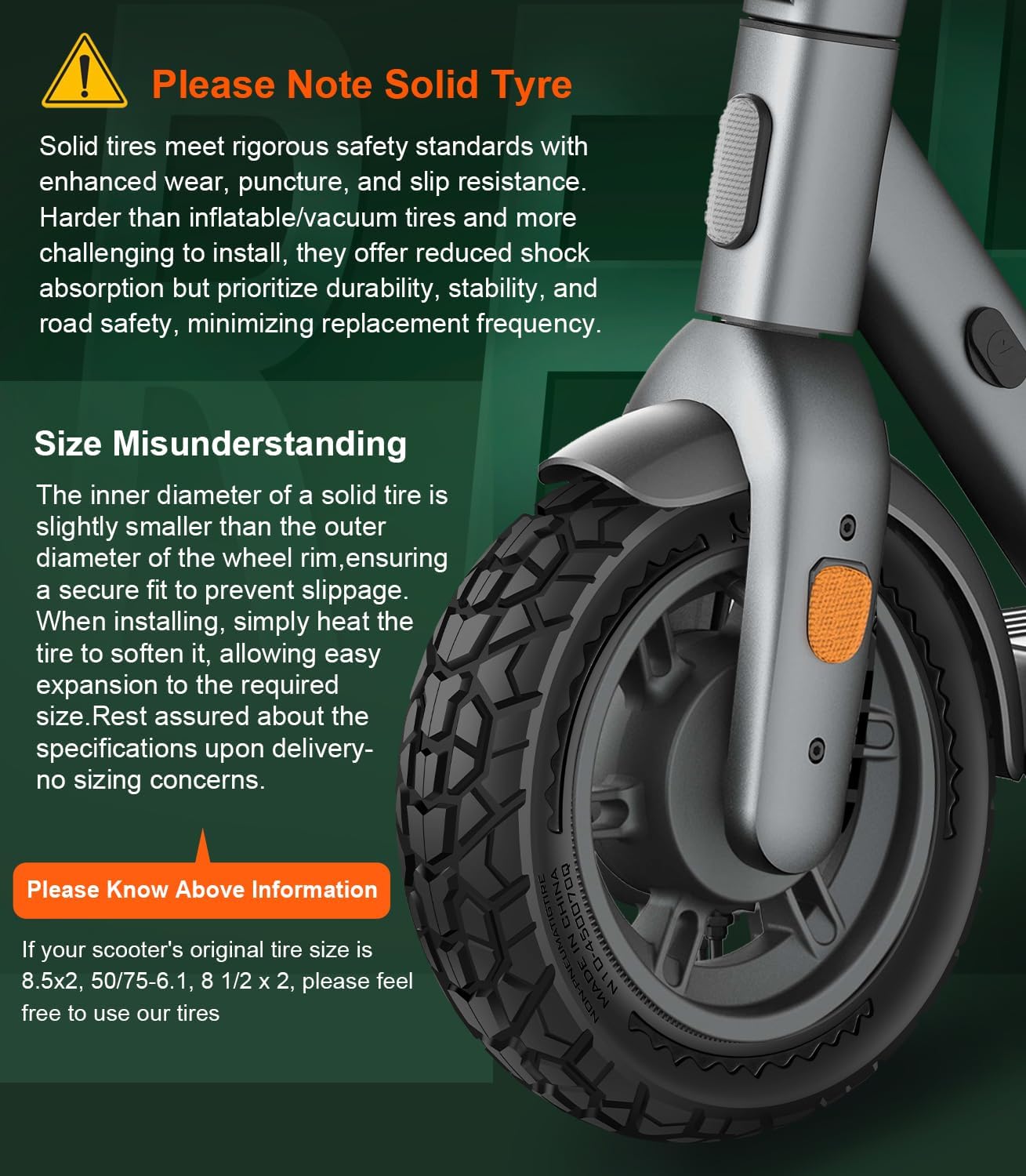
The BANGTING 2-piece solid tire set is designed for electric scooters that use 8.5 x 2, 50/75-6.1, or 8 1/2 x 2 tires. It is compatible with selected Gotrax, Hiboy, Xiaomi, and Cecotec models, although riders should verify their original tire and rim measurements before purchasing.
- Flat-Free Design: Solid construction eliminates punctures and inner-tube replacements.
- Improved Traction: Off-road tread provides dependable grip on varied surfaces.
- Low Maintenance: No inflation, pressure checks, patches, or pumps are required.
- Difficult Installation: The tight fit may require special tools or professional assistance.
- Firmer Ride: Solid tires generally absorb less vibration than pneumatic tires.
- Limited Compatibility: Exact tire and rim measurements must be confirmed before ordering.
Best for: Riders with compatible 8.5-inch scooters who want to eliminate tube punctures.
This two-tire set is marketed for several scooters using 8.5 x 2 or 50/75-6.1 sizing, including selected Xiaomi, Gotrax, and similar models. Its solid construction removes the need for inflation and tube repairs. The tradeoff is a firmer ride and potentially more vibration than an air-filled tire.
Confirm the precise rim dimensions and fender clearance before converting from pneumatic tires.
2. Cooryda 10 x 2.125 Solid Scooter Tires


The Cooryda 10 x 2.125 solid tire set is designed as a front or rear replacement for compatible 10-inch electric scooters. It fits selected Gotrax, Segway Ninebot, and Hiboy models, including the Gotrax G4 and XR V2, Ninebot F25 and F65, and Hiboy S2 Pro. Riders should confirm the original tire code and wheel measurements before ordering.
- Puncture Resistant: Solid construction eliminates traditional flats and tube repairs.
- Durable Rubber: Wear-resistant material is designed for regular scooter use.
- Low Maintenance: No inflation, air-pressure checks, or inner tubes are required.
- Challenging Installation: Heating and considerable force may be needed for fitting.
- Firmer Comfort: Solid tires may transmit more road vibration than pneumatic options.
- Model Restrictions: Compatibility depends on exact wheel and rim dimensions.
Best for: Compatible 10-inch commuter scooters where puncture resistance is the priority.
The Cooryda set is listed for several Gotrax, Ninebot, and Hiboy models that use compatible 10 x 2.125 sizing. It can be installed at the front or rear when the wheel and rim specifications match.
Because solid tires can be difficult to mount, professional installation may be worthwhile. Incorrect installation can damage the rim or prevent the tire from seating evenly.
3. ZAITUO 60/70-6.5 Self-Sealing Tubeless Tire


The ZAITUO self-sealing tubeless tire is designed for selected Segway Ninebot Max scooters, including the G30, G30LP, and G30E. Its 60/70-6.5 construction combines an air-filled ride with an internal self-sealing layer intended to close certain small tread punctures.
- Self-Sealing Layer: Helps close certain small punctures in the tread area.
- Comfortable Ride: Pneumatic construction absorbs bumps better than most solid tires.
- Stable Handling: Wider tread supports traction and controlled road contact.
- Sizing Inconsistency: The listing displays both 60/70-6.5 and 62/70-6.5 measurements.
- Pressure Maintenance: Requires regular inflation and air-pressure checks.
- Limited Fit: Intended primarily for compatible Ninebot Max G30-series scooters.
Best for: Compatible Segway Ninebot Max riders who want pneumatic comfort with puncture-sealing capability.
This 10-inch tubeless tire is marketed for selected Ninebot Max G30-series models and includes a self-sealing layer intended to address certain small punctures.
Self-sealing technology reduces inconvenience but does not replace tire inspections. Cuts, bead damage, larger punctures, or continuing pressure loss still require repair or replacement.
4. HTBCCHB 10 x 2.50-6.5 Tubeless Scooter Tire

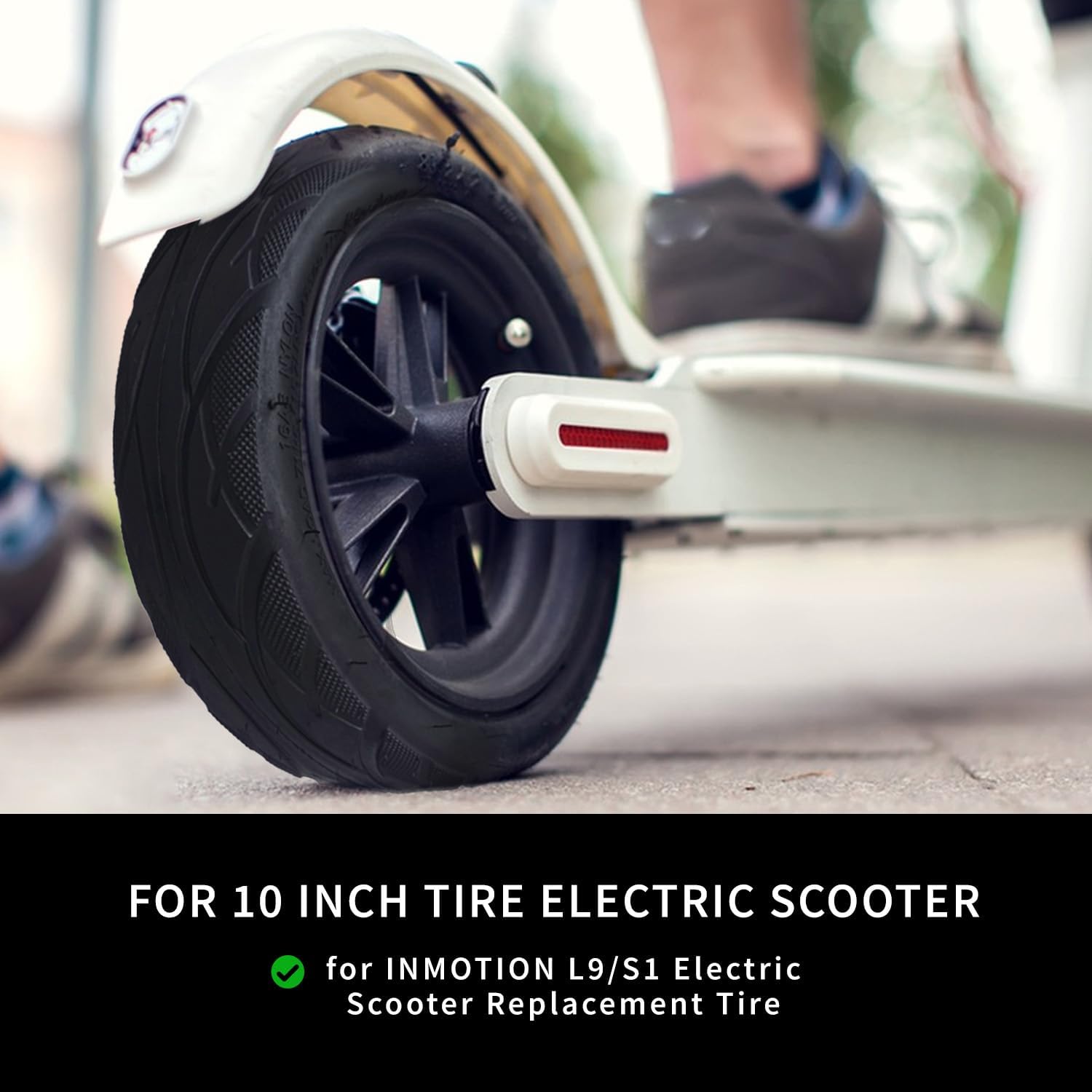
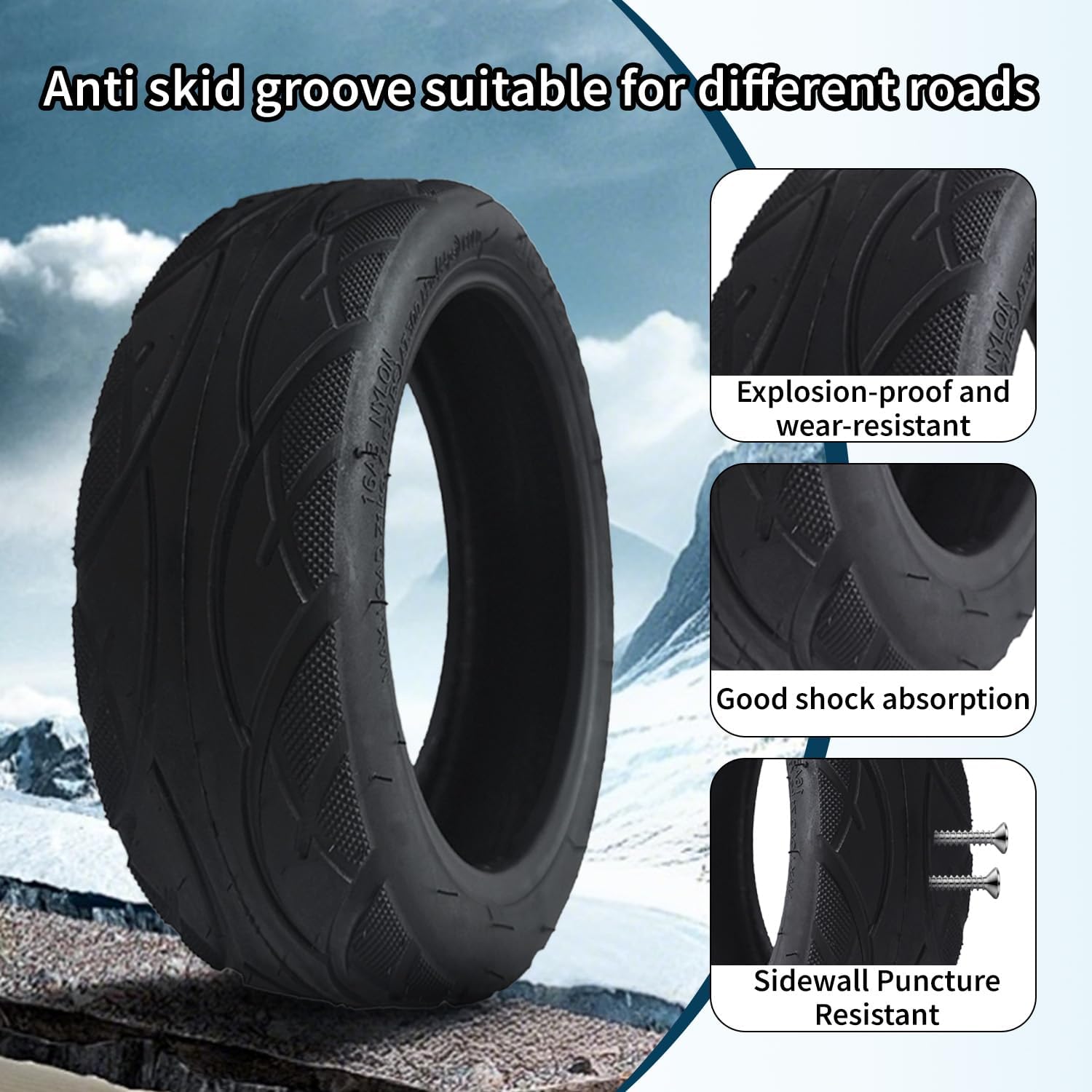
The Hromra two-pack includes 10 x 2.50-6.5 tubeless replacement tires designed for compatible INMOTION L9 and S1 electric scooters. Each tire is made from natural rubber and features a thicker, air-filled construction intended to provide better cushioning than a solid tire.
- Improved Comfort: Air-filled construction helps absorb bumps and road vibration.
- Wet-Road Grip: Grooved tread supports drainage and traction in damp conditions.
- Complete Two-Pack: Includes two tubeless tires and two matching air valves.
- Pressure Maintenance: Tires require regular inflation and pressure monitoring.
- Installation Difficulty: Tubeless mounting may require specialized tools or professional help.
- Limited Compatibility: Designed primarily for compatible INMOTION L9 and S1 models.
Best for: Compatible 10-inch scooters requiring a 10 x 2.50-6.5 tubeless replacement.
This replacement is supplied with an air valve and is described as a four-ply, year-round tubeless tire. Its listing specifies 10 x 2.50-6.5 sizing, but that size alone does not guarantee compatibility with every 10-inch scooter.
Check the original tire code, rim channel, load requirements, available frame clearance, and valve access before purchasing.
How Long Do Electric Scooter Tires Usually Last?
Electric scooter tire life varies too widely for one universal figure. A rider covering several miles every day on rough city streets will normally wear tires faster than someone using a scooter occasionally on smooth paths.
Solid electric scooter tires may last approximately 1,500 to 3,000 miles under suitable conditions, according to guidance published by electric scooter manufacturer OKAI. However, this is a broad estimate rather than a guaranteed service life. Aggressive acceleration, hard braking, heavy loads, abrasive pavement, poor wheel alignment, and high temperatures can shorten that interval considerably.
Pneumatic tires may need replacement earlier when they experience repeated punctures, underinflation, damaged sidewalls, or worn tread. Their usable life depends heavily on pressure maintenance. A tire that is continually ridden below its recommended pressure can flex excessively, generate heat, pinch its inner tube, and wear unevenly.
Tubeless and self-sealing tires may continue operating after a small puncture, but self-sealing material does not make them permanently damage-proof. A puncture that continues leaking, a cut near the sidewall, or damage to the tire bead should be professionally assessed or replaced.
Age also matters. Rubber gradually loses flexibility through heat, sunlight, ozone, moisture, and long storage. A tire may therefore become unsafe even when the scooter has low mileage. Inspect older tires for fine cracks, hard or glossy rubber, loss of grip, and deformation after storage.
Recommended Inspection and Replacement Schedule
A condition-based schedule is more reliable than changing every tire after an arbitrary number of months.
Before Frequent Rides
Perform a quick visual and physical check:
- Look for visible cuts, nails, glass, or embedded debris.
- Check that the tire is seated evenly around the rim.
- Confirm that pneumatic tires do not appear soft.
- Spin each wheel and watch for wobbling or an uneven tire profile.
- Make sure no part of the tire is rubbing against the fender, fork, brake, or cable.
- Check for missing pieces or deep splits in solid tires.
This check takes less than a minute and can identify developing problems before a ride.
Every Month
Use a reliable pressure gauge on pneumatic or tubeless tires. Do not judge pressure only by squeezing the tire with your hand, because small scooter tires can feel firm while still being underinflated.
NIU recommends consulting the user manual and lists 45–50 psi for its kick scooters, while Segway lists 42–48 psi for models such as the F2. These figures illustrate why the scooter’s own specification matters; another model may require a significantly different pressure.
During the monthly inspection, examine the center tread and shoulders, check the valve stem for cracking, and look for signs of air leakage around the bead.
Every Three Months
Conduct a more complete tire assessment:
- Measure or compare remaining tread.
- Inspect the entire circumference of each sidewall.
- Check for irregular wear on one side.
- Look for flattened sections caused by skidding.
- Examine the bead where the tire meets the rim.
- Check wheel bearings and axle tightness.
- Confirm that the wheel runs straight.
- Compare front- and rear-tire wear.
Segway currently recommends checking tire pressure and condition every three months on several models, while also advising riders to repair punctures promptly.
After a Puncture, Impact, or Long Storage Period
Inspect the tire immediately after hitting a deep pothole, curb, sharp object, or other obstacle. Internal tire or rim damage may not be obvious during the ride.
A scooter that has been stored for several months also needs a complete inspection. Pneumatic tires may lose pressure naturally, while solid tires can develop flat spots or surface deterioration when exposed to heat and sunlight.
Seven Signs Your Electric Scooter Tires Need Replacing
1. The Tread Is Nearly Gone
Tread grooves channel water and help the tire grip irregular road surfaces. When the center becomes smooth, the scooter may have less traction during braking, cornering, or wet conditions.
Some tires include molded tread-wear indicators. Replace the tire when the surrounding tread approaches the indicator level. When there are no indicators, compare the tire with a new version or follow the scooter manufacturer’s service specification.
Do not wait until the tire is completely bald. Small scooter tires have a relatively limited contact area, so reduced tread can quickly affect stability.
2. The Tire Has Cracks or Sidewall Cuts
Small superficial marks are not always critical, but deep cracks, spreading splits, or cuts that expose internal material require replacement. Sidewalls flex as the scooter moves and cannot safely tolerate major structural damage.
A sidewall puncture should not usually be treated like a small hole in the main tread area. Large cuts and sidewall damage commonly require full tire replacement rather than a basic patch.
3. The Tire Keeps Losing Air
Occasional pressure adjustment is normal. Repeated or rapid pressure loss is not.
Possible causes include:
- A punctured inner tube
- A leaking tubeless-tire bead
- A damaged valve core
- A cracked valve stem
- Rim damage
- A puncture too large for sealant
- An incorrectly installed tire
Repairing the leak may be sufficient when the outer tire remains healthy. Replace the tire when its casing, bead, or sidewall is damaged.
4. You Notice Bulges or Deformation
A bulge can indicate that the tire’s internal structure has weakened. A misshapen tire may produce vibration, wobbling, or inconsistent contact with the road.
Stop riding when a pneumatic tire develops a visible bulge. Continuing to use it may lead to sudden air loss or casing failure.
Solid tires can also deform. Replace them when they become noticeably oval, develop severe flat spots, separate from the rim, or lose chunks of rubber.
5. The Scooter Vibrates or Pulls to One Side
New vibration does not automatically mean the tire is worn, but it should be investigated. Potential causes include uneven tread, a poorly seated bead, a bent rim, a loose axle, damaged bearings, or an unbalanced replacement tire.
If the scooter pulls consistently to one side, compare tire pressure and tire wear on both wheels before checking the alignment and steering assembly.
6. The Rubber Has Become Hard and Slippery
Rubber can harden as it ages. An old tire may retain visible tread while providing less grip than it once did.
Warning signs include a glossy surface, fine cracking, reduced flexibility, increased wheel slip, or poor wet-weather traction. Tires stored near windows, heaters, motors, chemicals, or outdoor areas may age faster.
7. The Tire Has Been Repaired Repeatedly
A properly repaired small puncture does not necessarily require a new outer tire. However, numerous patches, recurring leaks, multiple embedded objects, or damage clustered in one area may indicate that replacement is more dependable.
Frequent punctures can also point to low pressure, an incorrect tire, exposed rim edges, a damaged rim strip, or debris remaining inside the tire.
Pneumatic, Tubeless, and Solid Tire Replacement Differences
Pneumatic Tires With Inner Tubes
These tires generally provide good ride comfort because the compressed air helps absorb vibration. Their main disadvantages are punctures and pressure-related maintenance.
The inner tube and outer tire are separate components. A punctured tube can often be replaced while retaining the tire, provided the casing, tread, and bead remain undamaged.
Replace the outer tire when it is badly worn, cracked, stretched, cut, deformed, or repeatedly causing tube failures.
Tubeless Tires
Tubeless tires hold air against the rim without a separate inner tube. They may be more resistant to pinch flats and can sometimes be repaired with plugs or internal patches.
They require a clean, undamaged bead and compatible rim. If the bead is torn or the rim is bent, the tire may not seal reliably.
Self-sealing versions contain a material designed to close certain small punctures. They still need routine pressure and condition checks. Segway specifically advises repairing punctured self-sealing tires promptly to prevent further damage.
Solid or Honeycomb Tires
Solid tires cannot suffer a conventional air-pressure puncture, making them attractive to riders who prioritize low maintenance. However, they tend to transmit more vibration and can provide less cushioning than pneumatic tires.
Replace a solid tire when:
- The tread has worn smooth.
- The rubber has cracked deeply.
- Pieces of the tire are missing.
- It rotates on the rim.
- It has developed a severe flat spot.
- Its profile is distorted.
- Grip has noticeably declined.
Solid tires are not automatically compatible replacements for pneumatic tires. The rim shape, tire dimensions, fender clearance, and installation method must all match.
What Causes Electric Scooter Tires to Wear Out Faster?
Incorrect Tire Pressure
Underinflation increases sidewall flex and rolling resistance. It may also cause uneven wear or inner-tube pinch damage. Overinflation can reduce ride comfort, decrease the tire’s ability to conform to rough pavement, and concentrate wear near the center.
Use the manufacturer’s pressure rather than a generic internet recommendation.
Rider and Cargo Weight
Greater total weight places more load on the tire. Never exceed the scooter’s stated weight limit, and remember that bags, locks, and carried items contribute to the total.
Rough Roads
Potholes, broken pavement, gravel, sharp debris, curb impacts, and construction zones increase wear and puncture risk. Slowing down around rough surfaces protects the tires, rims, bearings, and steering components.
Hard Acceleration and Braking
Powerful motors can wear the driven tire quickly, especially when the wheel spins. Repeated emergency-style braking can create flat spots or uneven tread.
Wheel or Brake Problems
A dragging brake generates heat and resistance. Loose bearings, a bent axle, incorrect wheel installation, or alignment problems can produce irregular tire wear.
Weather and Storage
Heat accelerates rubber aging, while prolonged sunlight can contribute to surface cracking. Store the scooter in a dry, temperature-controlled area away from direct sunlight when possible.
Should You Replace Both Tires at the Same Time?
Electric scooter tires do not always have to be replaced as a pair. Replacing only one is reasonable when it has been punctured or damaged and the other still has healthy tread, flexible rubber, and an even profile.
Replacing both can be beneficial when:
- They have similar mileage and wear.
- Both tires are old or cracked.
- You are changing tire type.
- The matching original tire is no longer available.
- Handling feels unbalanced because one tire has a substantially different profile.
- You are upgrading to a different tread pattern or width approved for the scooter.
Do not mix incompatible sizes or constructions merely because they fit onto the rims. A major difference in diameter or profile can alter deck height, steering response, braking, motor load, speed readings, and fender clearance.
How to Make Electric Scooter Tires Last Longer
Maintain the specified tire pressure and check it when the tires are cold. NIU advises checking the scooter’s manual for the proper figure, while current Segway models publish different pressures depending on the model.
Avoid riding through broken glass, construction debris, deep potholes, and sharp curb edges. When an obstacle cannot be avoided, reduce speed and cross it as straight as safely possible.
Use controlled acceleration and progressive braking rather than repeatedly spinning or locking the wheels. Do not exceed the scooter’s weight limit, and investigate brake drag, wheel wobble, or unusual vibration promptly.
Remove embedded debris carefully before it works deeper into the tire. However, do not pull out a nail or screw from a tubeless tire while away from a safe repair location, because the object may be partially limiting air loss.
Finally, store the scooter indoors in a dry area away from direct sunlight and extreme temperatures. Long storage does not eliminate the need for pressure checks or rubber inspections.
Final Thoughts
Electric scooter tires should not be replaced according to one rigid calendar. The safest approach is to inspect them regularly and respond to actual wear, damage, pressure loss, and changes in handling.
For many riders, that means a quick check every few rides, a pressure and condition check each month, and a detailed assessment every three months. Mileage estimates can help with budgeting, but visible condition should always take priority.
Replace the tire immediately when you find deep cracking, structural cuts, bulges, exposed internal material, severe tread loss, repeated leakage, deformation, or significant grip reduction. A new tire costs far less than the consequences of losing traction or suffering a tire failure during a ride.
Frequently Asked Questions
1. How many miles do electric scooter tires last?
There is no universal mileage because lifespan depends on tire type, pressure, road conditions, rider weight, speed, and maintenance. As a broad reference, some solid scooter tires may last approximately 1,500 to 3,000 miles, but damage or lost traction can require earlier replacement.
2. Can I ride an electric scooter with a bald tire?
You should replace a tire before it becomes completely bald. Worn tread can reduce grip and make braking or cornering less predictable, particularly on wet, dusty, or loose surfaces.
3. Should I replace a tire after one puncture?
Not necessarily. A small repairable puncture in the main tread area may only require a patch, plug, sealant service, or new inner tube. Replace the outer tire when it has a large cut, sidewall damage, bead damage, severe wear, deformation, or recurring leaks.
4. Are solid scooter tires better than pneumatic tires?
Solid tires are resistant to flats and require no pressure checks, but they generally provide a firmer ride. Pneumatic tires usually offer better cushioning and road conformity but require inflation and can puncture. The better option depends on compatibility, road quality, comfort preferences, and maintenance priorities.
5. What pressure should electric scooter tires have?
Use the pressure printed in the scooter manual or specified by the manufacturer. For example, NIU lists 45–50 psi for its kick scooters, while certain Segway models specify 42–48 psi. These are model-specific examples rather than universal settings.