Best Last-Mile Electric Scooters
*We may earn a commission for purchases made using our links. Please see our disclosure to learn more.
The best last-mile electric scooter is light enough to carry, compact enough for public transportation or office storage, and capable of completing a normal round trip without using its full battery. For most riders, the strongest choice is not the fastest scooter. It is the model that balances portability, reliable braking, practical range, tire comfort, rider capacity, and electrical safety.
A last-mile scooter handles short connections between home, transit, parking, school, work, and other final destinations. It should remain convenient when stairs, elevators, crowded platforms, and limited storage become part of the trip.
Key Takeaways
- The NIU KQi Air is the best overall option for riders who prioritize low weight, useful range, and premium commuter features.
- A realistic last-mile route is usually better served by portability and dependable brakes than extreme speed.
- Manufacturer range figures are maximum estimates, so buyers should keep a generous battery reserve.
- Pneumatic tires generally provide a smoother urban ride, while solid tires reduce puncture concerns.
- UL 2272 certification should be treated as a core buying requirement, not an optional extra.
Four Best Last-Mile Electric Scooters
The following models were listed on Amazon at the time of review. Availability, seller, configuration, and price can change, so the current listing should always be checked before purchase.
| Scooter | Best for | Claimed range | Top speed | Weight |
|---|---|---|---|---|
| NIU KQi Air | Best overall | Up to 31 miles | 20 mph | 26.2 lb |
| GOTRAX XR Elite | Best balanced value | Up to 18.6 miles | 15.5 mph | 32 lb |
| Segway Ninebot E2 Plus II | Best beginner option | Up to 16 miles | 15.5 mph | 36.2 lb |
| Hiboy S2 Pro | Best for added power and range | Up to 25 miles | 19 mph | 37.4 lb |
1. NIU KQi Air: Best Overall

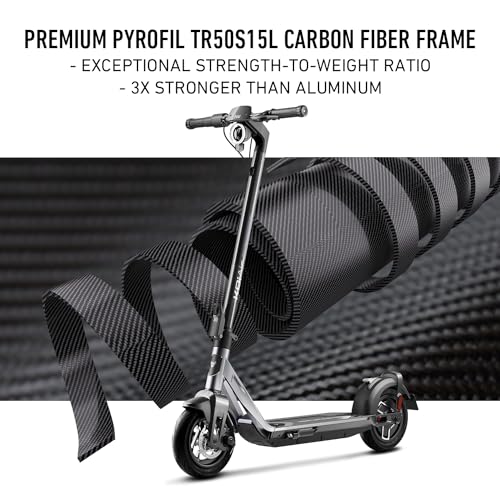
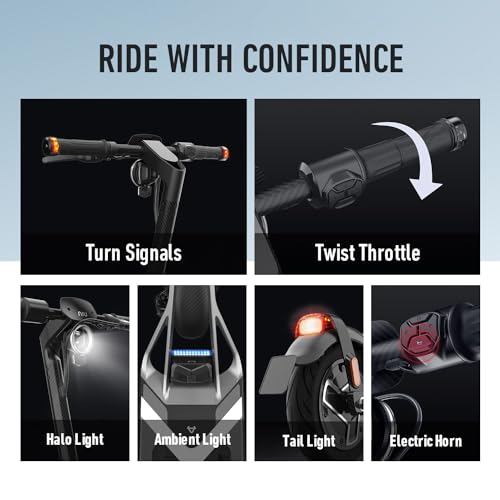
The NIU KQi Air Electric Scooter combines a lightweight carbon-fiber frame with practical performance for commuting and short urban trips. Weighing only 26.2 pounds, it is easier to carry up stairs, place in a vehicle, or take on public transportation than many full-size electric scooters.
- Lightweight Design: Weighs only 26.2 pounds for easier carrying and storage.
- Strong Commuter Range: Provides a claimed maximum range of up to 31 miles.
- Smart Safety Features: Includes turn signals, lighting, an electric horn, NFC unlocking, and dual braking.
- Premium Price: Costs more than many entry-level commuter scooters.
- Limited Customer Rating: The listed 2.9-star Amazon rating may concern some buyers.
- App Dependence: Some security and monitoring features require the NIU mobile app.
The NIU KQi Air is the strongest all-around last-mile scooter because it solves the problem that limits many commuter models: weight. At 26.2 pounds, it is substantially easier to lift into a trunk, carry up stairs, roll through a station, or store beside a desk than many scooters weighing more than 35 pounds.
Its manufacturer lists a 20 mph top speed, up to 31 miles of range, 9.5-inch tubeless pneumatic tires, turn signals, an electric horn, rear lighting, a front disc brake, regenerative braking, NFC unlocking, and app controls. NIU also identifies Amazon as one of the model’s available retailers.
The KQi Air is best for mixed-mode commuters who combine riding with trains, buses, cars, elevators, or stairs. Its main drawback is cost, but frequent carrying makes its low weight unusually valuable.
2. GOTRAX XR Elite: Best Balanced Value

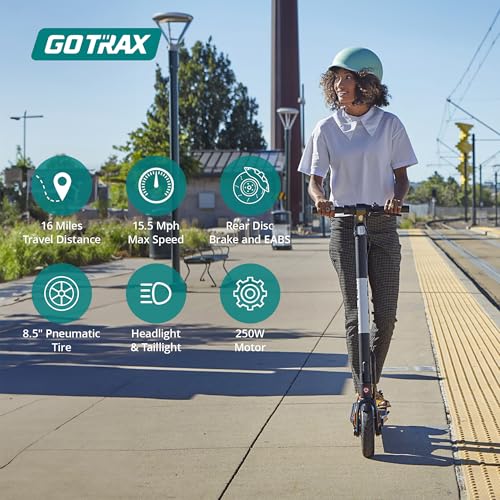

The Gotrax XR Elite is a foldable commuter scooter designed for short urban trips, daily errands, and last-mile travel. Its 36V 7.8Ah battery delivers a claimed range of up to 16 miles under suitable riding conditions, while the 250W motor reaches a top speed of 15.5 mph.
- Comfortable Tires: The 8.5-inch pneumatic tires help reduce vibration on uneven pavement.
- Reliable Braking: Rear disc braking and EABS provide two forms of stopping support.
- Foldable Frame: The aluminum frame folds for easier transport and compact storage.
- Limited Range: The claimed 16-mile range may be insufficient for longer round trips.
- Modest Motor: The 250W motor may struggle on steep hills or with heavier riders.
- Frequent Tire Care: Pneumatic tires require pressure checks and may be vulnerable to flats.
The GOTRAX XR Elite offers a practical middle ground for riders who want an affordable commuter without moving into the heaviest category. It weighs 32 pounds and folds for storage, making it manageable for occasional stairs and transfers.
GOTRAX lists a 300-watt motor, up to 18.6 miles of range, a 15.5 mph top speed, 8.5-inch tires, a 220-pound payload capacity, and UL 2272 compliance. GOTRAX XR Elite describes a 16-mile range configuration, pneumatic tires, a rear disc brake, electronic braking, and a folding aluminum frame. Differences between retailer and manufacturer range figures make it especially important to confirm the exact version before ordering.
This scooter suits relatively flat routes, campuses, neighborhoods, and station connections. Its pneumatic tires improve comfort but require pressure checks and can puncture. The modest motor is not ideal for repeated steep climbs, yet the overall package balances weight, range, speed, and cost.
3. Segway Ninebot E2 Plus II: Best for Beginners


The Segway Ninebot E2 Plus II is a foldable electric scooter designed for beginners, teenagers aged 14 and older, and adults with short daily commutes. It reaches a top speed of 15.5 mph and offers a claimed range of up to 16 miles in Eco Mode or 12 miles in Sport Mode.
- Beginner-Friendly Controls: Smooth acceleration and simple controls make the scooter easy to operate.
- Low-Maintenance Tires: Inner-hollow tires absorb some vibration without the risk of punctures.
- Certified Electrical System: UL 2272 and UL 2271 certifications provide added safety assurance.
- Long Charging Time: A full charge takes approximately 7.5 hours.
- Limited Rider Capacity: The 198-pound weight limit is lower than many adult scooters.
- Short Sport Range: The claimed range drops to about 12 miles when using Sport Mode.
The Segway Ninebot E2 Plus II is a beginner-friendly choice for short, predictable routes. It emphasizes controlled performance rather than high speed, which can make it easier to learn on than a powerful dual-motor scooter.
The E2 Plus II is rated for up to 16 miles in Eco mode and 12 miles in Sport mode, with a top speed of 15.5 mph. It weighs about 36.2 pounds and uses 8.1-inch inner-hollow tires. Segway states that the model is certified to the UL 2272 standard, it highlights its folding design, battery management, and straightforward controls.
This model works best on smooth, gentle routes for riders who value predictable acceleration and a conservative top speed. At 36.2 pounds, it is manageable for short lifts but less convenient for daily stairs or frequent transit transfers. Its lower power also limits hill performance.
4. Hiboy S2 Pro: Best for Added Range and Power


The Hiboy S2 Pro and S2 Max are commuter-friendly electric scooters built with comfort and quiet performance in mind. Featuring a 500W brushless hub motor, these scooters reach speeds of up to 19 mph with ranges from 25 to 40.4 miles depending on the model. The 10-inch solid tires and rear dual shock absorbers provide a smooth, stable ride while keeping noise levels low, making them some of the quietest electric scooters in their price range. Additional features include a foldable design for portability, ultra-bright headlights for safety, and app connectivity to lock your scooter or customize ride settings.
- Quiet & Smooth Ride: Solid tires with dual rear suspension reduce noise and absorb shocks for comfortable commuting.
- App Connectivity: Hiboy app allows locking, acceleration adjustments, and braking customization.
- Portable Design: Foldable frame makes it easy to carry and store in compact spaces.
- Moderate Speed: Max speed capped at 19 mph, slower than premium models.
- Weight Limit: Supports up to 220 lbs, less than higher-capacity scooters.
- Solid Tires: While maintenance-free, they provide less cushioning than pneumatic tires.
The Hiboy S2 Pro is the most performance-oriented option in this group. Its 500-watt rated motor, 19 mph top speed, and claimed 25-mile maximum range give it more flexibility for longer connections and moderate inclines.
Hiboy lists a 37.4-pound product weight, 10-inch honeycomb tires, rear suspension, a 220-pound load limit, IPX4 water resistance, and a four-to-six-hour charging time.
Its solid honeycomb tires eliminate flats, while rear suspension reduces some vibration. The S2 Pro suits riders who want more speed and battery capacity but carry the scooter only occasionally. At 37.4 pounds, it is a ride-first commuter rather than an ultra-portable model.
What Makes an Electric Scooter Good for the Last Mile?
A good last-mile electric scooter fits the entire journey, including the parts when it is not being ridden. NHTSA notes that e-scooters are often used in dense urban communities for short rides.
Portable Weight
Portability should be judged against the actual routine. Models below approximately 30 pounds are easiest to carry regularly. Scooters in the 30-to-38-pound range work for short lifts but become inconvenient during repeated transfers. Check whether the folded stem locks securely and whether the frame has a comfortable carrying point.
Practical Range, Not Maximum Range
Advertised range is normally measured under controlled conditions. Real-world results change with rider weight, speed, temperature, tire pressure, hills, wind, acceleration, and repeated stops. Segway specifically notes that terrain, rider weight, wind, speed, starts, stops, and ambient temperature can affect range.
Choose enough capacity to complete the round trip while retaining at least 30 percent of the battery under normal conditions. The advertised maximum should never barely match the planned route.
Tires and Ride Comfort
Small wheels react strongly to potholes, expansion joints, gravel, and broken pavement. Larger pneumatic or tubeless tires usually improve comfort and grip because the air chamber absorbs part of the impact. They require pressure maintenance and may puncture.
Solid and honeycomb tires reduce puncture risk and routine tire care. Their disadvantage is a firmer ride. Suspension can help, but it cannot always reproduce the cushioning of properly inflated pneumatic tires.
Route quality should guide the decision. Smooth campuses and bike paths are less demanding. Older city streets usually justify larger tires, pneumatic construction, or effective suspension.
Braking and Visibility
A commuter scooter needs more than a strong motor. It should have a braking system that feels progressive and controllable, not abrupt or delayed. Dual-system designs commonly combine a mechanical brake with electronic or regenerative braking.
Front and rear lights, a brake light, reflectors, and turn signals improve visibility, but they do not replace defensive riding, especially at intersections and in low light.
Electrical Certification
UL 2272 addresses the electrical system of personal e-mobility devices, including the battery, charger, drive system, and related components. UL Solutions explains that the standard was designed to reduce the serious risk of dangerous fires in micromobility products.
Certification does not prove that a scooter has excellent brakes, long range, or durable tires. It indicates that the electrical system has been evaluated against a recognized safety standard. Buyers should verify the certification claim for the exact model and avoid relying solely on vague wording such as “UL tested.”
How to Choose the Right Scooter for a Specific Commute
Start by mapping the complete route. Record the riding distance, steepest hill, roughest pavement, number of stairs, storage space, weather exposure, and time spent carrying the scooter. This produces a more useful answer than comparing motor wattage alone.
Commute type should guide the decision. Riders combining a scooter with train travel should prioritize low weight and compact folded dimensions. For direct three-to-five-mile trips, tire comfort and battery reserve may matter more, while hilly routes require closer attention to motor output, controller tuning, rider weight, and battery voltage.
Check destination policies and local rules before buying. Buildings and transit systems may restrict storage or charging, while speed limits, sidewalk access, helmet requirements, rider ages, and permitted riding areas vary by jurisdiction.
Common Buying Mistakes
The most common mistake is choosing by top speed. A 25 mph scooter may look more capable, but higher speed generally brings more weight, larger batteries, stronger frames, and less convenient carrying. That can work against the purpose of last-mile transportation.
Maximum range is a comparison figure, not a guarantee. Rider capacity also matters because operating near the load limit can reduce acceleration, hill performance, and range.
Cheap replacement chargers are another risk. Use the manufacturer-supplied charger or a replacement specifically approved for the exact scooter and battery system. Battery modifications, mismatched chargers, and damaged packs can create serious hazards.
Water resistance is not waterproofing. Avoid deep puddles, heavy rain, submerged components, and charging a wet scooter.
How to Get Better Range and Longer Service Life
Maintain recommended tire pressure, inspect fasteners, test the brakes, and check tires before commuting. Smooth acceleration and moderate speed conserve energy. Store the scooter in a dry area away from temperature extremes, and never charge a battery that is damaged, unusually hot, swollen, wet, or producing an unfamiliar odor.
Conclusion
The NIU KQi Air is the best last-mile electric scooter for riders who regularly carry their scooter or combine it with public transportation. Its 26.2-pound weight, useful claimed range, pneumatic tires, braking equipment, and commuter features create the strongest portability-to-performance balance.
The GOTRAX XR Elite is a more affordable balanced option, while the Segway Ninebot E2 Plus II suits beginners with short and predictable routes. The Hiboy S2 Pro is better for riders who prioritize power and range over easy carrying.
The correct choice depends on the full commute. Weight, folded size, road quality, hills, battery reserve, braking, and verified electrical certification should be evaluated together. A last-mile scooter succeeds when it remains convenient from the front door to the final destination.
Frequently Asked Questions
What Is a Last-Mile Electric Scooter?
A last-mile electric scooter is a compact personal transportation device designed for short connections between a starting point, transportation hub, parking location, workplace, school, or final destination. It is usually foldable and prioritizes portability, practical range, and urban maneuverability.
How Much Range Is Enough for a Last-Mile Scooter?
Most riders should choose a scooter with a realistic range comfortably above their total round-trip distance. Keeping at least a 30 percent reserve helps account for hills, cold weather, rider weight, stops, wind, and battery aging.
What Is the Best Scooter for Combining With a Train or Bus?
A scooter under about 30 pounds is usually best for frequent transit transfers. The NIU KQi Air stands out because it weighs 26.2 pounds while retaining a full-size deck, pneumatic tires, and a substantial claimed range.
Are Solid or Pneumatic Tires Better for Commuting?
Pneumatic tires generally provide better comfort and grip on rough streets, but they need pressure checks and can puncture. Solid tires require less maintenance and cannot go flat, although they usually create a firmer ride.
Is UL 2272 Certification Important for an Electric Scooter?
Yes. UL 2272 evaluates the electrical system of personal e-mobility devices against established safety requirements. Buyers should still assess braking, mechanical quality, tires, and manufacturer support because electrical certification does not measure every aspect of scooter performance.