Can You Overcharge an Electric Scooter?
*We may earn a commission for purchases made using our links. Please see our disclosure to learn more.
Electric scooters rely on rechargeable lithium-ion batteries that are designed to accept hundreds of charging cycles. However, because these batteries store a significant amount of energy in a compact space, charging them incorrectly can shorten their lifespan and, in rare cases, create a serious fire hazard.
So, can you overcharge an electric scooter?
A properly functioning modern electric scooter generally cannot be overcharged in the traditional sense. Its battery management system, or BMS, should stop or greatly reduce charging once the battery reaches its maximum safe voltage. Some models include protection against overcharging, overheating, excessive current, short circuits, and excessive discharge.
That does not mean you should leave an electric scooter connected to a charger indefinitely. A damaged battery, incompatible charger, defective BMS, poor-quality electrical system, or unsafe charging environment can still cause overheating or thermal runaway. Even when no immediate safety incident occurs, repeatedly keeping a lithium-ion battery at 100% charge for extended periods may contribute to faster long-term degradation.
“Always be present when charging micromobility products. Never charge them while sleeping or when you are not at home.”
— U.S. Consumer Product Safety Commission
Key Takeaways
- A modern electric scooter’s battery management system should stop the battery from continuing to charge beyond its safe voltage.
- Leaving a scooter plugged in for a short time after it reaches 100% is not usually the same as forcibly overcharging the battery.
- You should still unplug the scooter when charging is complete unless the manufacturer specifically instructs otherwise.
- Never charge an electric scooter while sleeping, away from home, or unable to monitor it.
- Use only the charger supplied or specifically approved by the scooter manufacturer.
- Stop charging immediately if the battery, charger, cable, or charging port becomes unusually hot, swollen, damaged, noisy, or produces an unusual smell.
- Look for a scooter certified to an appropriate electrical safety standard, such as UL 2272, but remember that certification does not replace safe charging habits.
4 Electric Scooters Worth Considering
Specifications, prices, warranties, and included accessories may vary by retailer and model version. Before purchasing, confirm that the exact scooter includes the advertised safety certification, original charger, manufacturer warranty, and suitable return coverage.
1. Segway Ninebot MAX G3: Best for Longer Commutes


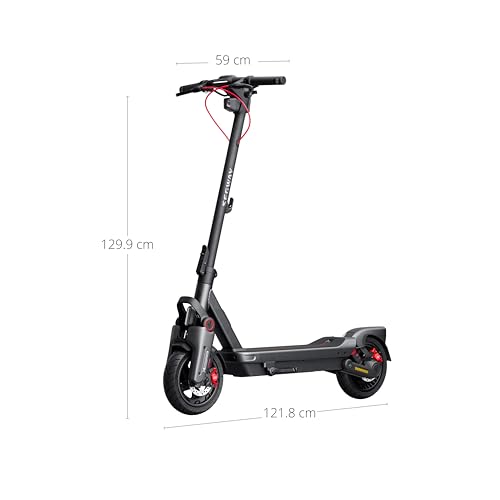
The Segway Ninebot Max G3 is one of the quietest electric scooters designed for riders who value both silence and performance. Featuring a powerful 2000W peak motor, a top speed of 28 mph, and a max range of 50 miles, this scooter delivers smooth, noise-free rides perfect for city commutes or long-distance travel. With dual hydraulic suspension, advanced stability systems, and self-sealing 11-inch tires, the G3 ensures comfort and safety while keeping road noise at a minimum. Its fast charging system (3.5 hours standard, 2.5 hours with optional DC charger) makes it ideal for daily use. Certified under UL-2272 safety standards, it’s a reliable option for adults and teens seeking premium quality and peace of mind.
- Quiet Ride: Low-noise motor and smooth suspension make it one of the quietest electric scooters for urban commutes.
- Long Range: Up to 50 miles per charge, ideal for extended rides without frequent recharging.
- Comfort & Stability: Dual hydraulic suspension and self-sealing tires absorb shocks for a smoother, quieter journey.
- Premium Price: Higher cost compared to entry-level scooters.
- Heavy Frame: Weighs more than lightweight commuter models, less portable.
- Non-Returnable: Limited return options due to hazardous material regulations.
The Segway Ninebot MAX G3 is a strong option for riders who prioritize comfort, range, and everyday commuting performance. It features a 551Wh battery, dual suspension, a listed maximum speed of 22 mph, self-healing tubeless tires, and UL 2272 certification.
The larger battery provides greater riding range than many basic commuter scooters, but it also requires a longer charging session. Owners should use the built-in or manufacturer-approved charging system, monitor the scooter while it charges, and disconnect it once charging is complete.
Best for: Longer urban commutes and riders who want suspension
Consideration: Heavier and less convenient to carry upstairs
2. NIU KQi3 Pro: Best Balance of Power and Portability


The NIU KQi3 Pro Electric Scooter is designed for urban commuters who want a reliable, smooth, and efficient ride. With a 31-mile range and a top speed of 20 mph, this scooter balances performance with practicality. Its foldable frame makes it easy to carry and store, while the pneumatic tires ensure a comfortable ride on various terrains. Whether you're heading to work or cruising around town, the KQi3 Pro delivers a dependable and enjoyable experience.
- Long Range: Travels up to 31 miles on a single charge, ideal for daily commuting.
- Smooth Ride: Pneumatic tires and ergonomic grips provide comfort on different surfaces.
- Portable Design: Foldable frame allows for easy storage and transport.
- Limited Speed: Maxes out at 20 mph, which may feel slow for some riders.
- Fixed Handlebar: Lacks height adjustability for personalized comfort.
- Mixed Reviews: Some users report durability concerns over time.
The NIU KQi3 Pro combines front suspension, a 500W rated motor, up to 1,000W peak output, 10.5-inch tires, app connectivity, and a manufacturer-listed maximum range of 37.3 miles. NIU also identifies the model as UL 2272 certified.
Its performance may suit riders who need more hill-climbing ability than an entry-level commuter scooter can provide. Always use the charger designed for the exact KQi model rather than assuming chargers from other NIU scooters are interchangeable.
Best for: Hilly commutes and riders seeking midrange performance
Consideration: Real-world range will generally be lower than the maximum advertised figure
3. GOTRAX G4: Best-Value Commuter


The Gotrax Electric Scooter for Adults is a powerful, long-range commuting scooter designed for daily travel and delivery services. Featuring a 500W motor, it can reach speeds of up to 20 mph and cover a maximum range of 42 miles (depending on the model). Its 10" pneumatic tires provide excellent stability and shock absorption, ensuring a smooth ride on different terrains. The scooter also boasts a removable 36V 10.4AH battery that offers great value for extended usage, and it includes safety features such as an electric code lock and a cable lock for easy security. With its foldable design, digital display, and LED lights, the Gotrax electric scooter makes commuting or delivery tasks more convenient and efficient.
- Long range: Up to 42 miles on a single charge, making it ideal for long-distance travel and delivery.
- Powerful motor: The 500W motor allows for smooth acceleration and a top speed of 20 mph.
- Pneumatic tires: 10" pneumatic tires offer better stability, comfort, and shock absorption, especially on rough roads.
- Weight: It weighs 36 lbs, which may be heavy for some users to carry.
- Charging time: A full charge can take several hours, which might not be ideal for high-frequency use.
- Price: On the higher end for budget-conscious buyers, especially for the longer-range models.
The GOTRAX G4 is positioned as a practical commuter scooter with a 500W motor, a listed top speed of 20 mph, 10-inch pneumatic tires, and a battery designed for moderate everyday journeys. GOTRAX lists the G4 as compliant with UL 2272.
The G4 may appeal to buyers who want a straightforward commuter model without moving into premium scooter pricing. Before purchasing, verify that the original charger is included and that the scooter is covered by the manufacturer’s warranty.
Best for: Everyday commuting on a moderate budget
Consideration: Pneumatic tires require regular pressure checks and can puncture
4. GOTRAX GMAX Ultra: Best for Extended Commuter Range


The Gotrax Gmax Ultra is a premium commuting scooter built for riders who want long-distance performance and quiet operation. Powered by a 500W motor with a 20 mph top speed and up to 45 miles of range, this model is designed for serious daily commuters. Its 10-inch pneumatic tires absorb road vibrations, reducing noise for smoother, quieter rides. Featuring a UL-2272 certified LG battery, cruise control, and a digital display, it’s both safe and easy to operate. Added anti-theft protections, including an electric code lock and built-in cable lock, make it a reliable choice for urban riders.
- Quiet & Smooth Ride: Pneumatic tires and stable frame reduce noise and vibration, making it one of the quietest electric scooters in its class.
- Long Range: Up to 45 miles per charge with a high-quality LG battery.
- Security Features: Built-in electric code lock and cable lock for double anti-theft protection.
- Heavier Build: Less portable compared to smaller commuter scooters.
- Moderate Speed: Capped at 20 mph, slower than some higher-end models.
- Tire Maintenance: Pneumatic tires require regular inflation to maintain performance.
The GOTRAX GMAX Ultra is a longer-range alternative within the brand’s commuter lineup. The manufacturer lists the model as compliant with UL 2272, making it worth considering for riders who need more battery capacity for longer daily journeys.
A larger battery provides additional range, but it also takes longer to recharge and adds weight to the scooter. Owners should avoid beginning a long charging session late at night when it may continue after they have gone to sleep.
Best for: Riders who need more range than a basic commuter scooter
Consideration: The larger battery increases both the scooter’s cost and weight
What Does Overcharging an Electric Scooter Mean?
Overcharging occurs when electrical energy continues to enter a battery after its cells have reached their safe maximum voltage.
Lithium-ion cells must operate within a controlled voltage range. If a cell is pushed beyond its maximum voltage, its internal chemistry can become unstable. This can increase heat, accelerate deterioration, cause swelling, damage internal separators, or contribute to thermal runaway.
Thermal runaway is a condition in which a battery cell produces heat faster than it can release it. The increasing temperature can trigger further internal reactions, potentially resulting in smoke, fire, or an explosion. UL Solutions identifies improper charging, environmental abuse, and physical damage as conditions that may compromise lithium-ion batteries and increase thermal-runaway risk.
In a properly designed electric scooter, several components work together to prevent this:
- The charger supplies the required voltage and current.
- The battery management system monitors the battery cells.
- Temperature sensors detect abnormal heat.
- Protective circuitry limits or disconnects charging under unsafe conditions.
- The charger reduces or stops current when the battery reaches its charging limit.
For example, Segway lists overcharge, over-discharge, overheating, short-circuit, and overcurrent protection as battery-management features on certain electric scooter models.
Can a Modern Electric Scooter Actually Be Overcharged?
Under normal conditions, a well-designed scooter using its original charger should not continue forcing full charging current into the battery after it reaches its maximum level.
The charging process usually occurs in stages. During the main portion of charging, the charger provides relatively steady current. As the battery approaches full capacity, the charger holds the voltage near its maximum while the current gradually decreases. The battery management system monitors individual cell groups and may balance their voltages before ending the charge.
Once the battery is full, the charger normally stops or reduces the current to a very low level. This is why a charger’s indicator commonly changes from red to green.
However, the word “normally” matters. The protection system may not work correctly when:
- The battery management system is damaged.
- The charger has the wrong voltage or current specifications.
- A generic or universal charger is used.
- The charging connector has been modified.
- Water has entered the battery or charging port.
- The battery has experienced a severe impact.
- The cells are defective, damaged, or poorly manufactured.
- The scooter uses uncertified or counterfeit electrical components.
- The battery has been rebuilt with incompatible cells.
- The scooter is charged outside its permitted temperature range.
The Consumer Product Safety Commission warns that even a seemingly functional battery can create a fire risk when paired with an incompatible charger. It advises owners to use the charger supplied with the device or a replacement confirmed as compatible by the manufacturer.
Is It Safe to Leave an Electric Scooter Charging Overnight?
It is not recommended.
Many scooter owners assume that built-in protection makes overnight charging harmless. A functioning battery management system certainly reduces risk, but it cannot guarantee that every battery, charger, outlet, cable, and sensor will work perfectly during every charging session.
The CPSC specifically advises consumers to remain present while charging micromobility products and not to charge them while sleeping or away from home. It also recommends unplugging the device when charging is complete.
Overnight charging is concerning because:
- A developing problem may go unnoticed for several hours.
- People may be asleep before detecting heat, smoke, odors, or unusual noises.
- A scooter may be charging near an exit, blocking an escape route.
- Flammable objects may be stored beside or above the scooter.
- Extension cords or overloaded power strips may add electrical risk.
- A pet, child, or moving object may damage or loosen the charging cable.
Charge the scooter while you are awake and able to check it periodically. Set a phone alarm based on the manufacturer’s estimated charging time, and disconnect it once the charger indicates completion.
What Happens If You Leave an Electric Scooter Plugged In?
Leaving a healthy scooter connected for an extra 20 or 30 minutes will not ordinarily cause immediate damage. Some manufacturers may even instruct owners of particular models to leave the charger connected briefly after the indicator turns green so that cell balancing can finish.
For example, Segway provides troubleshooting guidance for one model that instructs the owner to leave it connected for an additional 30 minutes after the charging indicator turns green to complete cell balancing. This is model-specific advice and should not be treated as a general instruction for every scooter.
Leaving a scooter connected for days is different. Although the charger may no longer be supplying meaningful current, the battery remains at or near its highest state of charge. Lithium-ion batteries generally experience more chemical stress when they spend long periods completely full, especially in warm conditions.
NIU’s battery-care guidance recommends avoiding extended periods at 100% and describes charging to approximately 80% to 90% for everyday riding as a practical approach, with full charging reserved for longer trips.
The practical rule is simple: charge the scooter when needed, allow the charge to finish, and unplug it when done.
Does Overcharging Damage Electric Scooter Battery Life?
Actual electrical overcharging can severely damage a battery. Even without true overcharging, consistently keeping the battery at maximum charge can contribute to gradual capacity loss.
Battery aging is affected by several factors:
Time spent at 100%
A battery stored fully charged for long periods experiences greater voltage-related stress than one stored at a moderate charge.
High temperatures
Heat accelerates chemical reactions inside lithium-ion cells. Charging a hot scooter immediately after a demanding ride may expose the battery to unnecessary stress.
Frequent deep discharge
Regularly running the battery completely flat can also shorten its useful life. Lithium-ion batteries generally perform better when they are not repeatedly taken from 100% to 0%.
Charging speed
Faster charging produces more heat than slower charging. Use only a fast charger that the manufacturer officially supports for your exact model.
Storage habits
Leaving a scooter fully charged or completely empty for several months can accelerate deterioration. Follow the manufacturer’s storage-charge recommendation. Segway, for example, recommends maintaining at least approximately 60% charge during extended winter storage for certain scooters.
How Long Should You Charge an Electric Scooter?
Charging time depends on battery capacity, charger output, battery temperature, remaining charge, and cell-balancing requirements.
Small commuter scooters may require approximately three to five hours, while long-range models with larger battery packs may need six to ten hours. Some high-capacity scooters take even longer when used with a standard charger.
The owner’s manual should be your primary reference. Do not assume that a larger charger from another scooter will reduce charging time safely.
A scooter that normally charges in five hours but suddenly takes ten hours may have:
- A failing charger
- A loose connection
- Damaged battery cells
- A battery-temperature issue
- A charging-port problem
- A malfunctioning battery management system
Similarly, a battery that reaches “full” unusually quickly but delivers very little range may have lost capacity or developed an internal imbalance.
The Safest Way to Charge an Electric Scooter
1. Allow the scooter to cool down
After a long ride, park the scooter and allow the battery and motor area to return to a normal temperature before charging. Do not place a hot scooter immediately on charge.
2. Inspect the scooter and charger
Check the cable, connector, charger housing, charging port, and visible battery compartment. Do not charge the scooter if you notice cracks, exposed wire, burn marks, corrosion, melted plastic, swelling, or signs of water entry.
3. Charge in a suitable location
Choose a dry, ventilated area away from direct sunlight, heaters, combustible materials, and escape routes. Do not charge on a bed, sofa, carpet pile, or other surface that can trap heat.
4. Use the original charger
Match the scooter with the charger supplied by its manufacturer. If a replacement is necessary, obtain the exact approved model or written compatibility confirmation from the manufacturer.
A connector that physically fits does not prove electrical compatibility. Two chargers may use the same plug while supplying different voltage, polarity, current, or communication signals.
5. Connect it correctly
Follow the order stated in the manual. Many manufacturers advise connecting the charger to the scooter first and then connecting the charger to the wall outlet, although instructions can vary.
6. Monitor the first few minutes
Check that the charger indicator behaves normally and that the connector is firmly seated. Listen for unusual crackling, popping, buzzing, or hissing.
7. Check it periodically
You do not need to stare at the scooter continuously, but remain nearby and check it during charging. Stop if the charger, port, deck, or battery becomes excessively hot.
8. Disconnect it when complete
When the manufacturer’s indicator shows a complete charge, unplug the charger according to the manual. Do not leave the scooter connected indefinitely as a matter of routine.
Warning Signs of a Dangerous Scooter Battery
Stop using and charging the scooter if you notice:
- Battery swelling or a deck that appears distorted
- A chemical, metallic, sweet, or solvent-like odor
- Hissing, popping, or crackling sounds
- Smoke or vapor
- Melted plastic or scorched connectors
- A charger that becomes unusually hot
- Intermittent charging when the cable moves
- Rapid battery heating
- A battery that will not charge
- A battery that loses power unusually quickly
- Visible water damage
- Damage following a crash, drop, or impact
UL guidance identifies swelling, heat, smoke, electrolyte odor, hissing, crackling, popping, and inability to accept or deliver power as possible signs of battery damage.
Do not open, puncture, compress, or attempt to repair a damaged lithium-ion battery yourself. Move away from a smoking or actively failing battery, warn others, call emergency services, and follow local fire-department instructions.
What Does UL Certification Mean for Electric Scooters?
UL 2272 is a safety standard for the electrical systems of personal e-mobility devices, including stand-up electric scooters. Testing evaluates the electrical drive system, battery system, charger combination, and related safeguards against hazards such as fire and electric shock.
UL 2271 applies specifically to batteries used in light electric vehicle applications. The two labels are related but not interchangeable: UL 2272 covers the scooter’s broader electrical system, while UL 2271 addresses the battery pack.
Certification cannot make a battery indestructible or compensate for misuse. However, it is more meaningful than an unsupported statement such as “tested for safety.” UL advises buyers to look for the UL Mark and verify a product’s certification using its identifying information.
Final Verdict: Can You Overcharge an Electric Scooter?
A properly operating electric scooter with the correct charger and a functioning battery management system should stop accepting normal charging current when the battery reaches its safe limit. Therefore, briefly leaving it plugged in after the indicator turns green is unlikely to create traditional overcharging.
However, no protection system should be treated as infallible. A defective battery, damaged charging port, counterfeit charger, incompatible replacement, poor-quality electrical system, excessive heat, or water damage can bypass the conditions under which those protections are expected to work.
The safest approach is to use an appropriately certified scooter, charge it with the original or manufacturer-approved charger, remain present, keep it away from flammable materials and exits, and unplug it when charging is complete.
Frequently Asked Questions
1. Can I leave my electric scooter plugged in after it reaches 100%?
Leaving it connected briefly will not normally force additional charging into a healthy battery because the charging system should stop or reduce current. Nevertheless, unplug it when complete unless the manufacturer gives model-specific instructions to leave it connected temporarily for balancing.
2. Is it okay to charge an electric scooter overnight?
No. The CPSC recommends that people remain present while charging micromobility products and never charge them while sleeping. Charge the scooter during waking hours in a dry, ventilated location.
3. Should I charge my electric scooter after every ride?
Not necessarily. Charge it when you need additional range rather than automatically topping it up after every short journey. Avoid regularly draining it completely, but also avoid leaving it at 100% for long periods when the full range is unnecessary.
4. Can I use a universal charger for my electric scooter?
Do not use one unless the scooter manufacturer has explicitly confirmed compatibility. The connector shape alone is not enough. The charger must match the required voltage, current, polarity, communication system, and battery chemistry. The CPSC has specifically warned against incompatible universal micromobility chargers.
5. Why does my electric scooter charger stay green?
A green light may mean the battery is full, the charger is not properly connected, the battery is too hot or cold, the charging port is damaged, or the battery is not accepting a charge. Check the manual, reconnect the charger, inspect the cable and port, and contact the manufacturer if the scooter remains uncharged. Do not attempt to bypass the battery management system.