Widoway Electric Scooter Guide
*We may earn a commission for purchases made using our links. Please see our disclosure to learn more.
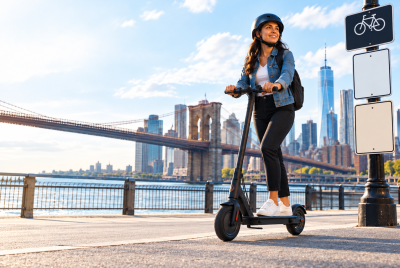
Electric scooters have become a practical option for short trips, neighborhood travel, and daily commuting. They offer a compact alternative to larger vehicles and can help riders cover routine distances without dealing with fuel, parking, or crowded public transportation. Among the newer options attracting attention, the Widoway Electric Scooter is positioned as a portable commuter model designed around straightforward controls, moderate speed, and convenient folding.
The Widoway Electric Scooter is best viewed as an everyday mobility product rather than a high-performance recreational machine. Its compact frame, solid tires, digital controls, and folding design support regular transportation. Depending on the selected configuration, it may include a 350W or 500W motor, app connectivity, cruise control, and dual braking. Buyers should confirm the selected variation because speed, range, motor output, and weight capacity can differ.
“Use micromobility devices and batteries that have been designed, manufactured, and certified for compliance with applicable voluntary safety standards.”
Source: U.S. Consumer Product Safety Commission.
Key Takeaways
- The Widoway Electric Scooter is designed mainly for commuting, errands, campus travel, and short recreational rides.
- A 500W DY8501 configuration is advertised with speeds of up to 17 to 20 mph and a claimed range of 17 to 21 miles.
- Its 8.5-inch solid tires reduce the risk of flats, although they may feel firmer on cracked pavement.
- Folding construction, app functions, cruise control, and a digital display support everyday convenience.
- Real-world speed and range depend on rider weight, hills, temperature, riding mode, and road conditions.
Featured Widoway Electric Scooters
Widoway DY8501 Electric Scooter


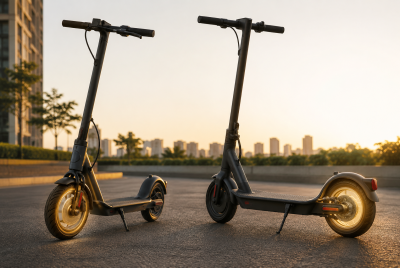
The Widoway DY8501 Electric Scooter is a lightweight and foldable commuter scooter designed for adults who need a convenient option for short trips and everyday urban travel. Its 500W motor can reach speeds of up to 17 to 20 mph, depending on rider weight, road conditions, and terrain. The lithium-ion battery provides a claimed travel range of approximately 19 to 21 miles and takes around five to six hours to charge.
The Widoway DY8501 is a foldable adult electric scooter built for commuting, short errands, and everyday urban transportation. It features a 500W motor capable of reaching advertised speeds of up to 17 to 20 mph under suitable riding conditions. Its lithium-ion battery provides a claimed range of approximately 19 to 21 miles, although actual performance depends on rider weight, terrain, riding speed, temperature, and road conditions.
- Strong Motor: The 500W motor supports daily commuting and moderate inclines.
- Easy Portability: The lightweight frame folds quickly for transport and storage.
- Smart Controls: The app provides access to locking, lights, gears, speed settings, and cruise control.
- Firm Ride: Solid tires may feel less comfortable on cracked or uneven roads.
- Variable Range: Actual distance depends on rider weight, speed, hills, and surface conditions.
- Limited Hill Performance: Steeper or longer inclines may reduce speed and battery range.
What Is the Widoway Electric Scooter?
The Widoway Electric Scooter is a foldable personal mobility device built for one rider. It uses an electric motor and rechargeable lithium-ion battery to provide powered transportation over short to moderate distances. The rider stands on the deck, steers through the handlebar, and controls acceleration and braking from the grips.
Its design focuses on accessibility. The scooter does not require advanced experience, but new riders still need time to learn balance, braking distance, turning response, and speed control. Its compact format may suit apartments, workplaces, vehicle storage, and public transportation connections.
The DY8501 platform appears in more than one configuration. Motor wattage, range, maximum speed, and capacity should therefore be confirmed on the selected product page and packaging.
Design and Portability
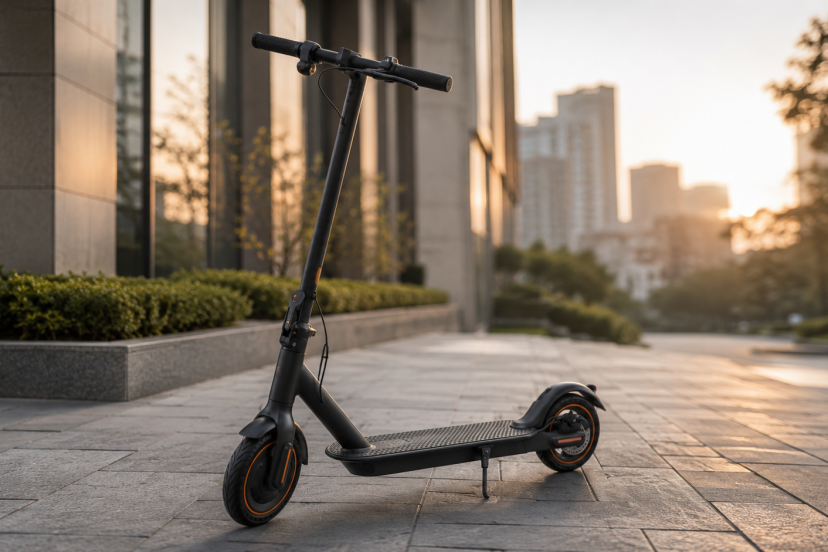
The Widoway Electric Scooter uses a conventional upright frame with a standing deck, narrow stem, front and rear wheels, and a folding joint near the base of the steering column. The listed frame material for one 500W version is aluminum.
At about 26 pounds for that configuration, it may be manageable for short carries, although stairs can still be tiring. Before riding, the folding stem should be fully raised, the latch secured, and any unusual movement investigated.
The ability to fold the scooter may be especially useful for riders with limited storage space. It can fit more easily into a vehicle, apartment, office corner, or storage area than a full-size bicycle. However, the folded measurements should still be checked when storage space is particularly limited.
Portability is not only about weight. The balance of the frame, the position of the folding latch, and the comfort of the carrying point also affect how easy the scooter is to move while folded.
Motor Power and Performance
The 500W configuration offers advertised power for typical urban travel, including flat streets, gentle inclines, and stop-and-go riding. It is intended for practical commuting rather than extreme speed or off-road use.
Maximum speed is advertised at approximately 17 to 20 mph. That is fast enough to require protective equipment and careful speed management. New riders should begin in the lowest mode and practice in an open, traffic-free area.
Hill performance depends on motor output, rider weight, charge level, slope, wind, temperature, and road surface. The scooter may slow down and consume power more quickly on longer inclines. A wattage figure alone cannot guarantee identical performance in every environment.
Acceleration may also feel different as the battery level decreases. A fully charged scooter may respond more strongly than one approaching the end of its available range. Riders should leave enough power for the return journey rather than assuming performance will remain constant until the battery is empty.
Battery Range and Charging
The 500W Widoway DY8501 is advertised with a range of 17 to 21 miles. Real-world distance may be lower because frequent acceleration, top-speed riding, steep hills, heavier loads, cold weather, and rough pavement require more energy.
Daily riders should plan around a conservative range rather than the maximum estimate. A reasonable battery reserve reduces the chance of losing power before reaching the destination.
For example, a rider with a relatively short round-trip commute may have more flexibility than someone planning a journey close to the full advertised distance. Repeated stops, traffic lights, and inclines can use more battery power than a continuous ride on flat pavement.
Charging time is listed at approximately five hours. The original charger should be used in a dry, ventilated area away from flammable materials. After a hot ride, the scooter should be allowed to cool before charging.
The charger, cable, and charging port should be inspected regularly. Charging should stop if the charger becomes damaged, produces unusual odors, makes unexpected sounds, or becomes excessively hot.
Solid Tires and Ride Comfort
The 8.5-inch solid honeycomb tires are among the scooter’s most practical features. They do not depend on air pressure, so they avoid ordinary punctures and pinch flats. This reduces maintenance for riders who travel through areas where road debris is common.
The tradeoff is comfort. Air-filled tires absorb some vibration, while solid tires transmit more of the road surface into the deck and handlebar. Smooth pavement may feel predictable, but cracks, potholes, and rough asphalt can create a firmer ride.
Solid tires may be a sensible choice for riders who place convenience and puncture resistance above maximum cushioning. They eliminate the need to check tire pressure and remove the risk of arriving at a destination with a flat tire.
Riders should scan the route continuously and slow down before uneven sections. Small wheels can react sharply to potholes, raised edges, gravel, and wet leaves. A slightly longer route with smoother pavement may be safer than the shortest path.
Wet surfaces require additional care. Solid tires can provide consistent maintenance-free operation, but available traction may still decrease in rain or on painted road markings, metal covers, leaves, and loose debris.
Braking System
The listed system combines electronic braking with a rear braking mechanism. Dual braking can provide more controlled stopping than a single system, but performance still depends on technique, surface conditions, and maintenance.
Brakes should be tested at low speed before each trip. Delayed response, rubbing, unusual sounds, or a loose lever should be addressed before riding. Riders should keep both hands on the handlebar, bend their knees slightly, and brake smoothly.
Stopping distance increases on wet roads, loose surfaces, and downhill sections. The scooter’s maximum speed may not be appropriate for every environment.
Riders should also avoid following vehicles, bicycles, or other scooters too closely. Leaving additional stopping space provides more time to react when another road user changes direction or stops unexpectedly.
Smart App, Display, and Cruise Control
The smart app may provide access to speed information, riding modes, lighting, locking functions, or cruise-control settings, depending on the product version and software. The digital display provides basic information without requiring a phone during the ride.
Riders should learn the physical power, throttle, brake, and mode controls before leaving home. Phone use while moving should be avoided.
Cruise control can reduce thumb fatigue on long, uninterrupted paths, but it is less appropriate in crowded areas. Riders should understand how it activates and disengages before using it.
The display should be checked before starting a trip. Battery level, selected riding mode, lights, and warning indicators can provide useful information about whether the scooter is ready for use.
App-based locking features may discourage casual movement of the scooter, but they should not replace a physical lock when the scooter is left unattended. Electronic locking may prevent normal motor operation without physically securing the scooter to a fixed object.
Electric Scooter Safety
This guidance matters because an electric scooter contains a battery, charger, controller, wiring, and motor that operate together. Safety claims should be reviewed carefully and certification details confirmed when possible.
A certification logo in marketing should not automatically be treated as proof that every variation has been tested as a complete system. Buyers should examine the exact model number and certification information instead of relying only on general statements made about the brand.
The scooter should also be charged only with the supplied or approved charger. A charger that physically fits the port may still provide the wrong voltage or charging behavior.
Who Is It Best For?
The Widoway Electric Scooter may suit adults who need a compact option for short daily trips. It can be practical for commuting to a nearby workplace, traveling around a campus, reaching local stores, or completing the first and last part of a transit journey.
It may also appeal to riders who prioritize low tire maintenance. Solid tires remove the need to monitor air pressure or repair common punctures, while the folding frame supports storage in limited spaces.
The scooter may work particularly well for riders whose routes are mostly flat, paved, and reasonably smooth. A predictable daily distance also makes it easier to determine whether the battery range is sufficient.
It may be less suitable for badly damaged roads, long-distance routes, steep hills, or riders who want a highly cushioned ride. It is designed for one rider and should not carry a passenger.
Anyone who needs to lift the scooter frequently should also consider the approximately 26-pound listed weight. While relatively portable, it may still feel heavy during long carries.
Setup Before the First Ride
After unboxing, packaging materials should be removed and the handlebar installed according to the instructions. Every fastener, the folding latch, brake lever, throttle, display, lights, and tires should be inspected.
The battery should be charged with the supplied charger. Riders should learn the controls before moving because some scooters require a kick start before the motor engages.
The first practice session should take place on a flat, dry surface away from traffic. Starting, turning, slowing, and emergency braking should be practiced at low speed. A properly fitted helmet should be worn from the first ride.
The rider should practice looking over each shoulder without sharply turning the handlebar. This helps prepare for checking traffic while maintaining a steady path.
Foot placement also affects stability. Both feet should remain securely on the deck while the scooter is moving. Bags and other objects should not be hung from the handlebar because they can interfere with steering.
Maintenance and Battery Care
Solid tires reduce maintenance, but they do not make the scooter maintenance-free. Dirt should be wiped from the frame and deck, while the folding mechanism should remain clear of debris. High-pressure water should not be used around electrical components.
Road vibration can loosen fasteners. The stem, handlebar, wheels, fenders, brakes, and folding hardware should be checked regularly. Changes in steering or stopping performance should be investigated immediately.
The battery should be stored in a cool, dry location and protected from extreme temperatures. It should not remain completely empty for long periods. Only the charger specified for the model should be used.
The scooter should not be stored outdoors where rain, humidity, direct sunlight, or extreme temperatures can affect the frame, electronics, battery, and display.
A quick inspection before every ride can prevent minor problems from becoming more serious. The rider should look for damaged cables, loose parts, unusual tire wear, brake problems, and cracks around the folding mechanism.
Advantages and Limitations
The Widoway Electric Scooter combines a foldable frame, practical motor output, app functions, and puncture-resistant tires in a commuter-friendly format. Its compact size may simplify storage, while solid tires reduce puncture concerns.
The tradeoffs include a firmer ride on broken pavement and range that may fall below the maximum estimate. Buyers should consider route quality, carrying needs, rider weight, hills, charging access, warranty coverage, return terms, and replacement-part availability.
Its moderate speed may be suitable for ordinary local travel, but riders should not treat the maximum speed as a target for every trip. Conditions should determine riding speed.
The scooter’s value will depend on how closely its features match the intended route. A compact scooter can perform well on smooth urban streets while feeling less comfortable on roads filled with cracks and potholes.
Important Buying Considerations
Before purchasing, confirm the motor version, rider limit, speed, range, charging time, tire type, warranty, and return policy. Product pages may group multiple configurations together, so the selected option matters.
The route should influence the decision. Smooth, mostly flat streets are better suited to a compact solid-tire scooter than roads with deep potholes, loose gravel, or steep hills. Anyone who must carry the scooter should consider its full weight and folded dimensions.
Replacement parts and customer support should also be considered. Brake components, chargers, tires, displays, and folding hardware may eventually require service or replacement.
Local rules should be checked before riding. Speed limits, sidewalk restrictions, helmet requirements, lighting rules, and minimum rider ages vary by location. Some paths or roads may prohibit motorized scooters even when nearby areas allow them.
Conclusion
The Widoway Electric Scooter offers a straightforward combination of portability, moderate motor power, solid tires, digital controls, and commuter-focused features. The 500W DY8501 configuration is advertised for short to moderate trips, with speeds of up to 17 to 20 mph and a claimed range of 17 to 21 miles.
Its strongest qualities are convenience and low tire maintenance. The folding frame supports storage, while app controls, cruise control, and dual braking add useful functionality. Its main compromises are the firmer ride of solid tires and the likelihood that real-world range will vary from the maximum estimate.
For riders with smooth routes, realistic distance needs, and safe habits, the Widoway Electric Scooter may provide a practical option for everyday local travel. Careful model selection, regular inspection, proper charging, and protective equipment remain essential.
Frequently Asked Questions
Is the Widoway Electric Scooter suitable for commuting?
Yes. It is designed mainly for short urban trips, campus use, neighborhood travel, and first-mile or last-mile commuting. Route quality, hills, rider weight, and local rules should be considered before relying on it every day.
How fast does the Widoway Electric Scooter go?
One 500W DY8501 configuration is advertised at approximately 17 to 20 mph. Other versions may have lower speed limits, so the selected model should be checked before purchase.
How far can it travel?
The 500W version is advertised with a range of about 17 to 21 miles. Actual distance may be lower because of hills, temperature, rider weight, frequent stops, riding speed, and road conditions.
Does it have puncture-proof tires?
The listed 8.5-inch honeycomb tires are solid and do not require air, so they avoid ordinary punctures. Solid tires generally provide a firmer ride than air-filled tires on damaged pavement.
Can the Widoway Electric Scooter be folded?
Yes. The DY8501 uses a folding stem intended to make storage and transportation easier. The latch should be checked before every ride to ensure that the stem is secure.