Electric Scooters Worth It With High Gas Prices?
*We may earn a commission for purchases made using our links. Please see our disclosure to learn more.
A practical breakdown of the real costs, benefits, and trade-offs for everyday commuters in 2025 and beyond.
Gas prices have a way of making people rethink how they get around. When filling a tank starts feeling like a small bill at a restaurant, alternatives start looking a lot more attractive. Electric scooters have quietly moved from novelty to legitimate commuter tool, and for good reason. The question is not just whether they are cheaper to run, but whether the full picture, from upfront cost to long-term value, makes them a smart investment over riding out the fluctuating fuel market.
This article explores everything a potential buyer needs to know before making that call.
The fuel savings alone are a complete game-changer. For an average city commuter, switching to electric means saving hundreds of dollars every year just by plugging in instead of pumping gas.
– Punk Ride, Electric Scooter vs Gas Scooter: 2026 Guide
Key Takeaways
- A full charge on an electric scooter typically costs under $0.50, compared to $5 to $8 per gas fill-up.
- Electric scooters have significantly lower maintenance costs due to fewer moving parts and no engine oil requirements.
- The average electric scooter pays for itself within 6 to 12 months for regular commuters who previously relied on gas-powered vehicles.
- Most urban electric scooters offer 15 to 40 miles of range per charge, making them ideal for short daily commutes.
- Electric scooters produce zero direct emissions and benefit from expanding low-emission zone policies in major cities.
- The global electric scooter market is booming, signaling better technology, more options, and stronger resale value ahead.
The Gas Price Problem Is Not Going Away
Fuel prices in the United States have become notoriously unpredictable. With gas hovering around $3.50 per gallon on average, drivers are paying between $5 and $8 every time they top up a small scooter tank. Over the course of a year, that adds up to hundreds of dollars just in fuel, before even accounting for oil changes, tune-ups, and the general maintenance burden that comes with a combustion engine.
The appeal of an electric scooter is straightforward: plug it in at home, and the cost of a full charge rarely exceeds $0.50 at average U.S. electricity rates of around 17 cents per kilowatt-hour. On a per-mile basis, that works out to just a few cents, compared to the 10 to 15 times higher cost-per-mile on a gas scooter. For anyone commuting daily, the math shifts quickly in favor of going electric.
Breaking Down the Real Cost of Ownership
Looking at sticker price alone would be misleading. The upfront investment for a quality electric scooter typically falls between $400 and $800 for a mid-range commuter model, with budget options starting around $200 and premium versions climbing past $1,500. Gas scooters can start lower, but entry-level electric models have closed that gap considerably.
Where the difference becomes stark is in ongoing costs. Electric scooters benefit from brilliant mechanical simplicity. There is no engine oil to change, no spark plugs to replace, no fuel filters, and no exhaust system to maintain. Lifetime maintenance costs for an electric scooter tend to land between $100 and $500, covering basics like tires, brakes, and occasional battery checks. A gas scooter, in contrast, demands regular oil changes every 1,000 to 2,000 miles and a cycle of engine-related upkeep that accumulates quickly over time.
Battery replacement is the one notable long-term expense for electric scooters. Most batteries last three to five years or 500 to 1,000 charge cycles, and replacement can cost anywhere from $200 to $500. Factoring this in, the total cost of ownership still typically favors the electric option for riders who use their scooter consistently.
Performance: Where Do Electric Scooters Stand?
One of the most common hesitations about electric scooters is whether they can actually handle a real commute. The honest answer: for urban and suburban riders, yes. Most quality adult electric scooters reach top speeds between 15 and 25 mph, with higher-end models pushing 30 mph or more. That is plenty for city streets, bike lanes, and mixed-use paths.
Range is the more meaningful spec for daily commuters. The majority of mid-range electric scooters deliver 15 to 40 miles per charge, with newer models and larger batteries extending beyond that. For context, the average American commute is well under 20 miles round-trip, meaning most riders can handle a full workweek without a midday recharge.
Gas scooters do offer a range advantage on longer trips, often covering 200 to 300 kilometers on a single tank, and refueling takes minutes at any station. For riders who regularly cover long distances or travel routes without charging infrastructure, a gas model may still be the more practical choice. However, for the majority of urban commuters, range anxiety on a quality electric scooter is largely a solved problem.
Environmental and Regulatory Tailwinds
Beyond the personal financial case, electric scooters benefit from a broader shift in how cities are organizing transportation. Low-emission zones are expanding in metro areas across the country, with gas-powered vehicles facing restrictions or additional fees in certain zones. Electric scooters, in many jurisdictions, receive preferential treatment or are exempt from such restrictions entirely.
The environmental argument is also genuine. Electric scooters produce zero direct emissions. Even when accounting for the carbon involved in electricity generation and battery manufacturing, they carry a substantially smaller environmental footprint than gas alternatives. For riders who care about that dimension, the choice is clear.
Regulatory frameworks are also evolving to accommodate electric scooters more explicitly, with many cities expanding dedicated infrastructure, charging points, and parking options for e-mobility devices.
Who Benefits Most from an Electric Scooter?
The return on investment is strongest for certain rider profiles. Urban commuters with short to medium daily distances, typically under 20 miles round-trip, stand to gain the most from the combination of low running costs, reduced parking stress, and the ability to charge overnight at home. Students, city workers, and anyone navigating stop-and-go traffic will find that the electric scooter’s instant torque and nimble handling make it genuinely enjoyable to ride, not just economical.
Those who should think more carefully include riders in areas without reliable home charging access, anyone who regularly commutes long distances across routes without charging infrastructure, or those who need to carry heavy loads. For these use cases, a gas scooter or alternative vehicle may still make more practical sense.
Top Electric Scooters
For those ready to make the switch, here are four well-regarded electric scooters currently available on Amazon that cover a range of budgets and use cases.
Segway Ninebot E2 Plus Electric Scooter


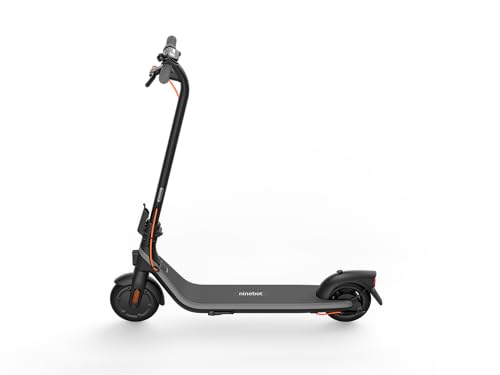
The Segway Ninebot E2 Plus is a sleek and durable electric scooter designed for daily commutes and city rides. Powered by a high-efficiency motor, it reaches speeds of up to 15.5 mph and offers a 15.5-mile range on a single charge. The 8.1-inch shock-absorbing tires provide a stable and comfortable ride, while the foldable frame makes it easy to store and transport. Built with automotive-grade steel, this scooter is engineered for longevity, tested to withstand 3,000 km of riding. The large LED dashboard and 256-color RGB ambient lights add a modern touch, enhancing both style and visibility.
The Segway Ninebot E2 Plus is a budget-friendly, beginner-focused scooter with 8.1-inch shock-absorbing tires for a smooth ride. It offers up to 15.5 miles of range and a top speed of 15.5 mph, making it ideal for short commutes. With intuitive controls, cruise control, and app connectivity, it’s easy to use, while its durable build, UL certification, and RGB lighting add reliability and style.
- Durable Build: Made with automotive-grade steel for long-lasting performance.
- Quick Charging: Fully charges in just a few hours for minimal downtime.
- Stylish Lighting: 256 RGB ambient lights enhance visibility and aesthetics.
- Limited Weight Capacity: Supports up to 198.4 lbs, which may not suit all riders.
- No Front Suspension on Some Models: Only the ES1L variant includes added shock absorption.
- Modest Speed: Max speed of 15.5 mph may not be fast enough for thrill-seekers.
Hiboy S2 MAX Electric Scooter


The Hiboy S2 MAX Electric Scooter caters to the urban commuter seeking a versatile, efficient, and safe mode of travel. With an impressive 40.4-mile range and a top speed of 19 mph, this foldable electric scooter features sturdy 10-inch pneumatic tires, a robust 650W motor, and an array of safety features. Its smart technology integration allows for seamless control and monitoring via a smartphone app.
The Hiboy S2 MAX offers a compelling combination of a 500W motor, 10-inch tires, and an impressive real-world range of up to 40 miles, making it one of the longer-range options available in its price bracket. At around 19 mph top speed, it handles urban commuting comfortably. The folding design keeps it portable enough for multi-modal trips, and the dual braking system provides reliable stopping power. It is consistently well-reviewed for build quality and value, making it a strong pick for riders who want range without a premium price tag.
- Impressive Range: The scooter boasts a 40.4-mile range, ideal for extended rides.
- Safety Features: Equipped with a dual braking system, ensuring reliable stopping power for enhanced safety.
- Smart Integration: The Hiboy app and LED display offer convenient control, locking, firmware updates, and real-time data.
- Weight Limit: With a capacity of 220 pounds, it may be limiting for heavier riders.
- Price Point: Pricier compared to alternatives.
- Tire Maintenance: Pneumatic tires might require more frequent upkeep compared to solid alternatives.
Gotrax G4 Pro Electric Scooter


The Gotrax Electric Scooter for Adults is a powerful, long-range commuting scooter designed for daily travel and delivery services. Featuring a 500W motor, it can reach speeds of up to 20 mph and cover a maximum range of 42 miles (depending on the model). Its 10" pneumatic tires provide excellent stability and shock absorption, ensuring a smooth ride on different terrains. The scooter also boasts a removable 36V 10.4AH battery that offers great value for extended usage, and it includes safety features such as an electric code lock and a cable lock for easy security. With its foldable design, digital display, and LED lights, the Gotrax electric scooter makes commuting or delivery tasks more convenient and efficient.
The Gotrax G4 Pro is a popular mid-range pick that addresses one of the biggest criticisms of base G4 models: it adds front suspension for noticeably smoother rides over uneven pavement. With a 500W motor, 10-inch tires, and a top speed of 20 mph, it stands out from the crowded 15.5 mph field. A textured footplate with strong grip and dual LED lighting round out its commuter credentials. The G4 Pro is available in two colors and regularly cited as a step-up scooter that punches above its price range in comfort and handling.
- Long range: Up to 42 miles on a single charge, making it ideal for long-distance travel and delivery.
- Powerful motor: The 500W motor allows for smooth acceleration and a top speed of 20 mph.
- Pneumatic tires: 10" pneumatic tires offer better stability, comfort, and shock absorption, especially on rough roads.
- Weight: It weighs 36 lbs, which may be heavy for some users to carry.
- Charging time: A full charge can take several hours, which might not be ideal for high-frequency use.
- Price: On the higher end for budget-conscious buyers, especially for the longer-range models.
NIU KQi 300X Electric Scooter


The NIU KQi3 Pro Electric Scooter is designed for urban commuters who want a reliable, smooth, and efficient ride. With a 31-mile range and a top speed of 20 mph, this scooter balances performance with practicality. Its foldable frame makes it easy to carry and store, while the pneumatic tires ensure a comfortable ride on various terrains. Whether you're heading to work or cruising around town, the KQi3 Pro delivers a dependable and enjoyable experience.
The NIU KQi 300X earns consistent praise for offering long-range capability in a lighter, more approachable package than many competitors at its performance level. With a real-world range well-suited to longer urban commutes and a thoughtfully designed folding mechanism, it hits a practical sweet spot for riders who want capability without excessive bulk. NIU’s engineering maturity shows in details like the cable routing, braking system, and overall build consistency. It is a particularly good choice for anyone seeking a scooter with strong resale value and manufacturer credibility behind it.
- Long Range: Travels up to 31 miles on a single charge, ideal for daily commuting.
- Smooth Ride: Pneumatic tires and ergonomic grips provide comfort on different surfaces.
- Portable Design: Foldable frame allows for easy storage and transport.
- Limited Speed: Maxes out at 20 mph, which may feel slow for some riders.
- Fixed Handlebar: Lacks height adjustability for personalized comfort.
- Mixed Reviews: Some users report durability concerns over time.
What to Check Before Buying
A few practical considerations can save a lot of frustration after purchase. Local regulations vary significantly: some cities require registration, insurance, or minimum age thresholds for electric scooters, while others have speed caps or restrict use on certain roads. Verifying local rules before buying is worth the extra ten minutes of research.
Storage and charging access matter too. Riders who can charge at home overnight enjoy the full convenience benefit. Those in apartments without accessible outlets may need to factor in the logistics of hauling a scooter up stairs, or whether public charging points are accessible nearby.
Weight capacity, build quality, and tire type also deserve attention. Riders in heavier body ranges should confirm the scooter’s load rating. Pneumatic tires absorb bumps better but require monitoring for flats, while solid tires are low-maintenance but can feel rough on uneven pavement. A mid-range budget of $400 to $800 generally gets a rider a scooter that handles all of these variables reasonably well.
The Verdict
For most urban and suburban commuters who deal with short to medium daily distances, an electric scooter is a financially sound alternative to gas-powered transport. The combination of near-negligible charging costs, minimal maintenance, and expanding city-level support for electric mobility makes the investment case straightforward. Gas prices will continue to fluctuate, but the cost of electricity remains far more stable and dramatically lower on a per-mile basis. For anyone spending money at the pump every week and traveling under 20 miles a day, switching to an electric scooter is not just worth it. It is one of the more practical financial decisions available in personal transportation right now.
Frequently Asked Questions
How much does it cost to charge an electric scooter?
At average U.S. electricity rates of around 17 cents per kilowatt-hour, a full charge typically costs between $0.10 and $0.50 depending on the scooter’s battery size. That translates to just a few cents per mile, which is dramatically cheaper than gasoline at current prices. Over a full year of regular commuting, most riders spend under $50 on charging.
How long does an electric scooter battery last?
Most electric scooter batteries are rated for 500 to 1,000 charge cycles and typically last three to five years under normal use. A charge cycle is a full deplete-and-recharge sequence. Partial charges are gentler on battery health. Some manufacturers recommend not charging past 80 percent regularly to extend overall battery lifespan. Battery replacement, when it eventually becomes necessary, typically costs between $200 and $500.
Do electric scooters require a license or registration?
This varies by location. In many U.S. cities, electric scooters below certain power and speed thresholds are treated similarly to bicycles and do not require a license or registration. However, some states and municipalities have specific rules, including minimum age requirements, speed caps, and restrictions on where scooters can be ridden. It is important to check local laws before purchasing, as the rules can differ significantly from one city or state to the next.
Is an electric scooter practical for longer commutes?
For commutes under 20 miles round-trip, most mid-range electric scooters handle the task comfortably. For longer distances, higher-capacity models with 30 to 50 miles of range are available but come at a higher price point. Riders covering 30 or more miles daily would need to plan around charging access or consider a model with a removable battery for easier mid-day recharging. Gas scooters still hold a range advantage for extended travel, especially in areas without reliable charging infrastructure.
How do electric scooters compare to electric bikes for commuting?
Electric scooters and electric bikes serve overlapping but distinct use cases. Scooters are generally more compact, lighter, and easier to store or carry on public transit. E-bikes offer greater range, more physical stability at speed, and the option to pedal if the battery runs low. For very short urban commutes and last-mile travel, scooters tend to be more practical. For longer mixed-terrain routes or riders who want the option of exercise, an e-bike may be the better fit. Cost-wise, entry-level options for both categories overlap significantly.