AONIU Electric Scooter: A Complete Guide
*We may earn a commission for purchases made using our links. Please see our disclosure to learn more.
Electric scooters have revolutionized urban commuting, offering an eco-friendly alternative to traditional transportation methods. Among the growing selection of electric scooters available today, AONIU has emerged as a brand delivering accessible performance and practical features for everyday riders. With models designed for various needs, from casual city cruising to more demanding terrain, AONIU scooters combine affordability with functionality.
“Electric scooters have transformed urban mobility by providing an efficient, eco-friendly alternative that combines the convenience of personal transportation with the environmental benefits of electric power.”
— Electric Transportation Research Institute
Key Takeaways
- AONIU electric scooters feature motors ranging from 350W to 800W, offering speeds up to 28 mph depending on the model
- Battery ranges vary from 22 miles to 37 miles on a single charge across different AONIU models
- Most AONIU scooters include dual brake systems, LED lighting, and foldable designs for portability
- The brand offers both seated and standing scooter options with pneumatic tires for enhanced comfort
- AONIU scooters typically support maximum loads between 264-330 lbs, accommodating various rider sizes
- Models feature UL2272 safety certification and integrated battery management systems
Recommended AONIU Electric Scooter
AONIU M4 Electric Scooter for Adults
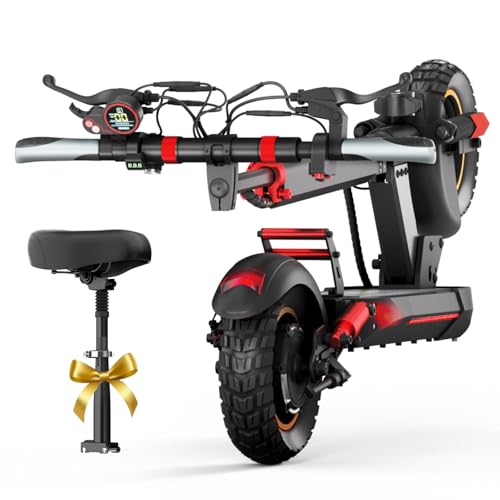
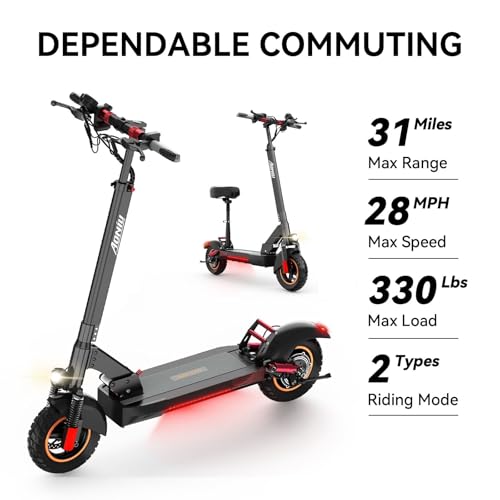

The AONIU Electric Scooter is designed for adults who want speed, comfort, and durability in one reliable ride. Powered by an 800W peak motor, this electric scooter can reach speeds of up to 28 mph under specific conditions, making it ideal for commuting or recreational use. With a long-range battery offering up to 31 miles, riders can enjoy extended trips without frequent recharging.
The AONIU Electric Scooter stands out as a high-value option in the electric mobility market, offering a rare combination of power, range, and durability at an accessible price point. Its 800W peak motor makes it capable of handling slopes and uneven terrain that many entry-level scooters struggle with, while still maintaining smooth and controlled acceleration for city riding.
- Powerful Performance: 800W peak motor delivers strong acceleration and hill-climbing capability.
- Long Travel Range: Up to 31 miles per charge, ideal for commuting and extended rides.
- All-Terrain Comfort: 10-inch pneumatic tires with dual suspension handle rough roads smoothly.
- Charging Time: Requires 4–5 hours for a full charge.
- Weight: Heavy-duty build may feel bulky for frequent carrying.
- Speed Conditions: Maximum speed depends on rider weight, terrain, and riding conditions.
Understanding AONIU Electric Scooters
AONIU has positioned itself in the electric scooter market by offering models that address different riding preferences and requirements. The brand’s lineup includes various configurations designed to meet the needs of urban commuters, recreational riders, and those seeking versatile transportation solutions.
Model Range and Specifications
The AONIU product line features several distinct models, each engineered for specific use cases. The N1 model serves as an entry-level option with a 350W motor capable of reaching speeds up to 22 mph. This compact scooter delivers a maximum range of approximately 22 miles under optimal conditions and supports riders up to 264 lbs. The 8-inch pneumatic tires combine with front and rear suspension to deliver comfortable rides, while the LED display provides real-time information about speed, battery level, and riding mode.
Moving up the performance scale, the M4 model incorporates a more powerful 600W motor in a 48V system. This configuration enables speeds approaching 28 mph with an extended range between 21-31 km per charge. The M4 distinguishes itself with 10-inch off-road pneumatic tires and a detachable seat option, allowing riders to choose between seated and standing positions. The dual disc brake system on both wheels provides reliable stopping power, while integrated headlights and warning tail lights enhance visibility during low-light conditions. With a maximum load capacity of 330 lbs, the M4 accommodates a broader range of riders.
For those requiring even greater capability, the M4-15Ah variant features an 800W brushless motor paired with a larger 15Ah battery. This combination delivers speeds of 25-28 mph and an impressive range of 25-37 miles. The enhanced battery capacity makes this model particularly suitable for longer commutes or extended recreational rides where charging opportunities may be limited.
The ES10 represents the flagship offering with dual 1000W motors providing all-wheel drive capability. This powerful configuration achieves speeds up to 30 mph with a maximum range of 37 miles. The scooter’s three-headlight system offers adjustable brightness levels for improved visibility during night riding. With dimensions 20% wider than standard scooters and a 12% wider deck, the ES10 provides enhanced stability and comfort for riders up to 280 lbs.
Design and Build Quality
AONIU scooters utilize iron and aluminum alloy construction to balance durability with manageable weight. The foldable frames enable compact storage, addressing a common concern for urban riders who may lack dedicated parking or storage space. The folding mechanism operates with a single-step process, allowing riders to transition between riding and storage configurations quickly.
The pneumatic tire systems across AONIU models contribute significantly to ride comfort by absorbing impacts from road irregularities. Unlike solid tires, pneumatic tires provide better traction and a more cushioned riding experience, though they do require periodic pressure checks and occasional maintenance.
Safety Features and Certifications
Safety represents a critical consideration in electric scooter design, and AONIU addresses this through multiple features. The UL2272 certification indicates that the electrical systems have undergone rigorous testing for safety standards. This certification specifically evaluates the battery and charging systems to minimize fire and electrical hazards.
The dual brake systems on AONIU scooters typically combine disc brakes with electronic braking, providing redundant stopping capability. This configuration ensures that riders maintain control even if one braking system experiences reduced effectiveness. The disc brakes offer powerful, responsive stopping, while the electronic brake provides smooth deceleration and regenerative charging capability.
Lighting systems include front headlights that automatically illuminate in low-light conditions, significantly improving rider visibility. The integrated tail lights function as both running lights and brake lights, alerting other road users when the scooter is decelerating. Some models include turn signals or additional warning lights for enhanced communication with surrounding traffic.
Battery Technology and Range
AONIU scooters employ 18650 automotive-grade lithium-ion battery cells configured in 48V systems across most models. These battery packs offer several advantages, including high energy density, long cycle life, and built-in management systems that protect against overcharging, over-discharging, and temperature extremes.
Charging times typically range from 6-8 hours for full charges, though actual times vary based on battery capacity and charger specifications. The integrated battery management system monitors cell voltage, temperature, and current flow to optimize charging efficiency and extend overall battery lifespan.
Range figures depend on numerous factors beyond battery capacity. Rider weight significantly impacts distance, with heavier loads requiring more power to maintain speed. Terrain plays an equally important role, as inclines demand substantially more energy than flat surfaces. Wind resistance, tire pressure, ambient temperature, and riding mode selection all influence how far a scooter can travel on a single charge.
Practical Considerations for Electric Scooter Ownership
Purchasing an electric scooter involves evaluating several factors beyond initial specifications. Understanding these considerations helps ensure the chosen model aligns with actual usage patterns and requirements.
Intended Use and Range Requirements
Commuters should calculate their typical daily travel distance, including any detours or errands along the route. A scooter with insufficient range creates inconvenience and may necessitate charging at work or elsewhere during the day. Adding a safety margin of at least 30% beyond calculated daily needs accounts for battery degradation over time and less-than-optimal riding conditions.
For recreational use, consider whether rides typically occur on dedicated paths, city streets, or mixed terrain. Off-road capability requires larger tires with appropriate tread patterns, while smooth urban environments prioritize comfort and range over rugged construction.
Portability and Storage
Weight becomes a crucial factor for riders who must carry scooters up stairs, onto public transportation, or into offices for secure storage. Models weighing under 30 lbs offer the most manageable portability, while scooters exceeding 50 lbs may prove challenging for daily lifting. The folding mechanism quality also matters—systems that require tools or multiple steps reduce convenience significantly.
Storage dimensions determine whether a scooter fits in a car trunk, under a desk, or in a closet. Measuring available storage space before purchase prevents disappointment and ensures the scooter integrates smoothly into daily routines.
Maintenance and Longevity
Electric scooters require regular maintenance to ensure safe, reliable operation. Pneumatic tires need pressure checks weekly and occasional inflation to recommended PSI levels. Brake systems should be inspected periodically, with brake pads replaced when worn. Keeping the scooter clean and dry extends component lifespan, particularly for electrical connections and bearings.
Battery care significantly impacts overall scooter longevity. Storing the scooter with a partially charged battery rather than fully depleted or fully charged helps maintain cell health. Avoiding extreme temperatures during storage and charging preserves battery capacity over time. Most electric scooter batteries retain 80% of original capacity after 500-800 charge cycles under normal use.
Legal and Safety Considerations
Electric scooter regulations vary widely by location, with some cities imposing speed limits, requiring specific safety equipment, or restricting where scooters can operate. Researching local laws before purchasing ensures compliance and prevents potential fines or confiscation.
Protective equipment remains essential regardless of legal requirements. Helmets significantly reduce head injury risk in falls or collisions, while additional protective gear like knee and elbow pads offers further protection. Visibility clothing and reflective accessories help other road users notice scooter riders, particularly during dawn, dusk, or night riding.
Performance in Real-World Conditions
Manufacturer specifications provide useful benchmarks, but real-world performance often differs based on environmental and usage factors. Understanding these variables helps set realistic expectations and enables more informed purchasing decisions.
Speed and Acceleration
Advertised top speeds typically represent optimal conditions with a lightweight rider on flat, smooth surfaces. Heavier riders, uphill grades, or headwinds reduce achievable speeds. Acceleration capability matters more than top speed for urban riding, where traffic conditions rarely allow sustained high-speed travel. Responsive acceleration enables confident merging into traffic and quick responses to changing conditions.
Hill Climbing Ability
Motor power and torque determine how effectively a scooter handles inclines. A 350W motor generally manages grades up to 15 degrees with lighter riders, while steeper hills or heavier loads require 500W or greater power outputs. Some scooters experience significant speed reductions on hills, which could create safety concerns in traffic.
Ride Comfort and Handling
Suspension systems, tire size, and deck width all contribute to ride comfort. Larger tires roll over obstacles more easily, while suspension absorbs impacts that would otherwise transfer to the rider. Deck width affects foot positioning options during longer rides, with wider platforms reducing fatigue by allowing stance variations.
Handlebar design influences control and comfort. Adjustable handlebars accommodate different rider heights, while ergonomic grips reduce hand fatigue. Responsive steering provides confidence in tight maneuvers but shouldn’t feel twitchy or unstable at speed.
Cost Analysis and Value Proposition
Electric scooters represent a significant investment, but the total cost of ownership extends beyond the purchase price. Evaluating long-term expenses and benefits provides a complete financial picture.
Initial Investment
AONIU scooters typically occupy the budget to mid-range price segment, offering accessible entry points for new riders while including features found on more expensive models. The N1 model provides basic functionality at competitive prices, while the ES10 delivers premium performance at costs below comparable dual-motor scooters from other manufacturers.
Operating Costs
Electricity costs for charging remain minimal, typically adding less than $5 monthly for regular commuting use. Maintenance expenses vary based on usage intensity but generally include periodic tire replacements, brake pad changes, and occasional professional servicing. Pneumatic tires require more frequent attention than solid alternatives but deliver superior ride quality.
Savings Compared to Alternatives
For short to medium commutes, electric scooters can substantially reduce or eliminate car usage, generating significant savings on fuel, parking, and vehicle maintenance. Public transportation costs also decrease when scooters handle first-mile and last-mile connectivity. The time savings from avoiding traffic congestion and parking searches adds further value difficult to quantify purely in monetary terms.
Environmental Impact
Electric scooters contribute to reduced carbon emissions by replacing car trips and offering emission-free transportation. The environmental benefits extend beyond operational emissions to include reduced traffic congestion and decreased demand for parking infrastructure in urban areas.
Battery production and eventual disposal represent the primary environmental concerns associated with electric scooters. Lithium-ion batteries require resource extraction and energy-intensive manufacturing processes. However, the overall environmental footprint remains significantly lower than traditional vehicles when considered across the product lifecycle.
Responsible end-of-life battery disposal through proper recycling programs helps minimize environmental impact. Many communities offer battery recycling services, and manufacturers increasingly implement take-back programs to ensure proper handling of depleted batteries.
The Future of Personal Electric Transportation
Electric scooter technology continues advancing rapidly, with improvements in battery technology, motor efficiency, and integrated smart features. Future models will likely offer extended ranges, faster charging times, and enhanced connectivity with smartphones and other devices.
Urban infrastructure is gradually adapting to accommodate electric scooters and other micro-mobility devices. Dedicated lanes, charging stations, and improved parking facilities make scooter use more practical and safer. As adoption increases, regulatory frameworks are evolving to balance innovation with public safety and urban planning needs.
The integration of electric scooters into broader transportation networks through multimodal routing apps and shared mobility platforms demonstrates their role in sustainable urban mobility solutions. These developments position electric scooters as complementary components within comprehensive transportation ecosystems rather than isolated alternatives.
Conclusion
AONIU electric scooters offer practical solutions for urban transportation needs across various use cases and budgets. The brand’s range of models addresses different priorities, from basic commuting functionality to more capable all-terrain performance. With features including dual braking systems, adequate battery ranges, and safety certifications, AONIU scooters deliver reliable transportation at accessible price points.
Selecting the appropriate electric scooter requires careful consideration of individual needs, including typical travel distances, terrain conditions, storage constraints, and budget parameters. While AONIU provides solid options within their product lineup, examining alternatives from established manufacturers like Segway and Gotrax ensures riders find the best match for their specific circumstances.
As cities continue adapting to accommodate micro-mobility devices and technology advances to address current limitations, electric scooters will likely play an increasingly important role in urban transportation. For those ready to embrace this mode of travel, understanding the features, capabilities, and practical considerations outlined above provides a foundation for making informed decisions and enjoying the benefits of electric scooter ownership.
Frequently Asked Questions
What is the average lifespan of an AONIU electric scooter battery?
AONIU electric scooters typically use lithium-ion battery cells that maintain approximately 80% of their original capacity after 500-800 complete charge cycles under normal use conditions. This translates to 2-4 years of typical daily commuting before noticeable degradation occurs. Battery lifespan depends heavily on usage patterns, charging habits, and storage conditions. Avoiding extreme temperatures, maintaining partial charges during storage rather than full depletion, and using the manufacturer-provided charger help maximize battery longevity. When performance eventually declines, replacement batteries are generally available through the manufacturer or authorized service centers.
Can AONIU electric scooters handle wet weather conditions?
While AONIU scooters include some weather resistance, they are not designed for operation in heavy rain or through deep puddles. The electrical components can be damaged by water exposure, and wet surfaces significantly reduce tire traction, increasing accident risk. Light rain or brief exposure to moisture typically won’t cause immediate damage, but riders should avoid intentional wet weather operation. After inadvertent exposure to rain, allowing the scooter to dry thoroughly before charging reduces electrical hazard risks. For regular all-weather commuting, riders should consider models with higher IP waterproof ratings or plan alternative transportation during inclement weather.
How does rider weight affect electric scooter performance?
Rider weight significantly impacts multiple performance aspects of electric scooters. Heavier riders experience reduced top speeds, shorter ranges, and diminished hill-climbing ability compared to lighter riders. A scooter rated for 22 mph maximum speed with a 150-lb rider might achieve only 18 mph carrying a 220-lb rider. Similarly, advertised ranges represent optimal conditions with lighter loads—actual distances decrease proportionally with rider weight. Maximum load ratings should never be exceeded, as doing so compromises safety, accelerates component wear, and may void warranties. Riders approaching maximum weight limits should consider models with higher power ratings and load capacities for adequate performance.
Are replacement parts readily available for AONIU scooters?
Availability of replacement parts varies depending on the specific component and model. Common wear items like brake pads, tires, and tubes are generally available through the manufacturer’s website or authorized retailers. More specialized components like motor assemblies, battery packs, or electronic controllers may require ordering directly from AONIU or authorized service centers. Before purchasing any electric scooter, researching parts availability and typical replacement costs helps avoid frustration if repairs become necessary. Establishing contact with customer service and verifying warranty coverage terms provides additional assurance regarding long-term support.
What safety gear is recommended for electric scooter riding?
A properly fitted helmet represents the single most important safety item for electric scooter riders, significantly reducing head injury severity in falls or collisions. Beyond helmets, additional protective equipment includes knee and elbow pads, which protect joints during impacts. Wrist guards help prevent fractures in falls where riders instinctively extend their hands. High-visibility clothing or reflective accessories improve conspicuity to other road users, particularly during low-light conditions. Gloves provide better grip control and protect hands in falls. While local regulations may not mandate all these items, comprehensive protective gear substantially reduces injury risk and severity. Riders should also familiarize themselves with safe riding practices, including defensive positioning, appropriate speed for conditions, and awareness of road hazards.