Apollo vs Segway: Performance and Reliability Compared
*We may earn a commission for purchases made using our links. Please see our disclosure to learn more.
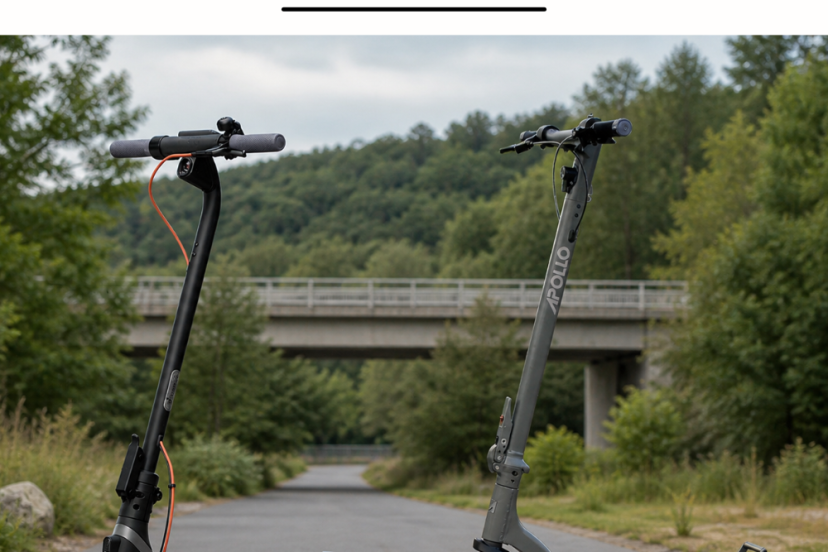
When shopping for a personal electric scooter, two brands consistently rise to the top of the conversation: Apollo and Segway. Both have built strong reputations in the personal mobility space, but they appeal to different types of riders with different priorities. Apollo leans toward performance-driven enthusiasts who want speed, range, and premium build quality. Segway, backed by Ninebot’s engineering, targets a broader consumer base with affordable, accessible, and reliable options.
This comparison breaks down how each brand performs across the categories that matter most, including motor power, battery life, build quality, safety features, and long-term value. Whether commuting daily across the city or looking for a weekend adventure machine, understanding the differences between these two brands helps in making a smarter, more confident buying decision.
“The Segway-Ninebot MAX was the scooter that essentially redefined what consumers should expect from a mid-range electric scooter in terms of range and reliability.”
– Micromobility Industries Report, 2022
Key Takeaways
- Apollo designs scooters for riders who prioritise speed and long-range performance, while Segway-Ninebot focuses on accessibility, reliability, and competitive pricing.
- Apollo builds its scooters with premium materials and dual-motor options, making them well-suited for heavier riders and demanding terrain.
- Segway-Ninebot dominates the entry-to-mid range segment, offering excellent value with foldable, lightweight designs ideal for urban commuters.
- Both brands back their products with solid warranties, but Apollo tends to offer more responsive customer support for specialized riders.
- Safety features are strong across both lineups, though Segway edges ahead in automatic braking systems on select models.
- For raw power and customization, Apollo wins. For ease of use, portability, and affordability, Segway is a consistent choice.
Apollo vs Segway
Before diving deeper into the comparison, here are four top-performing scooters from both brands currently available on Amazon US:
Apollo Go Electric Scooter


The Apollo Electric Scooter is a high-performance commuter scooter designed for adults seeking speed, power, and comfort. With dual 350W motors (1,500W peak output), it reaches speeds of up to 28 mph and can handle 25% grade hills with ease. The 21700 battery cells offer an impressive range of 30 miles in eco mode, making it ideal for longer commutes. Featuring self-healing tires, advanced suspension, and a 360° lighting system, the Apollo ensures a safe, smooth, and worry-free ride.
- High-Speed Performance – Reaches up to 28 mph with strong acceleration.
- Long Battery Life – Up to 30 miles per charge for extended rides.
- Advanced Suspension – Smooth ride with front spring & rear rubber suspension.
- Higher Price Point – Costs significantly more than entry-level models.
- Heavy Weight – At 46 lbs, it may be less portable for some riders.
- Limited Sport Mode Range – Only 15 miles in high-speed mode.
A powerful all-terrain commuter scooter built with dual 350W motors, a top speed of up to 28 MPH, and up to 30 miles of range in eco mode. Its Airflow suspension, self-healing tires, and 360° lighting system make it a strong choice for riders who want speed, comfort, and visibility on longer daily rides or mixed urban terrain.
Best for: Riders who want a powerful commuter scooter with strong hill-climbing ability, smooth suspension, and added safety features.
Segway Ninebot Max G3 Electric Scooter


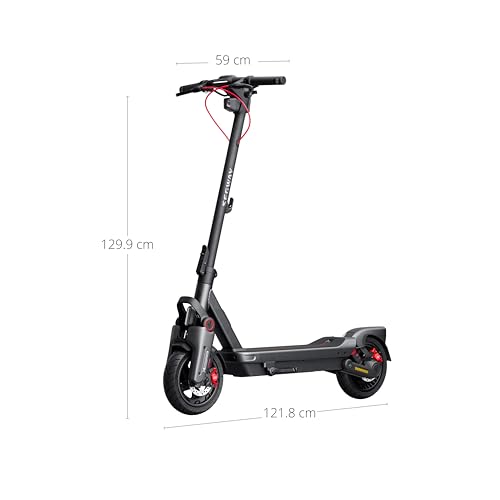
The Segway Ninebot Max G3 is one of the quietest electric scooters designed for riders who value both silence and performance. Featuring a powerful 2000W peak motor, a top speed of 28 mph, and a max range of 50 miles, this scooter delivers smooth, noise-free rides perfect for city commutes or long-distance travel. With dual hydraulic suspension, advanced stability systems, and self-sealing 11-inch tires, the G3 ensures comfort and safety while keeping road noise at a minimum. Its fast charging system (3.5 hours standard, 2.5 hours with optional DC charger) makes it ideal for daily use. Certified under UL-2272 safety standards, it’s a reliable option for adults and teens seeking premium quality and peace of mind.
- Quiet Ride: Low-noise motor and smooth suspension make it one of the quietest electric scooters for urban commutes.
- Long Range: Up to 50 miles per charge, ideal for extended rides without frequent recharging.
- Comfort & Stability: Dual hydraulic suspension and self-sealing tires absorb shocks for a smoother, quieter journey.
- Premium Price: Higher cost compared to entry-level scooters.
- Heavy Frame: Weighs more than lightweight commuter models, less portable.
- Non-Returnable: Limited return options due to hazardous material regulations.
A long-range electric scooter designed for adults who want comfort, stability, and strong everyday performance. The Segway Ninebot MAX G3 offers up to 50 miles of range, speeds up to 28 MPH, dual hydraulic suspension, 11-inch self-sealing tubeless tires, and fast charging for reliable commuting or longer city rides.
Best for: Riders who want a premium long-range scooter with extra comfort, durability, and safety features.
Brand Backgrounds: Two Different Visions
Apollo, a Canadian company, built its identity around delivering performance-focused electric scooters to a growing community of enthusiasts. The brand mainly sells direct to consumers, allowing it to offer competitive pricing and a more personal customer service experience. Its community-driven approach gives riders access to firmware updates, accessories, and active owner forums.
Segway, now operating under the Segway-Ninebot umbrella after its 2015 acquisition, is a global name with decades of history in personal transportation. Ninebot’s engineering brings deep R&D investment to every product line. Segway-Ninebot scooters are sold through major retail channels, including Amazon, Best Buy, and Walmart, making them widely available and easy to service in most urban areas.
The two brands represent different philosophies: Apollo builds for the rider who wants more, while Segway builds for the rider who wants something that simply works, consistently and affordably.
Motor Performance and Speed
Apollo scooters consistently outperform Segway models when comparing raw motor output. The Apollo Phantom, for example, runs dual 1200W motors with a peak output that can climb beyond 2400W during acceleration. This translates to faster acceleration, stronger hill-climbing ability, and a higher top speed ceiling.
Segway models, by contrast, are tuned for efficiency and practicality over outright power. Most Segway scooters in the consumer range top out between 300W and 700W. The Segway MAX G30LP reaches a top speed of about 18.6 mph, which is more than adequate for city riding and keeps the scooter well within legal limits in most regions.
For riders who need speed and torque, Apollo holds a clear edge. For riders who live in cities with speed regulations or who simply do not need to exceed 20 mph, Segway’s motors are more than sufficient and often more energy-efficient.
Battery Life and Range
Range anxiety is real in the e-scooter world, and both brands address it differently. Apollo’s higher-end models come equipped with large battery packs. The Phantom, for instance, advertises up to 40 miles of range under ideal conditions, making it one of the longer-range consumer scooters on the market.
Segway’s MAX G30LP is widely praised for punching above its weight in this category. Its 551Wh battery delivers a real-world range of around 22 to 28 miles depending on rider weight and terrain, which rivals some Apollo models at lower price points.
Charging times also differ. Apollo’s larger batteries typically require 8 to 12 hours for a full charge, while Segway models with smaller packs charge in 6 to 7 hours. For commuters who need a quick turnaround, Segway’s charging efficiency is a practical advantage.
Build Quality and Materials
Apollo positions itself as a premium brand, and its construction reflects that. Frames use aerospace-grade aluminum, welds are clean, and the fit and finish on flagship models like the Phantom feel solid and intentional. Suspension systems, particularly the dual hydraulic setups on higher-end Apollo models, offer genuine performance benefits on rough pavement.
Segway’s build quality is reliable but more utilitarian. The brand prioritizes durability for everyday use rather than performance riding. Frames are solid and the folding mechanisms are refined, but the overall feel is more functional than premium. That said, Segway scooters are built to last in the context they are designed for, and many riders report years of trouble-free use.
For riders who prioritize craftsmanship and a premium feel, Apollo wins. For those who want a scooter that holds up well to daily use without needing extra attention, Segway delivers.
Safety Features
Both brands take safety seriously, but their approaches differ. Apollo includes dual braking systems, bright LED lighting, and on higher models, regenerative braking that extends range while improving stopping control. The Apollo Phantom also includes a turn signal system and a robust headlight setup for nighttime riding.
Segway-Ninebot is known for integrating smart safety features into even budget-friendly models. The MAX G30LP features front and rear lights, EBS (Electronic Braking System), and a mechanical rear disc brake. Segway also implements speed-limiting features via its app, making it easier for users to configure scooters for younger riders or restricted zones.
Ride Comfort and Suspension
Suspension design has a significant impact on ride quality, especially on cracked pavement and uneven sidewalks. Apollo invests heavily here, particularly on its mid-to-high tier models. Dual spring and hydraulic suspension setups absorb vibration well and make longer rides considerably more comfortable.
Segway models in the budget range often rely on air-filled tires rather than dedicated suspension systems to smooth out the ride. The 10-inch pneumatic tires on the MAX series do an admirable job, but riders who cover longer distances or ride over rougher terrain will notice the difference when switching to a scooter with actual suspension.
Price and Value
Segway-Ninebot clearly wins the affordability competition. The MAX G30LP typically retails between $400 and $600, offering excellent real-world range and reliability for the price. Entry-level Segway models can be found for under $300, making them some of the most accessible quality scooters on the market.
Apollo scooters carry a higher price tag that reflects their premium materials and performance focus. The Apollo Air Pro typically runs between $700 and $900, while the Phantom can exceed $1,500. These are not casual purchases, but for the right rider, the investment pays off in performance and long-term satisfaction.
Long-Term Reliability and Support
Both brands offer warranties in the one-to-two year range. Apollo, operating as a smaller direct-to-consumer company, has developed a reputation for responsive support and an active community. Software updates and spare parts are generally accessible for Apollo owners.
Segway benefits from scale. Its global distribution means parts and service centers are easier to find, and the brand has established repair relationships with major retailers. For riders in areas without easy access to specialty repair shops, Segway’s wider service network is a practical advantage.
Conclusion
Apollo and Segway are both strong brands in the electric scooter market, but they serve different riders. Apollo is the better choice for performance-focused enthusiasts who want more speed, more range, and a premium build experience. Segway-Ninebot is the smarter pick for commuters who want a dependable, affordable, and widely supported scooter that does its job every single day without fuss.
Neither brand is objectively better. The best choice depends entirely on how the scooter will be used, how much the rider is willing to spend, and how much performance actually matters in day-to-day riding conditions.
Frequently Asked Questions
1. Which brand is better for beginners, Apollo or Segway?
Segway-Ninebot is generally more beginner-friendly. Its scooters come with app-controlled speed limits, intuitive controls, and a stable ride that builds rider confidence. Apollo scooters, particularly performance models, can feel more demanding for first-time riders due to their higher speeds and more powerful acceleration.
2. Are Apollo scooters worth the extra cost compared to Segway?
For riders who regularly push range limits, ride on hilly terrain, or want a high-performance daily driver, Apollo’s premium is justified. For casual urban commuters who stay within 15 to 20 miles per trip, Segway offers comparable reliability at a lower price.
3. How do Apollo and Segway compare for heavier riders?
Apollo scooters generally support higher weight capacities, with several models rated for up to 265 lbs and performance models handling more. Segway models typically max out around 220 lbs, which may limit options for heavier riders.
4. Which brand has better customer support?
Apollo’s direct-to-consumer model gives it an edge in personalized support, with active community forums and dedicated service channels. Segway benefits from a broader retail support network, making in-person service easier to access in most cities.
5. Can Segway and Apollo scooters be used in the rain?
Most models from both brands carry some degree of water resistance. The Segway MAX G30LP is rated IPX5, meaning it can handle light rain and splashing. Apollo scooters vary by model, but most carry similar ratings. Neither brand recommends riding through heavy rain or submerging the scooter in water.