Scooter Tire Pressure Guide by Rider Weight
*We may earn a commission for purchases made using our links. Please see our disclosure to learn more.
Tire pressure is one of the most overlooked aspects of electric scooter ownership, yet it plays a direct role in rider safety, range efficiency, and overall performance. Many riders inflate their tires to a generic number printed on the sidewall without ever considering how their body weight changes what that optimal pressure should actually be. The reality is that a 120-pound rider and a 220-pound rider on the same scooter will experience very different handling characteristics if both are running the same PSI.
Understanding the relationship between rider weight and tire pressure helps prevent premature tire wear, reduces the risk of flats, and ensures the scooter handles predictably at all speeds. Whether riding a budget commuter model or a high-performance dual-motor scooter, dialing in the correct tire pressure for a specific body weight is a simple habit that pays significant dividends over time.
“Tire pressure is the single most important maintenance variable for electric scooter safety. Riders who check their PSI regularly experience fewer flats, better energy efficiency, and more predictable handling in all conditions.”
Source: Electric Scooter Guide, Tire Maintenance Best Practices
Key Takeaways
- Heavier riders need higher tire pressure to maintain proper contact patch and prevent pinch flats.
- Lighter riders should stay at or slightly below the maximum recommended PSI to avoid a harsh, bouncy ride.
- Always consult the manufacturer’s recommended PSI range as a baseline before adjusting for weight.
- Both underinflation and overinflation carry real risks, including blowouts, reduced traction, and accelerated wear.
- Tire pressure should be checked at least once every two weeks and before any long ride.
- Pneumatic (air-filled) tires require active pressure management; solid and foam-filled tires do not.
- Temperature changes affect tire pressure, so seasonal adjustments may be necessary.
Why Rider Weight Matters for Tire Pressure
Every tire is rated for a specific load range. When a rider sits on a scooter, their weight compresses the tire against the ground, reducing the contact patch and increasing internal stress on the rubber. If the tire is underinflated for a heavier rider, the sidewalls flex excessively, generating heat and increasing the chances of a pinch flat or blowout. If the tire is overinflated for a lighter rider, it becomes too rigid, resulting in reduced grip, a jarring ride, and a higher risk of losing control over bumps.
Manufacturers typically print a maximum PSI value on the sidewall and provide a recommended range in the user manual. That range is designed to cover the average rider, but it does not account for riders at the extremes of the weight spectrum. Adjusting within that range based on body weight is not only acceptable but encouraged.
PSI Guide by Rider Weight
The following ranges are general guidelines applicable to most standard electric scooters with pneumatic tires. Specific models may have narrower recommended ranges, so these should always be cross-referenced with the manufacturer’s specifications.
Under 100 lbs (Under 45 kg)
Riders in this category are typically younger users or very lightweight adults. For most scooters with a recommended range of 40 to 60 PSI, staying between 40 and 45 PSI is appropriate. Going higher creates an overly stiff ride and reduces the tire’s ability to absorb road vibration.
100 to 150 lbs (45 to 68 kg)
This is considered the lighter end of the average adult weight range. A PSI between 45 and 50 generally works well. The tire will maintain a good contact patch without excessive flex.
150 to 200 lbs (68 to 91 kg)
The majority of adult riders fall into this bracket. A PSI range of 50 to 55 suits most scooters with standard pneumatic tires. This range balances cushioning with structural support.
200 to 250 lbs (91 to 113 kg)
Heavier riders need more air pressure to prevent the tire from squashing too far and causing sidewall stress. A range of 55 to 60 PSI is recommended. If the scooter’s maximum rated PSI is 65, staying closer to that upper end is fine.
Over 250 lbs (Over 113 kg)
Riders exceeding 250 lbs should inflate to or very near the maximum recommended PSI for their specific tire. This is also a situation where checking the scooter’s maximum load capacity is critical. If a rider’s weight exceeds the manufacturer’s stated limit, tire pressure adjustments alone cannot compensate for the structural stress placed on the frame and wheels.
Pneumatic vs. Solid Tires: What Changes
Not all electric scooters use air-filled tires. There are three main tire types found on modern scooters, and only one requires active pressure management.
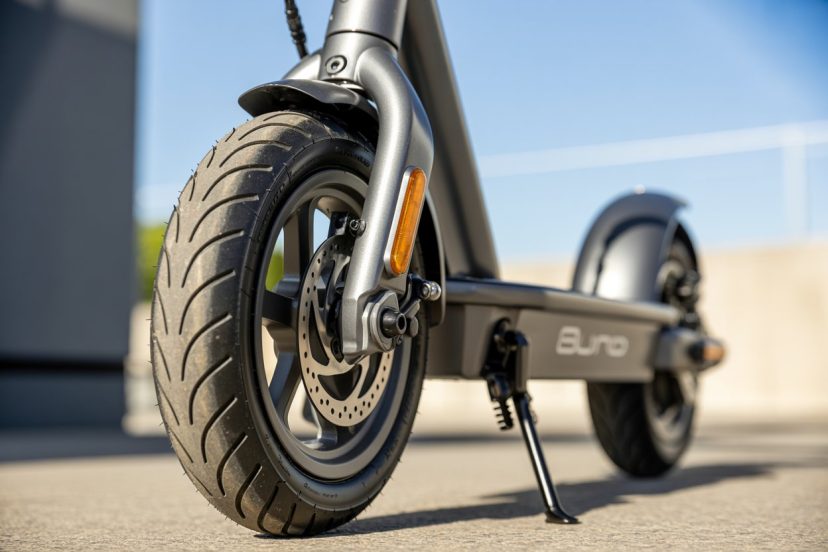
- Pneumatic (Air-Filled) Tires: These are the most common type on mid-range and performance scooters. They provide the best ride quality and grip, but they require regular PSI checks. All the weight-based guidance above applies specifically to pneumatic tires.
- Solid Rubber Tires: Solid tires are puncture-proof and require zero maintenance from a pressure standpoint. However, they offer a stiffer ride and are less forgiving on uneven surfaces. Rider weight still affects handling on solid tires, but there is no PSI adjustment to make.
- Foam-Filled Tires: A middle ground between pneumatic and solid, foam-filled tires are puncture-resistant and have a slightly more cushioned feel than pure solid tires. Like solid tires, they require no pressure checks.
For riders choosing between scooter models, knowing that a pneumatic tire requires ongoing attention is part of the ownership equation.
Risks of Incorrect Tire Pressure
Underinflation Risks
- Pinch flats: When a tire is too soft, it can compress fully on impact and pinch the inner tube between the rim and the road surface.
- Increased rolling resistance: A soft tire creates more drag, reducing battery range noticeably.
- Overheating: Excessive sidewall flex generates heat, weakening the rubber over time.
- Poor handling: Underinflated tires respond sluggishly to steering input, especially at speed.
Overinflation Risks
- Reduced traction: An overinflated tire has a smaller contact patch, meaning less grip on wet or uneven surfaces.
- Harsh ride: The tire becomes less effective at absorbing road imperfections, transferring more vibration to the rider.
- Blowout risk: Too much pressure inside the tire increases the chance of a sudden failure, especially in hot weather.
- Uneven wear: Overinflated tires tend to wear faster in the center of the tread.
How to Check and Adjust Tire Pressure
Tools needed:
- A quality pressure gauge (digital gauges are more accurate than stick-style gauges)
- A hand pump or floor pump with a PSI gauge
- The correct valve adapter if needed (most scooters use Schrader valves, similar to car tires)
Step-by-step process:
- Check tire pressure when the tires are cold, ideally before riding. Riding heats up the air inside the tire, causing a temporary pressure increase that can lead to inaccurate readings.
- Remove the valve cap and press the gauge firmly onto the valve stem.
- Read the PSI value and compare it to the target range for the rider’s weight.
- Add air using a pump if the pressure is too low. Release air using the small pin inside the valve if the pressure is too high.
- Replace the valve cap after checking to keep debris out of the valve.
Checking pressure every two weeks is a reasonable habit for most riders. Riders who use their scooter daily should check weekly.
The Effect of Temperature on Tire Pressure
Air expands when heated and contracts when cooled. For every 10 degrees Fahrenheit of temperature change, tire pressure shifts by roughly 1 to 2 PSI. This means a scooter inflated to 50 PSI on a warm afternoon may read closer to 46 or 47 PSI on a cold morning.
Seasonal riders should expect to adjust pressure when moving between warmer and cooler months. Riders in climates with significant temperature swings should pay closer attention during weather transitions. This is especially relevant for heavier riders who are already at the higher end of the recommended range, since a pressure drop due to cold weather can push them into underinflation territory.
Additional Tips for Maintaining Tire Health
- Inspect tires visually before each ride. Look for embedded debris, sidewall cracking, or visible bulging.
- Rotate usage patterns if possible. Some riders consistently lean harder on one side, causing uneven wear.
- Replace tires proactively. Waiting until a tire fails completely increases the risk of an accident. Tread depth and sidewall condition are good indicators of remaining life.
- Store the scooter properly. Extended storage in direct sunlight or extreme cold degrades rubber faster. If storing for weeks at a time, slightly deflating tires can reduce stress on the tube and casing.
- Use quality replacement tubes and tires. Cheap replacement parts often lack the durability of OEM components and may not hold pressure as reliably.
Conclusion
Getting tire pressure right for a specific body weight is a small but meaningful act of electric scooter maintenance. The few minutes spent checking PSI before a ride can prevent flats, improve battery efficiency, and make the overall riding experience safer and more comfortable. Heavier riders must stay vigilant about keeping pressure high enough to support their load, while lighter riders benefit from staying at moderate pressures to preserve ride quality.
As a general rule, staying within the manufacturer’s recommended range and adjusting within that range based on weight is the right approach. Combined with regular visual inspections and awareness of how temperature affects pressure, any rider can keep their tires in optimal condition for thousands of miles.
Frequently Asked Questions
1. How do I know the recommended tire pressure for my specific scooter?
The recommended PSI range is typically printed on the tire sidewall itself or listed in the owner’s manual. If neither source is available, the manufacturer’s website or customer support can provide the correct specification for a given model.
2. Can overinflating a tire increase top speed?
Slightly higher pressure does reduce rolling resistance, which can marginally improve top speed and battery efficiency. However, inflating beyond the maximum rated PSI is unsafe and voids any benefit. Staying at the upper end of the recommended range for a given weight achieves the same effect without the added risk.
3. What happens if tire pressure is ignored entirely?
Over time, tires lose pressure naturally even without a puncture. A scooter ridden on chronically low tires will experience faster tire wear, reduced range, and an increased risk of flats. In severe cases, a completely flat tire can cause a loss of control.
4. Do rear and front tires need different pressure levels?
Some manufacturers specify different PSI ranges for front and rear tires, particularly on larger performance scooters where weight distribution is uneven. Always check both tires separately and refer to model-specific guidance when available.
5. Is a digital or analog gauge better for checking scooter tire pressure?
Digital gauges are generally more accurate and easier to read, particularly in low light. Analog gauges are reliable if they are high quality and well-maintained, but they can develop calibration drift over time. For consistent readings, a digital gauge is the better investment.