Varla VS. Dualtron Electric Scooters
*We may earn a commission for purchases made using our links. Please see our disclosure to learn more.
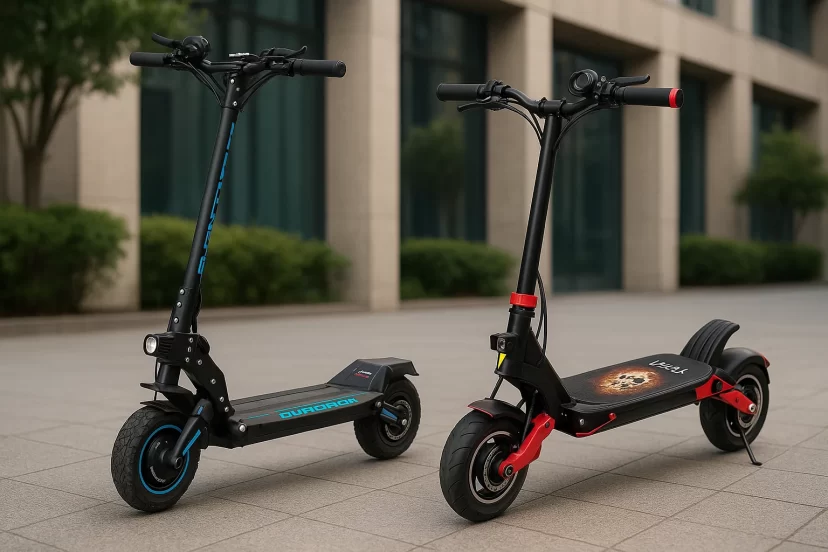
When considering high-performance electric scooters, two brands frequently dominate the conversation: Varla and Dualtron. Both manufacturers have established themselves as leaders in the dual-motor electric scooter market, offering powerful machines designed for speed enthusiasts and off-road adventurers. Understanding the differences between these brands can help riders make an informed decision based on their specific needs, budget, and riding style.
“The Varla Eagle One offers a ‘gateway’ into higher performance models; providing a safe, reliable, yet adrenaline-inducing ride that delivers best-in-class ride quality for its price point.”
— Electric Scooter Insider
Key Takeaways
- Price Positioning: Varla scooters typically offer more affordable options ($1,399-$2,099) compared to Dualtron models ($2,500-$6,000+), making Varla an attractive entry point for performance scooter enthusiasts
- Power and Speed: Dualtron models generally feature higher wattage motors and faster top speeds, with flagship models reaching 60+ mph versus Varla’s 40-45 mph range
- Build Quality: Dualtron scooters are known for premium materials and advanced engineering, while Varla focuses on delivering competitive performance at more accessible price points
- Range Capabilities: Both brands offer impressive range, with Varla providing 40-50 miles and Dualtron achieving 70-105 miles depending on the model
- Target Audience: Varla appeals to riders seeking excellent value and performance, while Dualtron caters to enthusiasts demanding the absolute pinnacle of electric scooter technology
Performance and Power: The Numbers Game
The most significant distinction between Varla and Dualtron lies in raw power output. Dualtron models feature substantially more powerful motors, with the X series utilizing dual 3360-watt motors generating combined power exceeding 6,000 watts. This translates to blistering acceleration and higher top speeds.
Varla’s flagship Eagle One Pro uses dual 1000W motors with 2600W peak power, reaching speeds around 40-45 mph. While impressive by most standards, this pales in comparison to Dualtron Thunder’s 5400W maximum power enabling speeds up to 60 mph.
However, power isn’t everything. Varla scooters demonstrate surprisingly competitive acceleration, with the Eagle One Pro achieving 0-15 mph in just 2.1 seconds—performance comparable to heavyweight veterans like the Dualtron Thunder at 2.0 seconds.
Range and Battery Technology
Range capabilities differ substantially between budget-focused and premium models. The Dualtron Thunder achieves approximately 73 miles maximum range, while the Varla Eagle One Pro offers around 45 miles. Top-tier Dualtron models push boundaries further, with the X Limited boasting a 5,040Wh battery enabling ranges up to 105 miles.
Both manufacturers utilize high-quality lithium-ion battery cells. Varla employs LG 21700 battery cells in newer models like the Eagle One V3.0, while Dualtron’s premium models also feature LG 21700 cells with expected lifespans up to four years.
Battery management systems protect against common issues including overcharging, over-discharging, and temperature extremes. Most models support dual charging ports, significantly reducing charge times when two chargers are used simultaneously.
Build Quality and Materials
Construction quality represents another differentiating factor. Dualtron Thunder frames utilize specially forged aluminum similar to aircraft-grade materials, ensuring maximum durability and safety. This premium construction contributes to Dualtron’s reputation for longevity and reliability.
Varla scooters employ quality aluminum alloy frames but generally don’t match the ultra-premium materials found in top-tier Dualtron models. However, Varla compensates with excellent value propositions—the Eagle One delivers performance matching scooters costing significantly more, like the INOKIM OxO at $2,599 or Dualtron Compact at $2,649.
Weight differences reflect these construction approaches. The Dualtron Thunder weighs approximately 95 lbs compared to the Varla Eagle One Pro’s 90 lbs, though the Eagle One Pro at 90.4 lbs represents the lightest option in the performance beast category.
Suspension and Ride Quality
Suspension systems significantly impact comfort during extended rides or off-road excursions. Dualtron Thunder features adjustable rubber shock absorbers on both ends, optimized for off-road conditions with reduced bounciness. The customization options allow riders to fine-tune suspension based on weight, terrain, and personal preferences.
Varla Eagle One Pro utilizes dual coil spring shocks effective at absorbing road irregularities, coupled with substantial ground clearance for tackling large bumps. While some reviewers note the suspension feels somewhat stiff and would benefit from adjustability, the setup effectively prevents bottoming out on large obstacles.
Varla’s Eagle One V2.0 incorporates front and rear suspension that helps smooth out rough surfaces and road bumps, making it suitable for off-road riding despite its mid-range positioning.
Braking Systems and Safety Features
Braking performance proves critical for high-speed electric scooters. Both manufacturers equip their models with hydraulic disc brake systems, though implementation varies by model and price point.
Dualtron Thunder features massive 160mm dual hydraulic brakes providing exceptional stopping power and reliability, paired with regenerative electric braking and anti-lock braking systems. Premium models like the X Limited utilize 4-piston calipers offering 50% more braking efficiency through increased contact area with brake rotors.
Varla Eagle One Pro also employs dual hydraulic brakes plus an ABS system, delivering exceptional and reliable braking performance. The combination of mechanical and electronic braking provides redundancy and control across various conditions.
Display and Control Systems
User interface design affects everyday usability. Dualtron models typically feature the Minimotors EY3 display showing speed, battery percentage, speed mode, and voltage usage in a minimalist format. Newer models incorporate the EY4 display system with app compatibility and Bluetooth connectivity, enabling riders to customize settings and monitor ride statistics through smartphones.
Varla scooters utilize more advanced LCD displays showing real-time ride metrics and employing Near-field Communication (NFC) technology to restrict unauthorized access. The NFC security feature requires a physical key fob to unlock the scooter, adding theft protection unavailable on many competitors.
Price-to-Performance Ratio
Perhaps the most compelling distinction involves value proposition. Varla Eagle One models range from $1,399 to $2,099, positioning them as affordable gateways to performance scooter ownership. The Eagle One matches the 40 mph top speed of significantly more expensive competitors while undercutting their prices substantially.
Dualtron models command premium pricing reflecting their elite engineering. Mid-range models start around $2,500, while the flagship X Limited exceeds $5,000. This premium positions Dualtron as the choice for riders prioritizing absolute performance over budget considerations.
For context, the Varla Eagle One V2.0 retails at $1,799 with sale prices around $1,599—substantially less than fancier alternatives from companies like Apollo while delivering competitive performance.
Terrain Capabilities and Versatility
Both brands design their performance models for all-terrain use, though approaches differ. Varla Eagle One features a 30-degree climbing angle capability, suitable for tackling steep inclines. The combination of powerful motors, substantial torque, and appropriate tire sizing enables confident hill climbing.
Dualtron models utilize ultra-wide 13-inch tires providing exceptional comfort and stability, making them among the most stable high-speed scooters available. The larger tire diameter smooths out terrain imperfections and improves obstacle clearance.
Varla scooters perform admirably both on tarmac and off-road trails, with suspension providing adequate cushioning for hitting potholes and curbs with confidence. The versatility allows owners to use their scooters for daily commuting while retaining weekend adventure capabilities.
Weight Capacity and Rider Accommodation
Load capacity considerations matter for heavier riders or those carrying cargo. The Varla Eagle One Pro supports up to 330 lbs, exceeding the Dualtron Thunder’s 265 lb capacity despite being lighter overall. This higher capacity makes Varla models more accommodating for larger riders or those frequently carrying supplies.
Deck dimensions also vary, with the Eagle One Pro measuring approximately 53.1 inches in length and 52.4 inches in height when extended, compared to the Thunder’s 48.7-inch length and 48-inch height. The larger platform provides more space for foot positioning during extended rides.
Portability and Storage
Despite their size and power, modern performance scooters incorporate folding mechanisms. Dualtron X2 features foldable stem and handlebars, making it compact enough for fitting in larger car trunks or storage areas. However, weight remains a portability challenge with premium models.
Varla Eagle One V2.0 weighs 82 lbs, making it impractical for frequent carrying despite its functional folding clasp. These scooters primarily serve as the journey itself rather than as portable last-mile solutions.
Warranty and Customer Support
Both manufacturers back their products with warranties, though coverage details vary. Varla provides a 2-year warranty and emphasizes superior customer service, with responsive support teams addressing issues promptly. Dualtron offers two-year coverage on electronics, motors, and frames, with one-year battery protection.
Third-party reviews consistently praise Varla’s customer service responsiveness and willingness to ship replacement parts quickly. Dualtron’s reputation as an established premium brand provides confidence in long-term parts availability and service network access.
Target Audience and Use Cases
Understanding ideal buyers helps clarify the choice. Varla suits riders seeking excellent performance without premium pricing—commuters upgrading from basic scooters, recreational riders exploring off-road capabilities, and enthusiasts wanting dual-motor power without breaking the bank.
Dualtron targets serious enthusiasts demanding cutting-edge technology and willing to invest accordingly. These scooters appeal to speed fanatics, long-distance commuters requiring maximum range, and riders prioritizing brand prestige alongside performance.
Making the Choice
Selecting between Varla and Dualtron ultimately depends on individual priorities. Those seeking the absolute best performance, longest range, and most advanced features should consider Dualtron despite higher costs. The investment delivers top-tier components, proven reliability, and impressive capabilities justified by premium pricing.
Budget-conscious riders requiring strong performance without elite-tier expenses will find Varla offers compelling value. The combination of dual motors, respectable range, quality construction, and competitive pricing makes Varla an excellent choice for most performance scooter buyers.
Consider typical use cases carefully. Urban commuters with moderate daily distances might find Varla’s range sufficient while appreciating cost savings. Long-distance riders or those frequently tackling challenging terrain may justify Dualtron’s premium for extended battery life and refined engineering.
Conclusion
The electric scooter market offers exciting options for performance enthusiasts, with Varla and Dualtron representing two distinct approaches. Dualtron establishes itself as the premium choice with uncompromising power, range, and build quality commanding higher prices. Varla delivers impressive performance at significantly more accessible price points, democratizing dual-motor scooter ownership.
Neither brand inherently surpasses the other—each excels within its intended market position. Dualtron remains unchallenged for riders demanding absolute performance peaks regardless of cost. Varla provides remarkable value for those seeking substantial performance without premium pricing, offering nearly comparable real-world capabilities for many riders.
Understanding personal priorities around budget, performance requirements, and intended usage guides the optimal choice. Both manufacturers produce quality scooters capable of delivering thrilling rides, reliable transportation, and years of enjoyment when properly maintained. The decision ultimately reflects individual circumstances rather than objective superiority of one brand over another.
Frequently Asked Questions
Q: Are Varla scooters reliable compared to Dualtron models?
A: Varla scooters demonstrate solid reliability with quality components and responsive customer service backing them. While Dualtron benefits from longer market presence and premium materials, Varla owners report satisfactory durability and longevity. The 2-year warranty and positive user reviews suggest Varla provides dependable performance within its price category. However, Dualtron’s use of aircraft-grade materials and more established reputation gives it an edge in perceived long-term durability.
Q: Can Varla scooters handle off-road terrain as well as Dualtron models?
A: Both brands design their dual-motor models for all-terrain use with capable suspension systems and appropriate tire sizing. Varla scooters handle off-road conditions competently with dual spring suspension and good ground clearance. Dualtron models typically offer more sophisticated suspension tuning and larger tires providing slightly better off-road capability. For recreational off-road use, Varla performs admirably, while serious off-road enthusiasts might appreciate Dualtron’s advanced suspension customization.
Q: What is the main difference in top speed between Varla and Dualtron scooters?
A: Top speed represents a significant differentiator. Varla’s flagship models reach 40-45 mph maximum speeds, impressive for their price range. Dualtron models vary by specification, with mid-range options achieving 50-60 mph and premium models potentially exceeding 65 mph. The speed difference reflects motor power output—Dualtron models generally feature substantially more powerful motors. For most riders, Varla’s speeds suffice, while speed enthusiasts may prefer Dualtron’s higher capabilities.
Q: Is the price difference between Varla and Dualtron justified?
A: Price justification depends on individual priorities. Dualtron’s premium pricing reflects superior materials, more powerful motors, longer range, advanced engineering, and established brand reputation. These factors matter greatly to enthusiasts seeking absolute best performance. However, Varla delivers 70-80% of the performance at 40-50% of the cost for many comparable models, representing exceptional value. Budget-conscious riders often find Varla’s performance entirely satisfactory for their needs.
Q: Which brand offers better warranty and customer support?
A: Both manufacturers provide solid warranty coverage and customer support. Varla offers a 2-year warranty with consistently praised responsive customer service and quick parts shipment. Dualtron provides 2-year coverage on electronics and motors with 1-year battery protection, backed by an established service network and parts availability due to longer market presence. User experiences suggest both brands adequately support their products, though Varla owners particularly commend the company’s customer service responsiveness and willingness to resolve issues quickly.