Fast Charging vs. Removable Batteries
*We may earn a commission for purchases made using our links. Please see our disclosure to learn more.
Electric scooters have gone from niche curiosities to genuine urban commuting staples. As the market matures, buyers are increasingly confronted with a nuanced but consequential question: should the next scooter purchase prioritize fast charging capability, or the flexibility of a removable battery?
On the surface, both options solve the same problem, getting back on the road quickly after a ride. But the way they do it, and the lifestyles they serve, differ considerably. Fast charging relies on powerful onboard charging systems that can refuel a fixed battery in a fraction of the usual time. Removable batteries, on the other hand, allow the rider to physically swap out a depleted pack for a fully charged one, bypassing the wait altogether.
Neither is universally superior. The right choice depends on living situation, commuting patterns, storage access, and personal preference. This article breaks down both technologies in depth, covering real-world performance, costs, convenience, and long-term ownership factors, to help riders make a well-informed decision.
“The battery is the heart of any electric vehicle. How you manage it — how you charge it, how you store it — determines how long and how well it performs.”
— Battery University, Isidor Buchmann — Cadex Electronics
Key Takeaways
- Fast charging dramatically reduces downtime but requires access to a wall outlet near the scooter.
- Removable batteries offer unmatched flexibility for apartment dwellers and multi-scooter households.
- Fast charging can generate more heat, which may affect battery longevity over time.
- Removable battery packs are generally heavier and bulkier, adding weight to the scooter.
- Both technologies are advancing rapidly, with newer models narrowing the gap in convenience.
The best choice depends on living situation, commute distance, and how the scooter is stored.
Recommended Fast Charging Electric Scooters
For riders who prefer the simplicity of plugging in and walking away, the following two models represent strong options currently available on Amazon US.
| Product | Battery Type | Key Feature | Best For |
| Segway Ninebot MAX G2 | Fixed (Built-in Fast Charge) | 551Wh, built-in 3A charger, 43-mile range | Daily commuters |
| Segway ZT3 Pro | Fixed (2x Flash Charge) | 597Wh, full charge in 4 hrs, 43.5-mile range | All-terrain riders |
Segway Ninebot MAX G2


Introducing the Segway Ninebot GT1P SuperScooter—a high-performance electric commuter designed for adults. With a thrilling max speed of 37.3 mph and quick acceleration from 0 to 30 mph in just 7.5 seconds, this scooter offers an exhilarating ride. The long-range capability of up to 43.5 miles on a single charge ensures extensive exploration. The digital display provides clear information for a seamless riding experience. Crafted with an aircraft-grade aluminum frame, this scooter boasts durability and sturdiness.
The Ninebot MAX G2 is one of the few commuter scooters that ships with fast charging built directly into the scooter body — no external charging brick required. A standard IEC C5 cable is all that is needed, and the integrated 3A charger handles the rest, fully replenishing the 551Wh battery in approximately 5 hours. That’s notably faster than the 8–10 hours typical of budget scooters using 1.5A to 2A standard chargers. The scooter also delivers a 43-mile claimed range, 1000W peak motor, hydraulic front suspension, and Apple Find My integration, making it one of the most well-rounded commuter options on Amazon US.
- High Performance: The Segway Ninebot GT1/GT2 SuperScooter boasts impressive speeds and range, catering to thrill-seekers and commuters alike.
- Superior Comfort: Dual suspension, 11" self-sealing tubeless tires, and adjustable suspension ensure a smooth ride on various terrains.
- Advanced Safety Features: Front and rear hydraulic disc brakes, twin-charging capability, and UL-2272 certification prioritize rider safety.
- Price: The Segway Ninebot GT1/GT2 SuperScooter's high-end features may deter some buyers due to its premium price.
- Weight: While durable, the scooter's weight may be cumbersome for those seeking portability.
- Speed Limitations: Local regulations may restrict the scooter's top speed, limiting its full potential for some riders.
Segway ZT3 Pro


The Segway ZT3 Pro Electric Scooter is built for riders who want both speed and rugged capability in one sleek machine. Powered by a 1600W peak motor, it reaches speeds of up to 24.9 MPH, making it ideal for fast commutes or weekend adventures. With an impressive 43.5-mile range in ECO mode, you can go farther without worrying about frequent charging stops.
The ZT3 Pro takes fast charging a step further with Segway-Ninebot’s proprietary ‘2x Flash Charge Technology,’ which delivers a full charge in approximately 4 hours on its 597Wh battery — roughly half the time of conventionally charged scooters in the same range class. Its 1600W peak motor, 11-inch off-road tubeless tires, and dual suspension make it equally at home on city streets and unpaved paths. Smart features include AirLock keyless unlocking via the Segway app and Apple Find My integration. For riders who need legitimate fast charging plus off-road capability, the ZT3 Pro is one of the few scooters on Amazon US that delivers both.
The Segway ZT3 Pro Electric Scooter is built for riders who want both speed and rugged capability in one sleek machine. Powered by a 1600W peak motor, it reaches speeds of up to 24.9 MPH, making it ideal for fast commutes or weekend adventures. With an impressive 43.5-mile range in ECO mode, you can go farther without worrying about frequent charging stops.
Recommended Removable Battery Electric Scooters
For riders without dedicated charging spaces, or those who want the option to charge indoors, these two removable-battery models are worth considering.
| Product | Battery Type | Key Feature | Best For |
| Hiboy S2R Plus | Removable (Key-Lock) | 313Wh IPX5 battery, 22-mile range | Apartment dwellers, commuters |
| iENYRID M4 Pro S+ | Removable (Deck-Access) | 48V 12.5Ah battery, ~20–25 mile range, 28 mph speed | Commuters, off-road riders |
Hiboy S2R Plus


Upgrade your commuting experience with the Hiboy S2R Plus Electric Scooter. With its stylish appearance, powerful motor, and long-lasting battery, this scooter offers a convenient and exhilarating ride for adults. Featuring a unique patented replaceable battery design, you can double your range with ease. The scooter's pneumatic tires ensure stability and durability, while its IPX4 waterproof design makes it suitable for various weather conditions. Ride with confidence knowing that the sturdy aluminum frame and integrated braking system provide safety and reliability.
The Hiboy S2R Plus is purpose-built around the removable battery use case. Its 313Wh IPX5-rated pack detaches with a simple key-turn mechanism — the battery “pops up” and can be carried separately for indoor charging. Weighing 31.5 lbs overall, the scooter is light enough to carry up stairs when needed, making it a practical choice for apartment dwellers without garage access. The 9-inch pneumatic tires, 350W motor, and 19 mph top speed make it a capable daily commuter, while the app-connected BMS allows riders to monitor battery health from a smartphone. A spare battery (sold separately) doubles the range from 22 to 44 miles.
- Extended Range: Enjoy longer rides with the Hiboy S2/S2R Plus, offering a maximum range of up to 22 miles, ideal for daily commuting or leisurely adventures.
- Replaceable Battery Design: Enjoy uninterrupted rides with the innovative 3-second battery swap, doubling your range instantly.
- Enhanced Safety Features: Remain visible and secure with bright headlights, a red tail light, and reliable brakes for safety during your rides.
- Additional Battery Purchase: Customers must purchase an extra battery separately to double the scooter's range despite the replaceable battery design extending its capabilities.
- Price Point: The Hiboy S2/S2R Plus's higher price compared to entry-level scooters might deter budget-conscious consumers.
- Weight Consideration: Despite being portable and foldable, the scooter's weight could pose challenges when carrying it.
iENYRID M4 Pro S+ Electric Scooter

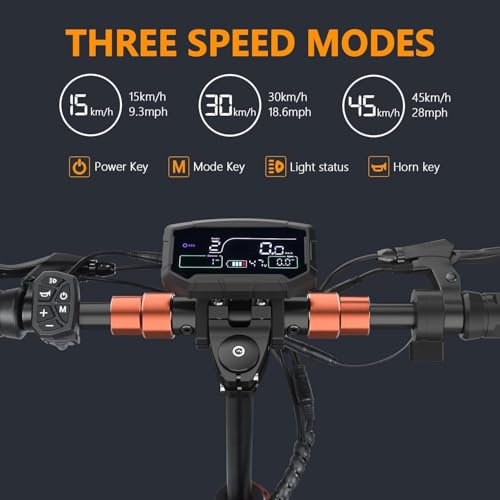
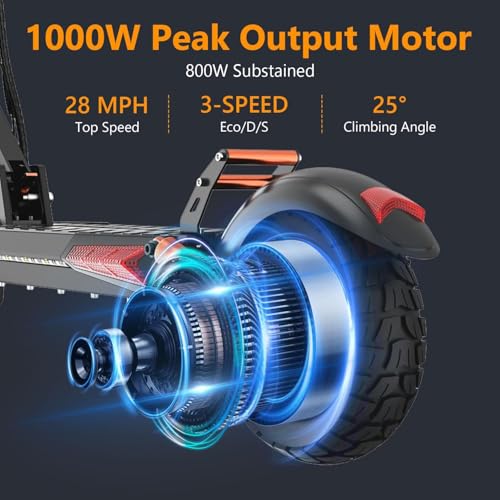
The iENYRID M4 Pro S+ Electric Scooter is a versatile and powerful ride designed for both urban commuting and light off-road use. Equipped with a 1000W peak motor, it delivers strong acceleration and reaches speeds of up to 28 mph, making it ideal for riders who want both speed and performance. Its 48V 12.5Ah battery offers a maximum range of up to 30–31 miles, providing enough distance for daily travel without frequent charging.
The iENYRID M4 Pro S+ stands out as a practical electric scooter that blends power, convenience, and comfort. Its removable battery design is a key advantage, especially for riders who need flexible charging options or plan to extend their travel range with spare batteries. This makes it more adaptable than many standard scooters with fixed batteries.
- Removable Battery: Easy to charge separately or swap for longer rides
- Strong Performance: 1000W motor delivers speed and hill-climbing power
- Comfort Features: Dual suspension and seat improve ride quality
- Heavier Build: Not very portable for carrying
- Average Build Quality: Varies depending on seller/rebrand
- Long Charge Time: Around 6–8 hours for full charge
How Fast Charging Works
Fast charging operates by increasing the current delivered to the battery during the charging cycle. Standard electric scooter chargers typically supply 1.5A to 2A of current. Fast chargers can push 4A, 6A, or even 8A, dramatically shortening the time needed to replenish a depleted pack.
Most modern lithium-ion battery management systems (BMS) handle fast charging safely by monitoring temperature, voltage, and current in real time. When the battery approaches full capacity, the BMS tapers the charge rate to protect cell integrity. This CC-CV (constant current, constant voltage) approach is standard across quality fast-charging systems.
The tradeoff is heat. Higher current means more thermal energy generated during charging. Over hundreds of charging cycles, repeated heat exposure can incrementally degrade battery cells. Scooters designed for fast charging typically incorporate thermal management features, ventilation channels, higher-grade cells, more sophisticated BMS hardware, to mitigate this. Budget fast-charging scooters may not include these protections, making cell degradation a legitimate long-term concern.
How Removable Batteries Work
Removable battery systems allow the battery pack to be physically disconnected from the scooter, carried separately, and charged on any compatible charger. The mechanism varies by manufacturer, some use slide-out designs, others use latching or locking systems.
The primary appeal is location independence. Apartment dwellers without garage access, office workers without accessible outlets near bike storage, or travelers who need to charge in hotel rooms all benefit from being able to bring just the battery indoors. There’s no need to lug the entire scooter up stairs or through a lobby.
The practical limitations relate to size and standardization. Battery packs are heavy, often 5 to 10 kg for mid-range scooters, and proprietary formats mean a battery from one brand rarely fits another. Spare batteries are also expensive, often running $200 to $600 depending on capacity, which limits the “swap and go” use case to riders willing to invest in a second pack.
Real-World Charging Scenarios
Understanding both technologies in abstract is useful. Applying them to actual rider situations is more revealing.
Scenario 1: The Apartment Dweller
A rider living on the fifth floor of a building without elevator access to bike storage faces a clear challenge with a fixed battery. Bringing the scooter inside every night is cumbersome. A removable battery solves this cleanly, the scooter stays outside or in a lobby, and only the battery comes upstairs.
Scenario 2: The Office Commuter
A rider who commutes 10 to 15 miles each way may return to the office with a significantly depleted battery. If the office has accessible outlets, a fast charger can restore a meaningful range buffer during a standard workday. A removable battery offers the same benefit, but requires carrying and storing the battery pack separately.
Scenario 3: The Weekend Explorer
For recreational riders who use their scooter for longer weekend trips and charge at home during the week, charging speed matters less. A standard charger overnight is fully adequate. In this case, the additional cost of a fast charger or the engineering overhead of a removable system may not justify itself.
Battery Longevity and Long-Term Costs
Battery replacement is the largest long-term cost in electric scooter ownership after the initial purchase. Understanding how each charging method affects cell lifespan is therefore financially important.
Fast charging, particularly at high rates (5A and above), can accelerate capacity loss if the battery and BMS are not designed to handle it. Riders who use fast charging daily should look for scooters where fast charging is factory-supported and the BMS is rated for the charging current. Aftermarket fast chargers used with scooters not designed for them can void warranties and degrade batteries faster.
Removable batteries face a different set of stresses. Physical handling introduces risks of dropped packs, connection wear from repeated insertion and removal, and potential exposure to moisture or extreme temperatures during transport. High-quality connectors and robust enclosures reduce these risks but add to manufacturing cost.
Both technologies, when properly implemented and used within manufacturer specifications, can deliver battery packs that retain 80% capacity after 500 or more full charge cycles, roughly two to four years of daily use.
Weight, Portability, and Design Tradeoffs
Fast charging scooters tend to be lighter in battery-adjacent components, since the battery itself remains sealed within the frame. The integrated design also tends to be more weather-resistant, as there are fewer seams or connection points through which moisture can enter.
Removable battery scooters carry engineering overhead. The battery housing, locking mechanism, and external connectors add weight and design complexity. Some manufacturers manage this elegantly; others produce designs where the battery compartment feels like an afterthought. Riders who prioritize a sleek, minimal scooter often find fast-charging integrated designs more appealing.
That said, the portability benefit of a removable battery — particularly for riders who must carry their scooter or navigate multi-modal commutes involving public transit — can outweigh aesthetic concerns.
Cost Comparison
Fast charging scooters typically cost more upfront than equivalent models with standard chargers, as the BMS and battery cells must be specified for higher charge rates. Fast chargers themselves add $30 to $100 to the system cost and are often sold separately.
Removable battery scooters often command a premium for the engineering required to make the battery safely detachable. Spare batteries represent a significant additional investment for riders who want true swap capability. However, the ability to replace only the battery — rather than the entire scooter — when capacity degrades can reduce long-term total cost of ownership.
Environmental Considerations
Both approaches have environmental implications worth acknowledging. Fast charging, when powered by renewable energy, is broadly efficient. The heat generated during high-rate charging does represent some energy loss, but modern systems minimize this.
Removable batteries have a potential sustainability advantage: they can be replaced individually rather than requiring the entire scooter to be retired when the battery degrades. Some manufacturers have begun offering certified refurbishment programs for spent battery packs. The modular nature of removable systems may also make it easier for third parties to develop standardized replacement packs in the future.
Conclusion
Both fast charging and removable batteries represent legitimate, well-engineered solutions to the same fundamental challenge: minimizing downtime while maximizing the practical utility of an electric scooter.
Fast charging suits riders with reliable outlet access near their scooter’s storage location, who prioritize a clean integrated design and are willing to wait 2–4 hours for a full charge. Removable batteries suit riders with constrained storage situations, multi-floor living arrangements, or a need to charge in varied locations without moving the scooter itself.
The technology gap between the two is narrowing. Some manufacturers are beginning to offer scooters with both removable batteries and fast-charge compatibility. For most urban riders today, the decision comes down to one practical question: where does the scooter sleep at night, and how far is the nearest outlet?
Frequently Asked Questions
Q: Can a standard electric scooter be upgraded to support fast charging?
A: In some cases, yes — but it depends entirely on the battery management system (BMS) installed in the scooter. If the BMS supports higher charge currents, a compatible fast charger can be used safely. However, using a high-current charger with a BMS not rated for it risks overheating, accelerated cell degradation, and potential safety hazards. Always check manufacturer specifications before using a third-party fast charger.
Q: How much faster is fast charging compared to standard charging?
A: Typical standard chargers deliver 1.5A to 2A, while fast chargers range from 3A to 8A or higher. A scooter that takes 8 hours to charge on a standard charger may charge fully in 2 to 3 hours on a quality fast charger. The actual time depends on battery capacity, the charger’s output rating, and the BMS charge management algorithm.
Q: Are removable batteries interchangeable between different scooter brands?
A: Generally, no. Battery packs are proprietary in voltage, form factor, and connector type. Some manufacturers have experimented with standardization, but there is currently no universal removable battery standard for consumer electric scooters. Riders should budget for brand-specific replacement packs when that time comes.
Q: Does fast charging significantly shorten battery lifespan?
A: When done correctly — with a charger and BMS designed for the charge rate — the impact on lifespan is modest. Studies on lithium-ion cells suggest that charging at 1C (the rate that charges a battery in one hour) can reduce cycle life by 10–20% compared to 0.5C charging over hundreds of cycles. For scooter riders who fast charge occasionally rather than daily, the practical impact on battery life is minimal.
Q: Is it safe to charge an electric scooter battery overnight using a fast charger?
A: Most quality scooters with fast charging support have BMS systems that automatically stop charging or reduce current once the battery is full, making overnight charging safe in practical terms. However, it is generally good practice to unplug any lithium-ion device once fully charged to minimize heat exposure during extended periods at 100% state of charge. When in doubt, follow the manufacturer’s guidance.