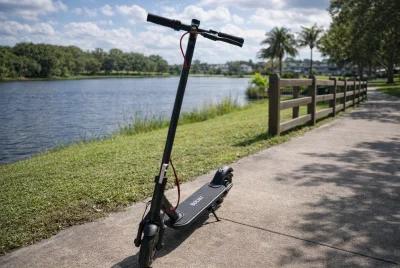
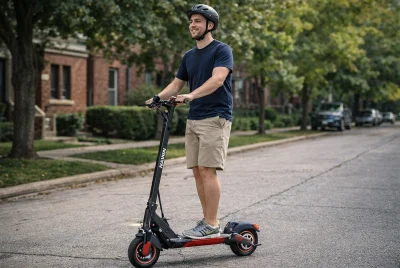
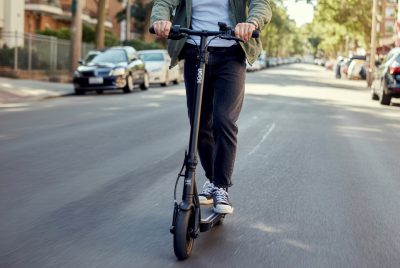
EGGKING Electric Scooter Buying Guide

*We may earn a commission for purchases made using our links. Please see our disclosure to learn more.
Urban commuting continues to evolve as electric scooters gain popularity among daily travelers seeking efficient alternatives to traditional transportation. Among the growing selection of budget-friendly options available in 2025, the EGGKING brand has emerged as a notable contender in the electric scooter market, offering practical features at accessible price points for adults and teenagers alike.
“The electric scooter market has matured significantly, with budget options now offering features that were premium-only just a few years ago. Consumers benefit from this democratization of technology, gaining access to safe, functional transportation at unprecedented price points.”
— Industry analysis from Electroheads, October 2025
Key Takeaways
- EGGKING electric scooters feature 350W to 600W motors with speeds reaching 19-25 MPH
- Range capabilities vary from 15 to 28 miles per charge depending on the model
- All models include dual braking systems and UL2272 safety certification
- Foldable designs allow compact storage and portability for multimodal commuting
- Smart app connectivity enables customization of speed, cruise control, and locking features
- Price points typically range from $300 to $600, positioning them in the budget-to-mid-range category
- Solid honeycomb tires eliminate maintenance concerns associated with pneumatic alternatives
Recommended EGGKING Electric Scooters
EGGKING Electric Scooter V8


The EGGKING electric scooter V8 is designed for smooth, reliable urban commuting with a balance of power, safety, and portability. Built with a durable aluminum frame and powered by a high-efficiency brushless motor, the V8 offers multiple power options (350W / 500W / 600W) to suit different riding needs. With a top speed of up to 25 MPH and a long-range battery reaching up to 30 miles on select models, it’s ideal for daily commutes or short city trips.
- Power Options: Multiple motor choices (350W–600W) for flexible performance and speed.
- Smart Control: APP connectivity for locking, riding modes, and real-time scooter monitoring.
- Portable Design: Lightweight aluminum frame folds in seconds for easy transport.
- Range Varies: Maximum mileage depends on motor size, rider weight, and road conditions.
- Solid Tires: Less shock absorption compared to air-filled tires on rough roads.
- Single-Rider Focus: Designed primarily for individual commuting, not tandem use.
The EGGKING electric scooter V8 stands out as a dependable and budget-friendly solution for modern urban transportation. Designed for adults and teens alike, it combines a powerful brushless motor with a compact, foldable frame that fits seamlessly into busy lifestyles. Whether you choose the 350W model for light commuting or the 600W version for longer, faster rides, the V8 adapts to your daily travel demands.
EGGKING Electric Scooter V10


The EGGKING electric scooter V10 is a powerful and comfortable commuting solution built for riders who want more speed, range, and stability. Equipped with a robust 500W brushless motor and durable 10-inch rubber tires, the V10 delivers smooth acceleration and confident handling on city roads. It reaches speeds of up to 25 MPH and offers a long-range capability of up to 26 miles under optimal conditions, making it ideal for daily commuting and longer urban rides.
- Strong Performance: 500W motor provides fast acceleration and higher top speed for city commuting.
- Comfortable Ride: 10-inch rubber tires improve stability and reduce vibration on uneven roads.
- Smart Features: APP control with cruise mode, speed settings, and battery monitoring.
- Charging Time: Full charge takes around 5 hours.
- Heavier Build: Slightly larger and heavier than 8.5-inch tire models.
- Urban-Focused: Best suited for paved roads rather than rough or off-road terrain.
The EGGKING electric scooter V10 is designed for riders who want a dependable, feature-rich electric scooter for everyday transportation. With its 500W brushless motor and extended range, it strikes an excellent balance between power and efficiency, allowing riders to commute longer distances without frequent recharging. The 10-inch tires enhance ride comfort and control, especially during longer trips or daily city use.
EGGKING Electric Scooter V10 (600W)
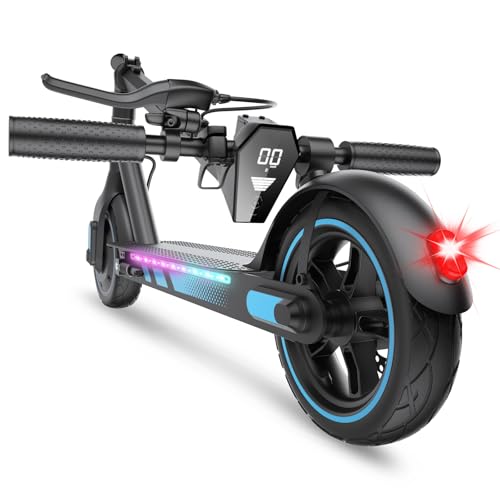


The EGGKING electric scooter V10 (600W) is built for riders who want maximum power, longer range, and enhanced visibility for daily commuting. Powered by a high-performance 600W brushless motor, this model reaches speeds of up to 25 MPH and delivers an extended range of up to 30 miles under optimal conditions. The upgraded 10-inch rubber tires provide improved stability and comfort, making city rides smoother and more controlled.
- High Power Output: 600W motor delivers strong acceleration and supports longer-distance commuting.
- Enhanced Safety Lighting: Side lights plus front and rear lights improve nighttime visibility.
- Smart Ride Control: APP connectivity for locking, cruise control, and real-time performance tracking.
- Longer Charging Time: Full charge takes approximately 6 hours.
- Heavier Than Entry Models: Slightly bulkier compared to 350W versions.
- Road-Focused Design: Best suited for paved surfaces rather than rough terrain.
The EGGKING electric scooter V10 600W represents the most powerful option in the V10 lineup, offering riders extended range, higher torque, and improved ride confidence. With its robust motor and long-lasting battery, it’s well suited for commuters who travel longer distances or want extra power for inclines and faster city travel. The 10-inch tires contribute to better balance and comfort, especially during extended rides.
Understanding EGGKING Electric Scooter Specifications
The EGGKING brand positions itself within the accessible segment of the electric scooter market, targeting commuters who prioritize practical functionality over premium features. The typical specifications across EGGKING models reveal a focus on essential performance characteristics that meet everyday transportation needs.
Motor performance represents a crucial consideration for any electric scooter purchase. EGGKING models generally incorporate 350W brushless motors in entry-level configurations, with higher-tier options featuring 500W to 600W motors. This power range translates to top speeds between 19 and 25 miles per hour, sufficient for urban environments while remaining within reasonable safety parameters. The brushless motor design contributes to reduced maintenance requirements and improved energy efficiency compared to brushed alternatives.
Battery capacity directly influences the practical utility of electric scooters for daily use. EGGKING scooters typically employ 36V battery systems with capacities ranging from 7.5Ah to 15Ah. These specifications result in advertised ranges between 15 and 28 miles per charge. Real-world range varies considerably based on rider weight, terrain elevation, ambient temperature, and riding style. Conservative estimates suggest actual ranges may achieve 70-80% of advertised figures under typical urban conditions.
Build Quality and Design Features
The construction approach employed by EGGKING emphasizes practical durability rather than premium materials. Frames utilize standard steel tubing, providing adequate strength for riders up to 265 pounds while maintaining affordability. This design philosophy prioritizes functional reliability over cutting-edge engineering innovations.
The folding mechanism represents a critical feature for commuters utilizing multimodal transportation. EGGKING advertises a three-second folding process, though actual deployment time varies with user familiarity. The compact folded dimensions allow storage in car trunks or beneath office desks, addressing common storage challenges faced by urban scooter users. Weight considerations remain important, as most EGGKING models weigh approximately 33 pounds, requiring moderate physical capability for carrying between transportation modes or up stairs.
Tire selection significantly impacts ride quality and maintenance requirements. EGGKING predominantly utilizes 8.5-inch honeycomb solid tires in standard models, with 10-inch options available in higher-tier variants. Solid tire construction eliminates puncture concerns and reduces ongoing maintenance, though this design typically sacrifices some shock absorption compared to pneumatic alternatives. Riders prioritizing minimal upkeep often prefer this trade-off, while those traversing rougher terrain may find the ride quality less forgiving.
Safety Systems and Certification
Safety considerations assume paramount importance when evaluating any personal electric vehicle. EGGKING models achieve UL2272 certification, indicating compliance with electrical and fire safety standards established for self-balancing scooters and hoverboards. This certification provides assurance regarding battery management systems, electrical components, and overall product safety.
The dual braking system implemented across EGGKING models combines drum braking with EABS anti-lock braking technology. This redundant approach enhances stopping reliability, particularly in emergency situations. Drum brakes provide consistent mechanical stopping power with minimal maintenance requirements, while the electronic anti-lock system helps prevent wheel lockup during aggressive braking maneuvers.
Lighting systems contribute to visibility during low-light conditions. EGGKING scooters incorporate front-facing headlights and rear warning taillights that illuminate during braking. While these basic lighting features meet fundamental safety requirements, riders commuting during early morning or evening hours may consider supplemental lighting for optimal visibility.
Smart Connectivity and User Interface
Modern electric scooters increasingly incorporate digital connectivity features, and EGGKING models reflect this trend through smartphone app integration. The companion application enables several practical functions including remote locking, speed mode selection, cruise control activation, and battery monitoring. These features provide convenience and customization options that enhance the user experience.
The onboard LED display presents essential information at a glance, showing current speed, selected riding mode, and battery charge level. This straightforward interface allows riders to monitor key parameters without requiring constant phone interaction. The display visibility under direct sunlight varies, with some users reporting difficulty reading the screen in certain lighting conditions.
Riding modes typically include eco, standard, and sport settings, allowing riders to balance performance against battery conservation. Eco mode extends range by limiting top speed and acceleration, while sport mode prioritizes responsiveness at the expense of efficiency. This flexibility accommodates different riding scenarios, from leisurely neighborhood exploration to time-sensitive commutes.
Performance Characteristics in Real-World Conditions
Understanding how electric scooters perform beyond controlled test environments provides valuable insight for prospective buyers. EGGKING models demonstrate adequate performance for flat urban terrain, maintaining advertised speeds under ideal conditions with riders of average weight. Performance degrades noticeably on inclines, with steeper hills requiring riders to provide assistance through kick-pushing or accept significantly reduced speeds.
Acceleration characteristics prove adequate rather than exceptional, with the 350W motor requiring several seconds to reach top speed from a standstill. The 500W and 600W variants demonstrate improved responsiveness, though neither matches the instant torque delivery of premium dual-motor configurations. For typical urban commuting scenarios involving frequent stops at intersections, this acceleration profile remains functional if not exhilarating.
Range performance represents one area where manufacturer claims often exceed real-world results. Riders should expect to achieve approximately 12-14 miles on 350W models and 18-22 miles on higher-capacity variants under typical conditions. Factors reducing range include cold weather, aggressive acceleration, maximum speed operation, and frequent stops. Conservative range planning helps prevent unexpected battery depletion during commutes.
Maintenance Requirements and Long-Term Ownership
Electric scooter ownership involves ongoing maintenance considerations that impact total cost of ownership beyond the initial purchase price. EGGKING’s use of solid tires eliminates the most common maintenance task associated with pneumatic tires, though this advantage comes with trade-offs in ride comfort. The sealed maintenance-free design reduces both inconvenience and recurring costs.
Battery longevity represents the most significant long-term consideration for electric scooter owners. Lithium-ion batteries undergo gradual capacity degradation with each charge cycle. EGGKING batteries typically withstand 500-800 charge cycles before experiencing noticeable capacity loss, translating to approximately two to three years of regular commuting use. Replacement batteries vary in availability and cost, factors prospective buyers should investigate before purchase.
Brake adjustment and periodic inspection comprise essential maintenance tasks. Drum brakes require less frequent adjustment than disc alternatives, though cables may stretch over time and require tension modification. Regular inspection of electrical connections, stem folding mechanisms, and tire condition helps identify potential issues before they compromise safety or functionality.
Comparative Market Positioning
The electric scooter market encompasses a broad spectrum of options ranging from budget models under $300 to premium configurations exceeding $2,000. EGGKING occupies the budget-to-mid-range segment, typically priced between $350 and $600 depending on model and retailer. This positioning places them in competition with established brands like Gotrax, Hiboy, and entry-level Segway models.
Value assessment requires consideration of features relative to price. EGGKING models provide UL certification, dual braking systems, and smart connectivity at price points competitive with alternatives offering similar specifications. However, brand recognition and customer service infrastructure lag behind more established manufacturers. Buyers prioritizing proven reliability and comprehensive support networks may prefer slightly higher-priced alternatives from companies with longer market presence.
Build quality comparisons reveal EGGKING as adequate rather than exceptional. The scooters demonstrate reasonable construction standards appropriate for their price category, though premium models from established manufacturers offer superior components and refined engineering. For budget-conscious buyers seeking functional transportation without luxury refinements, EGGKING presents a viable option.
Ideal Use Cases and User Profiles
Electric scooters serve diverse purposes depending on user requirements and environmental contexts. EGGKING models align well with specific use cases while proving less suitable for others. Understanding these distinctions helps potential buyers determine compatibility with their needs.
Short-to-medium urban commutes represent the ideal application for EGGKING scooters. Routes measuring five to ten miles on relatively flat terrain with good pavement conditions match the performance envelope of most models. Commuters combining scooter travel with public transportation benefit from the foldable design, though the 33-pound weight may challenge some users when navigating stairs or extended carrying.
Recreational riding around neighborhoods or parks provides another appropriate use case. The sport mode offers sufficient performance for enjoyable leisure rides, while the eco setting extends battery life for extended exploration. Families seeking affordable transportation options for teenagers find EGGKING models appealing, offering reasonable performance at accessible prices with appropriate safety certifications.
Conversely, certain applications exceed the intended scope of these scooters. Long-distance commuting beyond 15 miles requires either mid-journey charging or alternative transportation. Heavily hilly terrain challenges the motor capacity, resulting in frequent slowdowns or need for rider assistance. Off-road use or operation on unpaved surfaces proves impractical given the solid tire design and lack of substantial suspension systems.
Environmental Considerations and Sustainability
Electric scooters present environmental advantages compared to gasoline-powered vehicles, though their sustainability profile involves nuanced considerations. The zero direct emissions during operation contribute to improved local air quality, particularly significant in dense urban environments where transportation emissions concentrate.
Energy efficiency comparisons favor electric scooters over automobiles for short trips. The electrical energy required to charge scooter batteries represents a fraction of the fuel consumption needed for equivalent automotive travel. However, the electricity source matters, with renewable energy charging providing greater environmental benefits than electricity generated from fossil fuels.
Battery production and disposal considerations temper environmental advantages. Lithium-ion battery manufacturing involves resource extraction and energy-intensive processes. End-of-life battery disposal requires proper recycling to prevent environmental contamination and recover valuable materials. EGGKING provides limited information regarding battery recycling programs, a consideration for environmentally conscious consumers.
Warranty Coverage and Customer Support
Warranty terms provide insight into manufacturer confidence and buyer protection. EGGKING offers a 12-month warranty on major components with 180-day coverage for specific parts. This coverage duration aligns with industry standards for budget-category electric scooters, though premium manufacturers often provide more comprehensive or extended protection.
Customer support experiences vary based on purchasing channels. Buyers acquiring EGGKING scooters through major retailers like Amazon benefit from established return policies and customer service infrastructure. Direct purchases from lesser-known vendors may encounter challenges with warranty claims or technical support. Prospective buyers should verify seller reputation and support accessibility before completing purchases.
Common warranty exclusions include normal wear items such as tires and brake pads, damage from misuse or accidents, and issues arising from unauthorized modifications. Understanding these limitations helps set realistic expectations regarding covered repairs versus out-of-pocket expenses during ownership.
Regulatory Compliance and Legal Considerations
Electric scooter regulations vary significantly across jurisdictions, creating legal complexity for riders. EGGKING scooters generally comply with specifications common to street-legal electric scooters in many areas, though riders bear responsibility for verifying local regulations.
Many municipalities restrict electric scooter operation to bike lanes or roadways, prohibiting sidewalk use. Speed limits often apply, typically ranging from 15 to 20 miles per hour. EGGKING models capable of exceeding local speed restrictions should be operated in compliance with regulations, potentially utilizing app-based speed limiters to ensure adherence.
Helmet requirements, age restrictions, and licensing regulations vary by location. Some jurisdictions mandate helmet use for all electric scooter riders, while others apply requirements only to younger users. Insurance requirements remain uncommon for personal electric scooters in most areas, though riders should verify local mandates and consider personal liability coverage.
Cost Analysis and Total Ownership Economics
Initial purchase price represents only one component of electric scooter ownership costs. Comprehensive financial analysis should consider operational expenses, maintenance requirements, and potential savings compared to alternative transportation modes.
Electricity costs for charging remain minimal, typically measuring in pennies per charge. Assuming average electricity rates and 200 annual charge cycles, yearly electrical costs rarely exceed $20-30. This compares favorably to gasoline expenses for automotive travel or public transportation fares for equivalent trips.
Maintenance costs vary based on usage intensity and replacement part needs. Budget allocation for tire replacement proves unnecessary with solid tire designs, though battery replacement represents an eventual significant expense. Setting aside funds for a replacement battery after two to three years helps manage this predictable cost.
Potential savings accumulate through reduced automotive use, decreased parking expenses, and avoided public transportation fares. Commuters replacing even a few miles of daily driving can recoup the initial scooter investment within months through fuel and parking savings alone. These economic benefits prove most significant for urban residents facing high parking costs or long public transportation commutes for short distances.
Tips for Maximizing Performance and Longevity
Proper operation and maintenance practices significantly extend electric scooter lifespan and performance reliability. Implementing these strategies helps owners maximize their investment value.
Battery care represents the most critical factor in long-term performance maintenance. Avoiding complete discharge cycles extends battery life, as lithium-ion cells prefer partial discharge patterns. Storing scooters in temperature-controlled environments prevents extreme heat or cold from degrading battery capacity. Charging after each ride maintains battery health better than allowing deep discharges before recharging.
Regular inspection routines identify potential issues before they escalate. Weekly checks of tire condition, brake functionality, and electrical connections help catch problems early. Tightening loose fasteners prevents vibration-induced damage, while cleaning electrical contacts maintains reliable performance.
Riding technique influences both safety and component longevity. Smooth acceleration and braking reduce stress on mechanical and electrical systems. Avoiding obstacles and potholes when possible preserves structural integrity. Respecting weight limits prevents excessive strain on motors, batteries, and frame components.
Winter and Adverse Weather Operation
Weather conditions significantly impact electric scooter performance and safety. Understanding these effects helps riders make informed decisions about when to operate their scooters.
Cold temperatures reduce battery capacity through decreased chemical reaction rates within lithium-ion cells. Riders should expect 20-30% range reduction in freezing conditions compared to moderate temperatures. Storing scooters indoors overnight and charging batteries at room temperature helps mitigate some cold weather effects.
Wet conditions present safety challenges beyond the typical water resistance capabilities of EGGKING models. While IPX4 or IPX5 ratings provide protection against splashing water, operating in heavy rain or standing water risks component damage. Reduced traction on wet surfaces increases stopping distances and slip risks, particularly with solid tires that lack the channeling grooves of pneumatic alternatives.
Snow and ice conditions render electric scooter operation hazardous and impractical. The narrow tire contact patch and lack of substantial tread make maintaining control extremely difficult on slippery surfaces. Riders in areas experiencing winter weather should plan alternative transportation during adverse conditions.
Future Outlook and Market Trends
The electric scooter market continues evolving rapidly, with several trends shaping future product development and consumer options. Understanding these directions helps buyers anticipate how current purchases may age relative to advancing technology.
Battery technology improvements promise enhanced range and reduced charging times. Emerging lithium-ion formulations and solid-state batteries under development may double range capabilities while decreasing weight and charging duration. These advances will eventually trickle down to budget-category scooters, though premium models typically adopt new technologies first.
Smart features continue proliferating across all price segments. GPS tracking, theft protection, and predictive maintenance notifications represent evolving capabilities that may become standard even in budget offerings. EGGKING’s existing app integration positions the brand to adopt enhanced features as they become economically viable in the budget segment.
Regulatory evolution will shape market dynamics and product specifications. Some jurisdictions consider mandatory speed limiters, enhanced lighting requirements, or registration systems for electric scooters. Manufacturers including EGGKING will need to adapt products to meet evolving regulatory frameworks while maintaining competitive pricing.
Conclusion
The EGGKING electric scooter line occupies a practical niche within the competitive personal electric vehicle marketplace. These scooters deliver essential functionality for urban commuting without the premium pricing associated with high-end alternatives. The combination of UL safety certification, dual braking systems, solid tire designs, and smart connectivity features provides reasonable value for budget-conscious buyers seeking reliable short-to-medium distance transportation.
Prospective buyers should approach EGGKING with appropriate expectations aligned with the budget category positioning. These scooters perform adequately for their intended urban commuting purpose, though they lack the refinement, brand reputation, and comprehensive support networks of premium alternatives. The solid tire design eliminates puncture concerns while sacrificing some ride comfort. Range capabilities prove sufficient for typical commutes though fall short of manufacturer claims under real-world conditions.
For consumers prioritizing affordability while maintaining reasonable quality standards, EGGKING represents a viable option worth consideration alongside competing budget brands. Those seeking maximum reliability, extensive customer support, or premium performance characteristics may find better value in established brands despite higher initial costs. Ultimately, the decision hinges on individual priorities regarding price sensitivity, feature requirements, and risk tolerance concerning newer market entrants.
The electric scooter market continues maturing, with budget options improving annually through technological advancement and manufacturing efficiency gains. EGGKING demonstrates this evolution, offering contemporary features at accessible prices that make electric transportation viable for broader populations. Whether these scooters represent the optimal choice depends on specific use cases, but they certainly merit inclusion in any comprehensive evaluation of budget electric scooter options.
Frequently Asked Questions
What is the realistic range of an EGGKING electric scooter?
Real-world range typically achieves 70-80% of advertised specifications under normal conditions. For the 350W model advertised at 15 miles, expect approximately 12-14 miles. The higher-capacity models claiming 21-28 miles generally deliver 18-22 miles depending on rider weight, terrain, temperature, and riding style. Conservative range planning helps prevent unexpected battery depletion during commutes.
Are EGGKING scooters waterproof enough for rain?
EGGKING scooters typically feature IPX4 or IPX5 water resistance ratings, providing protection against splashing water but not designed for heavy rain or water submersion. Light drizzle generally poses no problems, though riders should avoid puddles and standing water. Heavy downpours risk component damage and significantly reduce traction on wet surfaces. Covering or storing scooters indoors during precipitation extends longevity.
How long does the battery last before requiring replacement?
Lithium-ion batteries in EGGKING scooters typically withstand 500-800 full charge cycles before experiencing noticeable capacity degradation. With regular commuting use involving 200 charges annually, expect two to three years before replacement becomes necessary. Proper battery care including avoiding complete discharges and temperature extremes can extend this lifespan. Replacement battery availability and cost should be verified before purchase.
Can EGGKING scooters handle hills effectively?
The 350W motor struggles on steep inclines, with noticeable speed reduction on grades exceeding 10-15%. Riders may need to provide assistance through kick-pushing on challenging hills. The 500W and 600W models demonstrate improved hill-climbing capability though still not matching dual-motor premium scooters. Commuters facing significant elevation changes should test ride or consider higher-power alternatives.
What maintenance do EGGKING scooters require?
The solid tire design eliminates tire inflation and puncture repair, the most common electric scooter maintenance tasks. Regular maintenance includes periodic brake cable inspection and adjustment, electrical connection checks, folding mechanism lubrication, and general cleaning. Battery care through proper charging practices significantly impacts long-term performance. Most owners can perform basic maintenance with minimal tools and mechanical knowledge.