Electric Scooter vs. Walking: When Is a Scooter Worth It?

*We may earn a commission for purchases made using our links. Please see our disclosure to learn more.
Getting from point A to point B used to be simple: walk if it is close, drive if it is far. But the rise of electric scooters has created a new middle ground that is reshaping how people think about short-distance travel. Whether it is a quick trip to a coffee shop, a daily commute to the office, or a last-mile connection from the train station, electric scooters are becoming a serious alternative to walking.
But are they actually worth it? The answer is not as straightforward as it might seem. The right choice depends on distance, terrain, health goals, cost, and personal lifestyle. This article breaks down the honest comparison between electric scooters and walking to help determine when riding makes sense and when putting one foot in front of the other is still the smarter move.
“Walking is man’s best medicine.”
— Hippocrates, ancient Greek physician, regarded as the father of medicine
Key Takeaways
- Electric scooters are best suited for distances between 1 and 10 miles where walking becomes impractical or time-consuming.
- Walking remains superior for health benefits, zero cost, and short distances under half a mile.
- Scooters save significant time during commutes and can replace car trips for errands and last-mile travel.
- The upfront cost of a quality scooter ranges from $300 to $900, but long-term savings on transport can offset this.
- Terrain, weather, and storage availability are practical factors that influence whether a scooter is the right fit.
- Both options have a legitimate place in a balanced lifestyle, and many people use them in combination.
Product Recommendations
Before diving deeper into the comparison, here are four well-reviewed electric scooters currently available on Amazon that cover a range of budgets and use cases.
1. Segway Ninebot E2 Plus Electric Kick Scooter


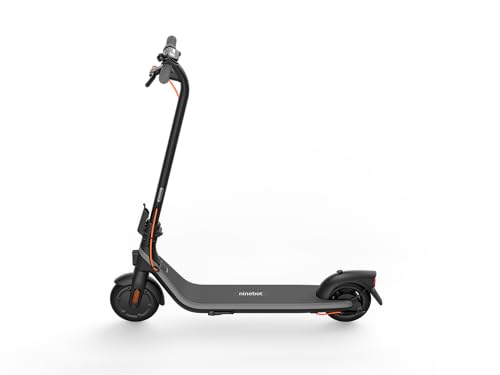
The Segway Ninebot E2 Plus is a sleek and durable electric scooter designed for daily commutes and city rides. Powered by a high-efficiency motor, it reaches speeds of up to 15.5 mph and offers a 15.5-mile range on a single charge. The 8.1-inch shock-absorbing tires provide a stable and comfortable ride, while the foldable frame makes it easy to store and transport. Built with automotive-grade steel, this scooter is engineered for longevity, tested to withstand 3,000 km of riding. The large LED dashboard and 256-color RGB ambient lights add a modern touch, enhancing both style and visibility.
- Durable Build: Made with automotive-grade steel for long-lasting performance.
- Quick Charging: Fully charges in just a few hours for minimal downtime.
- Stylish Lighting: 256 RGB ambient lights enhance visibility and aesthetics.
- Limited Weight Capacity: Supports up to 198.4 lbs, which may not suit all riders.
- No Front Suspension on Some Models: Only the ES1L variant includes added shock absorption.
- Modest Speed: Max speed of 15.5 mph may not be fast enough for thrill-seekers.
A beginner-friendly commuter scooter with a 15.5 mph top speed, 13.7-mile range, and a foldable design that fits easily in car trunks and under desks. Built with front and rear dual braking for added safety. Ideal for flat urban terrain and short daily commutes.
2. Razor E300 Electric Scooter
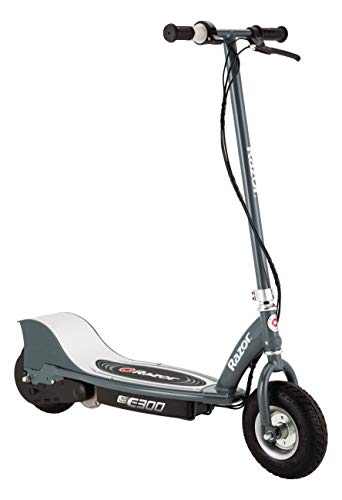


The Razor E300 Electric Scooter is a powerful and sleek choice designed for both teens and adults. In a stylish Matte Grey color, the E300 boasts a super-sized deck and frame, providing a robust ride for users weighing up to 220 pounds. Powered by a 250-watt, high-torque, single-speed, chain-driven motor, this scooter reaches a top speed of 15 mph. The rechargeable 24V sealed lead-acid battery system ensures up to 40 minutes of continuous use. With an all-steel frame and fork, as well as larger 9” pneumatic front and rear tires, the E300 offers a solid and smooth ride, standing up to rugged use.
- High Weight Limit: Supports riders up to 220 pounds.
- Powerful Motor: Reaches a top speed of 15 mph.
- Long Ride Time: Up to 40 minutes of continuous use on a single charge.
- Product Dimensions: Larger size may affect portability.
- Weight: Considerably heavier than some other models.
- Performance Limitations: Extreme conditions may impact scooter performance.
A classic, durable option built for teens and adults alike. It offers a 15 mph top speed, a wide deck for stability, and a rechargeable battery good for up to 40 minutes of continuous use. Simple to operate with no complex features to manage.
3. Gotrax GXL V2 Commuting Electric Scooter


The Gotrax GXL V2 is the perfect blend of affordability, reliability, and everyday convenience. With a lightweight aluminum frame, it’s easy to fold and carry, making it an excellent choice for commuters. The 250W motor provides a smooth ride at speeds of up to 15.5 mph, while the solid 8.5-inch tires eliminate the hassle of flats. Its 9-mile range is ideal for short city trips, and cruise control adds extra comfort for longer rides. Whether you're heading to work, school, or just cruising around town, the GXL V2 delivers a practical and fun ride.
- Lightweight & Portable: Folds easily and weighs only 27 lbs for effortless carrying.
- Flat-Free Tires:8.5-inch solid tires require no maintenance and resist punctures.
- Smooth Ride:Cruise control and a quiet 250W motor enhance comfort and efficiency.
- Limited Range:9-mile max range may not be enough for long commutes.
- Modest Power:Struggles on steep inclines due to its 250W motor.
- No Suspension:Rougher ride on uneven terrain compared to scooters with shock absorption.
One of the most popular mid-range scooters on the market, the GXL V2 offers a 15.5 mph top speed, a 12.5-mile range, and pneumatic tires for a smoother ride on varied surfaces. Folds in seconds and weighs just over 26 pounds.
4. Hiboy S2 Pro Electric Scooter


The Hiboy S2 Pro and S2 Max are commuter-friendly electric scooters built with comfort and quiet performance in mind. Featuring a 500W brushless hub motor, these scooters reach speeds of up to 19 mph with ranges from 25 to 40.4 miles depending on the model. The 10-inch solid tires and rear dual shock absorbers provide a smooth, stable ride while keeping noise levels low, making them some of the quietest electric scooters in their price range. Additional features include a foldable design for portability, ultra-bright headlights for safety, and app connectivity to lock your scooter or customize ride settings.
- Quiet & Smooth Ride: Solid tires with dual rear suspension reduce noise and absorb shocks for comfortable commuting.
- App Connectivity: Hiboy app allows locking, acceleration adjustments, and braking customization.
- Portable Design: Foldable frame makes it easy to carry and store in compact spaces.
- Moderate Speed: Max speed capped at 19 mph, slower than premium models.
- Weight Limit: Supports up to 220 lbs, less than higher-capacity scooters.
- Solid Tires: While maintenance-free, they provide less cushioning than pneumatic tires.
A step up in performance with a 19 mph top speed, an 18-mile range, and solid-rubber tires that eliminate flat tire concerns. Equipped with front and rear lights for safe night riding. App connectivity for speed control and ride monitoring.
Speed and Time: Where Scooters Win
The most obvious advantage of an electric scooter is speed. The average person walks at roughly 3 to 4 mph. An electric scooter typically travels at 15 to 20 mph. That difference becomes significant over any meaningful distance.
For a one-mile trip, walking takes about 15 to 20 minutes. On a scooter, that same mile takes roughly 4 to 5 minutes. Scale that to a two-mile commute, and the time savings stack up quickly, especially for people with tight schedules.
In urban environments where traffic gridlock is common, scooters can also outperform cars and ride-shares on short trips. There is no parking to find, no waiting for a driver, and no sitting in stop-and-go traffic. For distances under three miles in a city, a scooter often delivers people to their destination faster than any motorized vehicle.
Health and Physical Activity: Where Walking Wins
Walking is one of the most accessible and beneficial forms of low-impact exercise available to humans. It supports cardiovascular health, strengthens muscles, improves mood, and helps maintain a healthy weight. For many people, a daily walk serves as their primary form of physical activity.
Replacing walking with a scooter eliminates that physical engagement. Riding an electric scooter is largely passive from a fitness perspective. Standing on a moving platform burns minimal calories and does not provide the sustained aerobic benefit that walking does.
For individuals whose lifestyle is already sedentary, swapping every walk for a scooter ride may contribute to reduced daily movement. On the other hand, for active people who exercise regularly, using a scooter for errands or commuting does not meaningfully impact overall fitness.
The key distinction is intentionality. If walking is already part of a deliberate fitness routine, using a scooter for commuting is a neutral trade-off. If walking to places is one of the few ways physical activity gets incorporated into the day, replacing it entirely with a scooter could be a net negative for health.
Cost Comparison: Scooter vs. Walking (and Driving)
Walking costs nothing. That is its most undeniable advantage from a financial standpoint.
An electric scooter involves an upfront investment, typically between $300 and $900 for a reliable model. There are also ongoing costs: electricity for charging (minimal, usually under $1 per full charge), occasional tire replacements, and potential maintenance.
However, when compared to car ownership, ride-shares, or even public transit, a scooter pays for itself surprisingly fast. A single Uber or Lyft ride in a city can cost $10 to $20 for a two-mile trip. At that rate, a $400 scooter covers its own cost in under 30 shared rides. For people who take multiple short trips each week, the savings are substantial.
For those who currently use a car for short errands, a scooter also reduces fuel costs, parking fees, and wear on the vehicle. Even for transit commuters, a scooter eliminates the last-mile problem without the ongoing cost of bus or subway fares for short connections.
The cost case for a scooter is strong when it replaces paid transportation. It is neutral or slightly negative when it only replaces walking.
Environmental Impact: Both Options Are Low
Neither walking nor riding an electric scooter contributes meaningfully to carbon emissions. Both are far greener than driving a gas-powered vehicle. Electric scooters do require electricity to charge, and the environmental footprint of that electricity depends on the local power grid, but the impact is negligible compared to any combustion engine.
The greater environmental consideration is manufacturing. A scooter requires raw materials and energy to produce. If it replaces driving trips regularly, the carbon saved from avoided car travel quickly offsets the manufacturing footprint. If it only replaces walking, there is a small net negative from a lifecycle emissions standpoint.
For people genuinely trying to reduce their carbon footprint, a scooter that replaces even a few car trips per week is a meaningful step in the right direction.
When a Scooter Makes the Most Sense
Electric scooters are genuinely worth the investment in specific situations. Here is when riding one makes clear practical sense:
- Commuting distances of 1 to 6 miles: This is the scooter’s sweet spot. Too far to walk comfortably every day, but too short to justify driving or paying for a ride-share. A scooter covers this distance quickly and consistently.
- Last-mile transportation: Many transit systems leave riders with a gap between the station and their destination. A foldable scooter bridges this gap efficiently and can be brought aboard buses or trains in many cities.
- Flat urban terrain: Scooters thrive on smooth, flat surfaces. Cities with dedicated bike lanes or wide sidewalks are ideal scooter environments.
- Running errands without a car: For quick trips to a grocery store, pharmacy, or coffee shop within a few miles, a scooter is faster than walking and less hassle than driving.
- People with joint or mobility limitations: For individuals who find extended walking painful due to knee, hip, or back issues, a scooter allows them to remain mobile and independent without the physical strain.
When Walking Is Still the Better Choice
Walking remains the superior option in certain circumstances:
- Short distances under half a mile: For trips that take less than 10 minutes on foot, unlocking, riding, and re-securing a scooter takes almost as long as just walking. The time savings are negligible.
- Uneven or hilly terrain: Many electric scooters struggle on steep inclines or rough surfaces. Walking on a trail or uphill path is often easier than pushing or riding a scooter through it.
- When exercise is the goal: If the purpose of the trip is partly to get some movement in, walking is always the better choice.
- Indoor destinations: Scooters cannot always be brought inside buildings, and leaving one unattended creates theft risk. In situations where storage is unavailable or uncertain, walking removes the logistical headache.
- Adverse weather: Rain, snow, or ice significantly reduce scooter safety. Wet surfaces reduce braking ability and increase the risk of skidding. Walking, with appropriate footwear, is safer in most weather conditions.
Practical Considerations Before Buying
Anyone considering an electric scooter should think through a few practical realities before purchasing:
Storage: Where will the scooter live? Apartments without elevators or storage rooms can make keeping a scooter inconvenient.
Weight: Most commuter scooters weigh between 22 and 35 pounds. Carrying one up stairs or onto crowded public transit can become tiring.
Local laws: Regulations around where scooters can be ridden vary by city and country. Some areas restrict them to bike lanes, others prohibit sidewalk riding, and some require helmets by law.
Maintenance: Tires wear out. Batteries degrade over time. Brakes need occasional adjustment. Factoring in basic maintenance keeps expectations realistic.
Safety gear: A helmet is non-negotiable for scooter riding. Wrist guards and knee pads are worth considering for new riders. Safety gear adds cost but also significantly reduces injury risk.
Conclusion
The question of whether an electric scooter is worth it is really a question about lifestyle fit. For urban commuters, last-mile travelers, and anyone regularly covering distances between one and six miles, a scooter is a practical, time-saving, and cost-effective tool. It fills a gap that neither walking nor driving covers well.
For short trips, exercise-focused routines, or challenging terrain, walking is still the most reliable and beneficial option available. It costs nothing, improves health, and requires zero maintenance.
The smartest approach for most people is not choosing one over the other permanently. Using a scooter when distance and speed matter, and walking when the trip is short or the goal is fitness, allows both modes to serve their purpose well. The right tool depends entirely on the trip.
Frequently Asked Questions
1. How far can an electric scooter realistically travel on one charge?
Most mid-range electric scooters offer a real-world range of 10 to 18 miles per charge. Range is affected by rider weight, terrain, speed, and battery age. Manufacturers often list optimistic figures under ideal conditions, so actual range is typically 15 to 20 percent lower than advertised.
2. Is it safe to ride an electric scooter in rain?
Most consumer scooters have limited water resistance ratings (commonly IP54), which means they can handle light splashes but should not be ridden in heavy rain or through deep puddles. Wet roads also significantly reduce braking effectiveness. Riding in rainy conditions is not recommended for safety reasons.
3. Do electric scooters require registration or a license?
This depends entirely on local regulations. In many US cities, personal electric scooters do not require registration or a driver’s license for riders above a minimum age. However, rules vary by state, county, and city, so checking local laws before riding is essential.
4. How long does an electric scooter battery last before needing replacement?
Most lithium-ion scooter batteries are rated for 300 to 500 full charge cycles before noticeable capacity degradation. With daily use, this typically translates to two to four years before range is significantly reduced. Battery replacements, when available, generally cost between $100 and $250.
5. Can an electric scooter replace a car for daily use?
For people living in walkable or transit-rich urban areas with short commutes, a scooter can replace a significant portion of car trips. However, scooters are not suitable for highway travel, carrying passengers, hauling large loads, or long-distance trips. They work best as a complement to other transportation rather than a complete car replacement for most lifestyles.